
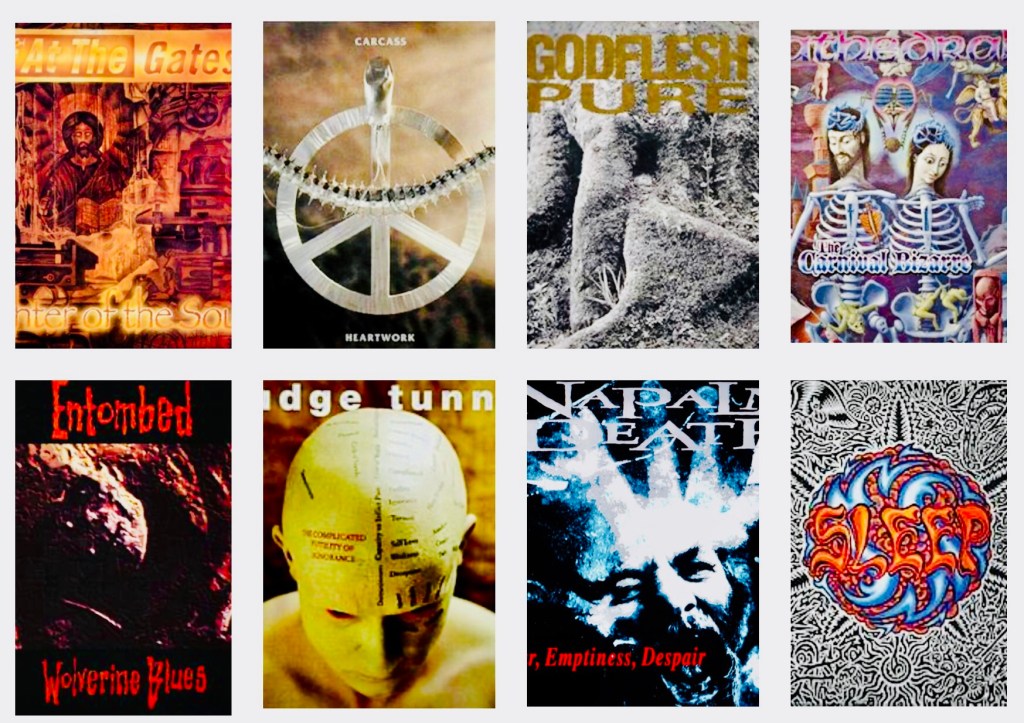
Earache Records the Uk label established in 1985 by Digby Pearson, were a true underground force in every sense of the phrase, who played an integral part in helping establish Extreme-Heavy Metal, as a commercial entity over the following decade.
With their third release in 1987 they lay the foundations for the Grind-Core sub genre, with the arrival of Napalm Dearth’s seminal debut album; Scum. A record that sounded quite unlike anything else at the time, pushing the boundaries of where Hardcore and Thrash Metal could be taken in terms of both it’s speed and heaviness.
During those formative years in the 1980s Earache would also release music from the likes of Morbid Angel and Bolt Thrower, establishing themselves as major players in the worldwide Death-Metal scene. But it would be in the 1990s that the label would really make their imprint commercially, in a new decade where the landscape of Metal would change forever. Helped by a consistently solid output of material and by their association with the following bands, who would release some truly ground-breaking music:
1. // At The Gates – Slaughter Of The Soul (1995)
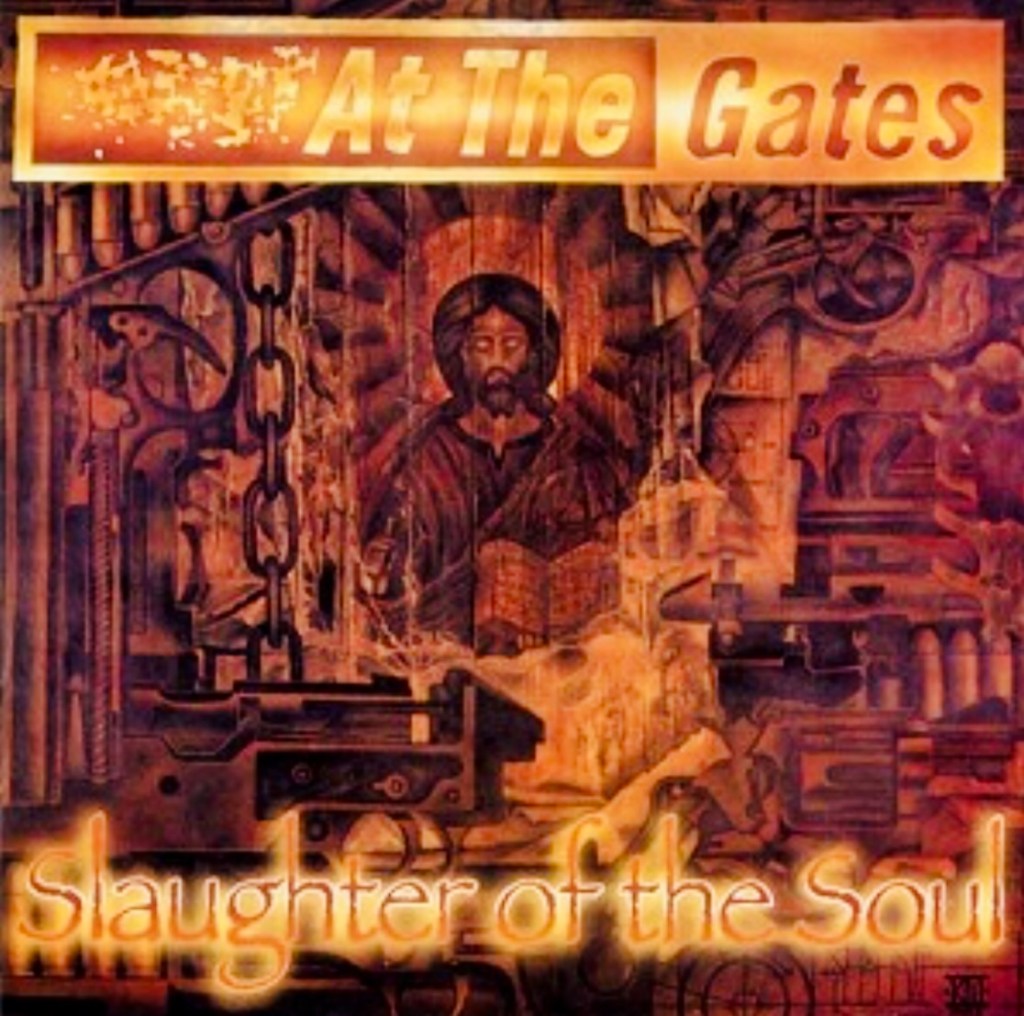
Slaughter of the Soul was the landmark fourth album from the Swedish pioneers of Melodic and Technical-Death-Metal, and At The Gates really did produce their masterpiece with this one establishing themselves as one of the leading bands in the scene at the time. It would also prove to be their final album for a number of years, as despite Slaughter of the Soul opening many doors internationally and seeing them start to significantly increase their profile, they would break up a year after its release, entering a hiatus that would last over a decade. The album opens with the phrenetic ‘Blinded by Fear,’ with an instant hook in the exhilarating main riff that showed they meant serious business from the off.
The intoxicating riffing continues into the title track with a real groove like quality, that at the time appealed to fans of well known heavier bands like Pantera and Sepultura. ‘Cold’ is another track that is catchy as hell, with another fine riff drawing you deep into the chorus. While the incredibly high standard just continues through classic track after track, including belters such as ‘Under the Serpent Sun’, ‘Suicide Nation’ and ‘Unto Others’. ‘Into the Dead Sky’ showcases a moment of calming melodic respite with some sumptuous classical guitar, while the instrumental closer ‘The Flames of the End,’ is crafted around a hypnotically eerie synth.
2. // Carcass – Heartwork (1993)
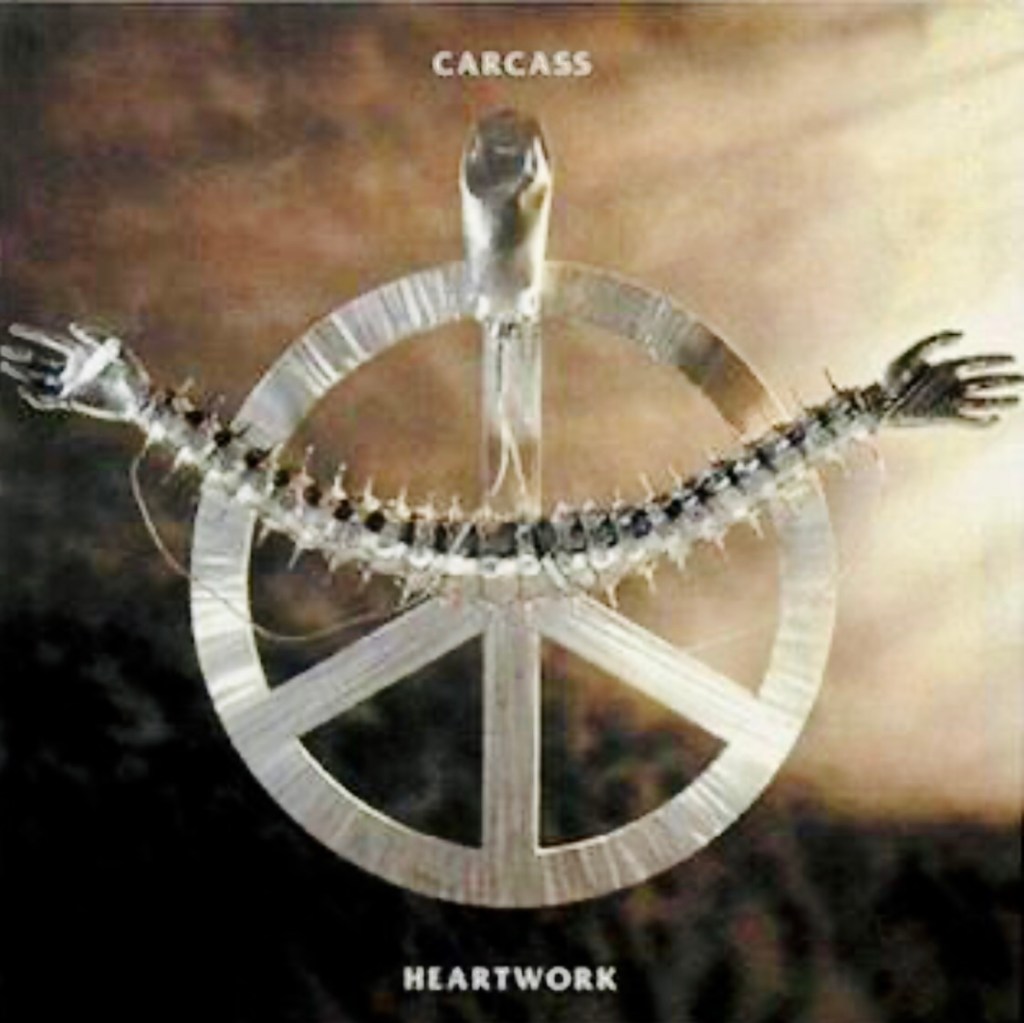
Another early 90s extreme metal classic, this time from Liverpudlian’s Carcass who established themselves as one of the UK’s leading Melodic-Death Metal bands with this vintage release. Their fourth record is the one which really put them on the map, and commercially was by far their most successful release. Guitarist Bill Steer first formed Carcass while he was at school in 1985, and a year later was joined by bassist Jeff Walker creating the bands consistent heartbeat. A stint playing with Napalm Death boosted Steer’s profile, before Carcass dropped their first album Reek of Putrefacation in 1988, which found a fan in legendary BBC broadcaster; John Peel.
Heartwork opens with Steer’s infectiously chugging riff on ‘Buried Dreams,’ where his technical leads entwine perfectly with the distinct vocal rasp of Walker. ‘Carnal Forge’ increases the pace with a Thrashier influence, while ‘No Love Lost’ drops back down into pure groove territory. The title track is a masterclass in melodic-death, with Steer’s sumptuous guitar playing taking centre stage alongside a strong vocal hook in the chorus. And the seminal album flows through some of the finest heavy songs of the era, with brilliantly crafted stand out tracks and all manner of sumptuous riffs and guitar solos on tracks including ‘This Mortal Coil’, ‘Blind Bleeding the Blind’ and ‘Death Certificate’.
3. // Godflesh – Pure (1992)
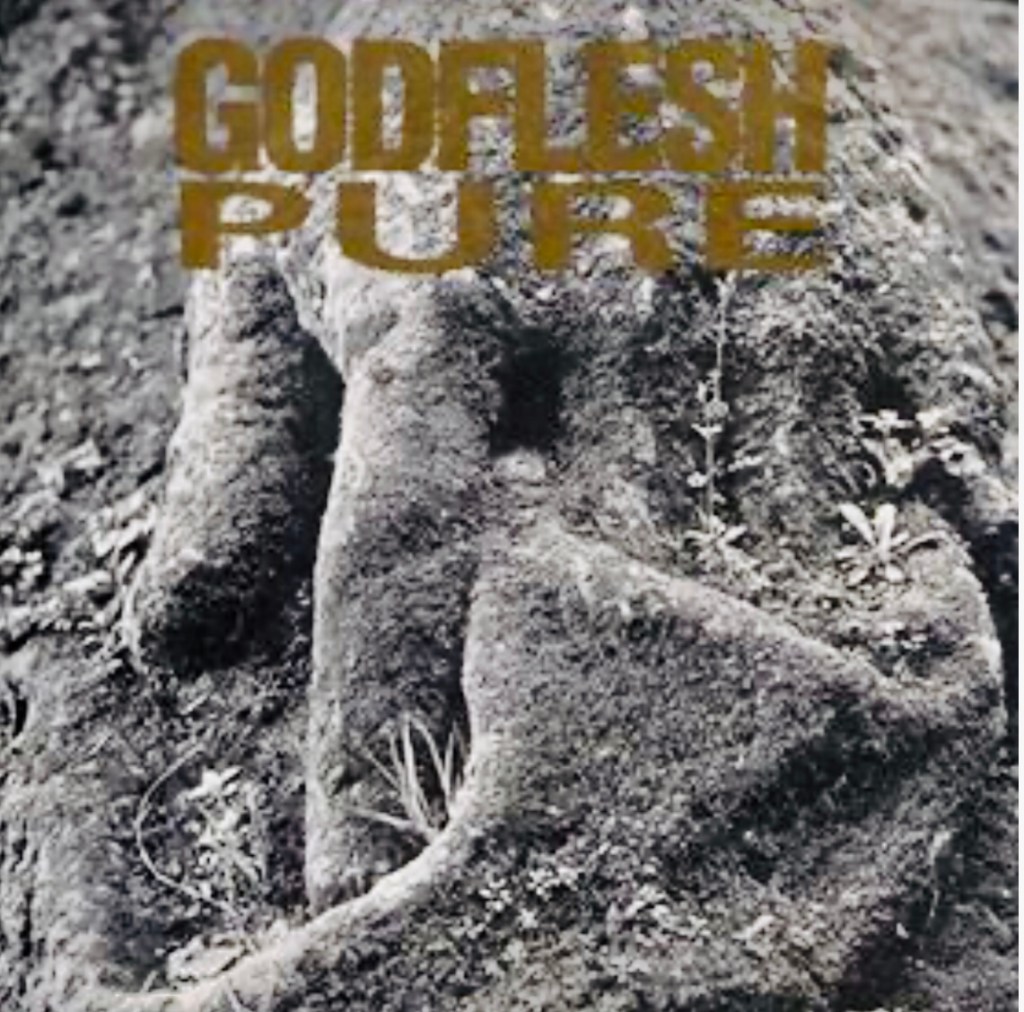
Godflesh are the innovative Industrial-Metal duo of bassist B.C Green, and Justin Broadrick who handles vocals, guitars and drum programming. Following the release of a demo, they exploded onto the scene with their unique and groundbreaking debut record Streetcleaner in 1989, two years after Broadrick had played guitar on the first half of Napalm Death’s classic debut Scum. But Godflesh were nothing like Napalm Death, and Streetcleaner was a unique blend of Metal and Electronica. Taking inspiration from the likes of Skinny Puppy and Ministry, it is widely considered as one of the quintessential early Industrial-Metal records. But their follow up Pure (1992) is no less groundbreaking for the style, and in many ways is the classic sophomore album in which Godflesh had been able to hone their sound and enhance their ideas, taking their individual style to the next level.
The record opens with ‘Spite,’ where breakbeats meet a stabbing distorted guitar and Broadrick’s dreary anarchistic vocals. ‘Mothra’ is built around an 80s sounding Electro beat, while a hypnotic and repetitive riff swirls its way around the percussion. The consistent base of the record is built around clattering electronic drums, that thump in unison with Green’s bass while the vocals and sweeping guitar hooks often sit subtly in the mix. ‘Predominance’ is one of the most recognisable of all of the early Godflesh songs, heavy gruff and hypnotic from start to finish … an aggressive slice of Industrialised Metal. Pure is percussive, virtually instrumental for long passages, and is unquestionably a seminal record in Industrial music. But it also very much lays down the blueprint for the Post-Metal genre, with its experimentation and left-field ideas a clear inspiration for the likes of Neurosis and Isis.
4. // Cathedral – The Carnival Bizarre (1995)
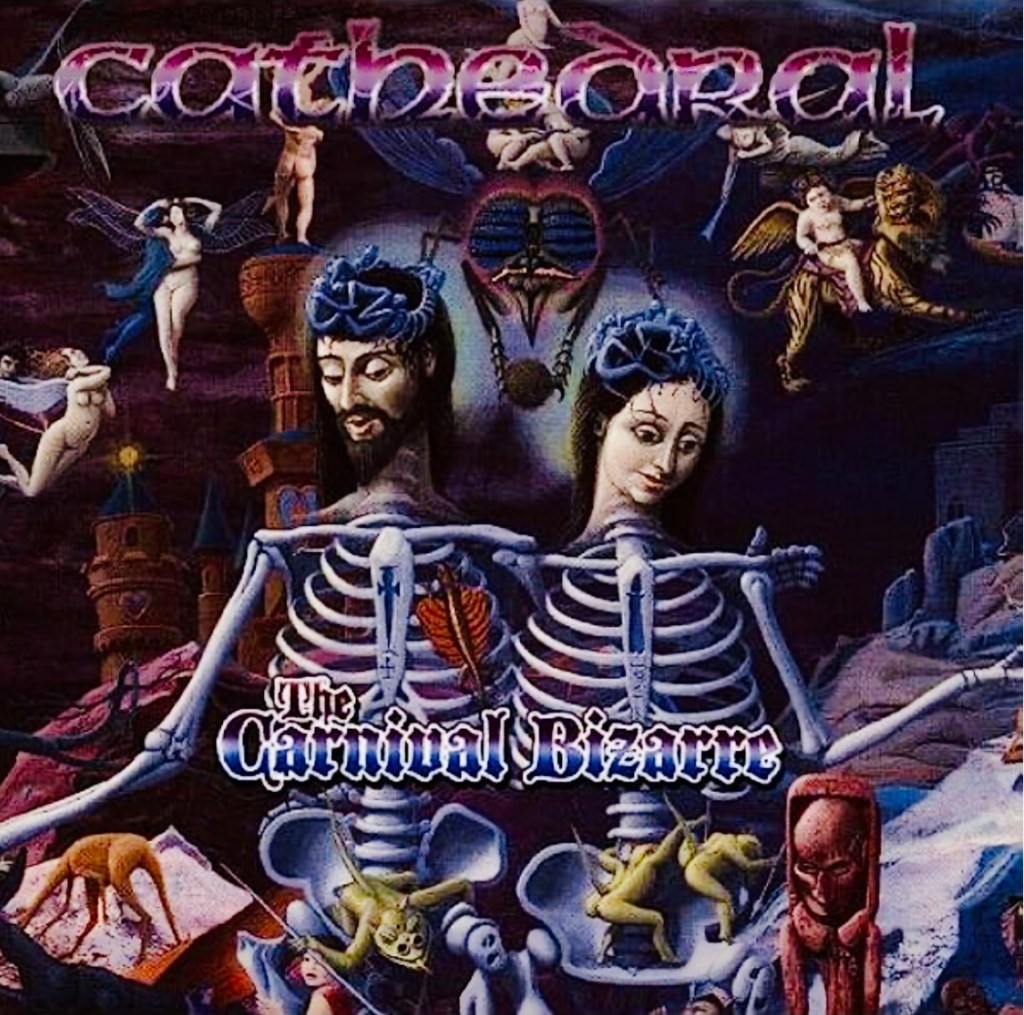
When Napalm Death vocalist Lee Dorian became disillusioned with the Death-Metal direction the band were headed, he left after their second album From Enslavement to Obliteration (1988) and formed Cathedral. A band who would become pioneers of a new-wave of Doom-Metal bands in the UK, when their debut album Forest of Equlibrium was released on Earache Records in 1991, and then their follow up; The Ethereal Mirror in 1993. But by the mid 90s Dorian and his band mates were looking to take Cathedral in a new direction, with a clearer influence from 70s Progressive-Rock and a huge nod to the masters Black Sabbath, with a shift in focus on writing shorter snappier songs with catchy vocal hooks.
The Carnival Bizarre opens with ‘Vampire Sun’ and an instant sign of departure from their Dirge-Doom beginnings, with an upbeat Cosmic-Stoner vibe, and Dorian’s distinctive vocal drawl asking; “Are you high? Come on!” They provide possibly their greatest ever song with ‘Hopkins (The Witchfinder General),’ an ode to the classic Hammer Horror’s movie, merging the imagery and samples of the film with one hell of a catchy riff, before finishing with an intoxicating breakdown and a mind blowing Iron Maiden-esq guitar solo. Cathedral supply one absolute banger after another, with ‘Utopian Blaster’, ‘Inertia’s Cave’ and ‘Fangalactic Supergoria’ all flowing in a cosmic haze of super-fun metal. While the band even manage to channel a ‘Scooby Doo in Transylvania’ kind of vibe on; ‘Night of the Seagulls.’
5. // Entombed – Wolverine Blues (1993)
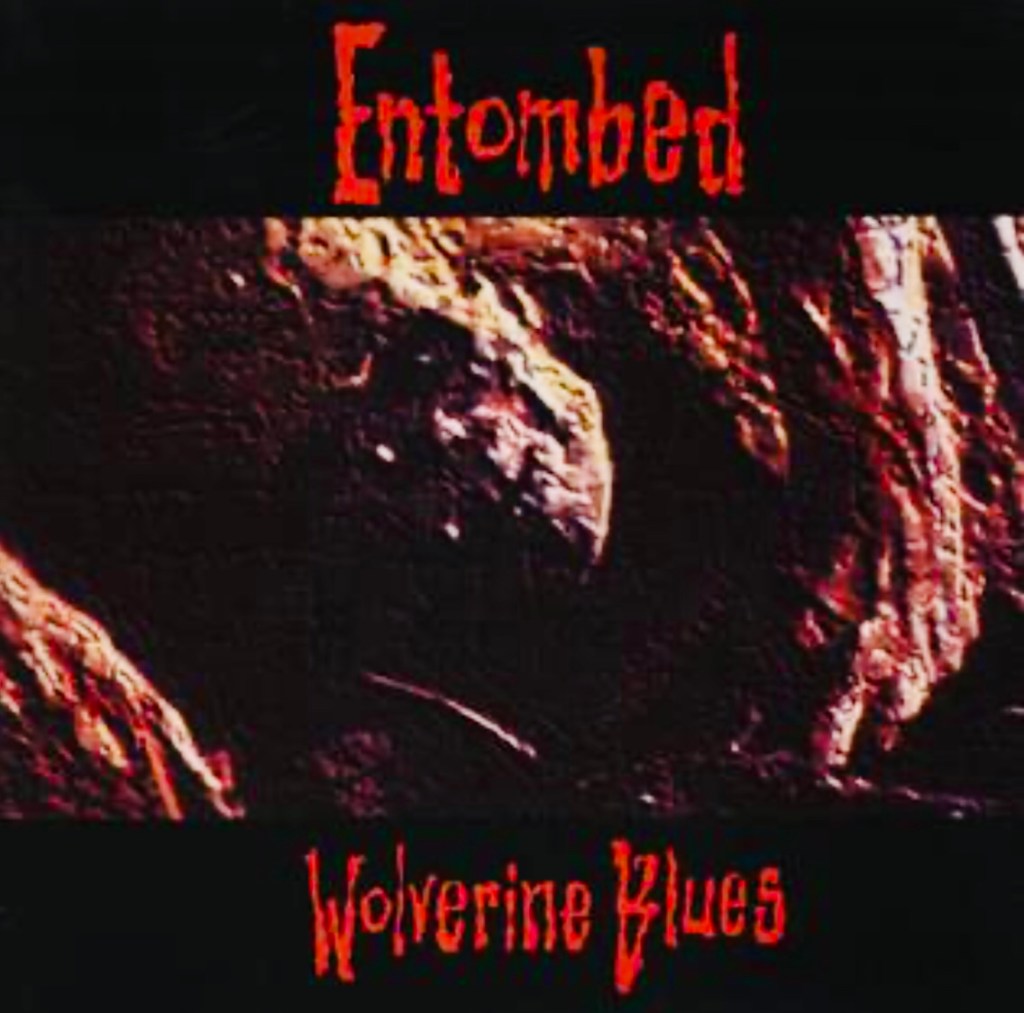
Along with At The Gates, Entombed were one of the bands who unquestionably put the Swedish Death-Metal scene on the map in the early 90s. Starting life as Nihilist in 1987, a change of name came before the release of their classic debut album Left Hand Path in 1990, a record that quickly gained them a cult following in the European scene. Wolverine Blues is the band’s third album and saw the return of vocalist L.G. Petrov (who missed out on Clandestine in 1991), as well as a departure of style from their initial purist Death-Metal albums, as Entombed delivered a more accessible ‘Death N Roll’ sound. Becoming a huge influence on the Groove-Metal style, that would eventually pave the way for Nu-Metal and Metal-Core.
Opening with a buzz of feedback on ‘Eyemaster’ before dropping into one hell of a groove, the track is a sure fire influence on the sound picked up by the likes of Machine Head as the decade rolled on. ‘Rotten Soil’ has a distinct Sepultura flavour, especially with the vocal delivery of Petrov, which sounds not unlike that of Max Cavalera. The title track is an absolute classic representation of the Groove-Metal sound, with it’s incredibly infectious riff and vocal hook of the chorus, while the style continues through tracks including ‘Demon’, ‘Full of Hell’, and ‘Hollowman.’ Which all sound perfectly attuned to the fledgling style that was starting to see traditional Hardcore, Death and Thrash-Metal bands find an audience, in an era where the genre was being championed by the likes of MTV’s Headbangers Ball.
6. // Fudge Tunnel – The Complicated Futility Of Ignorance (1994)
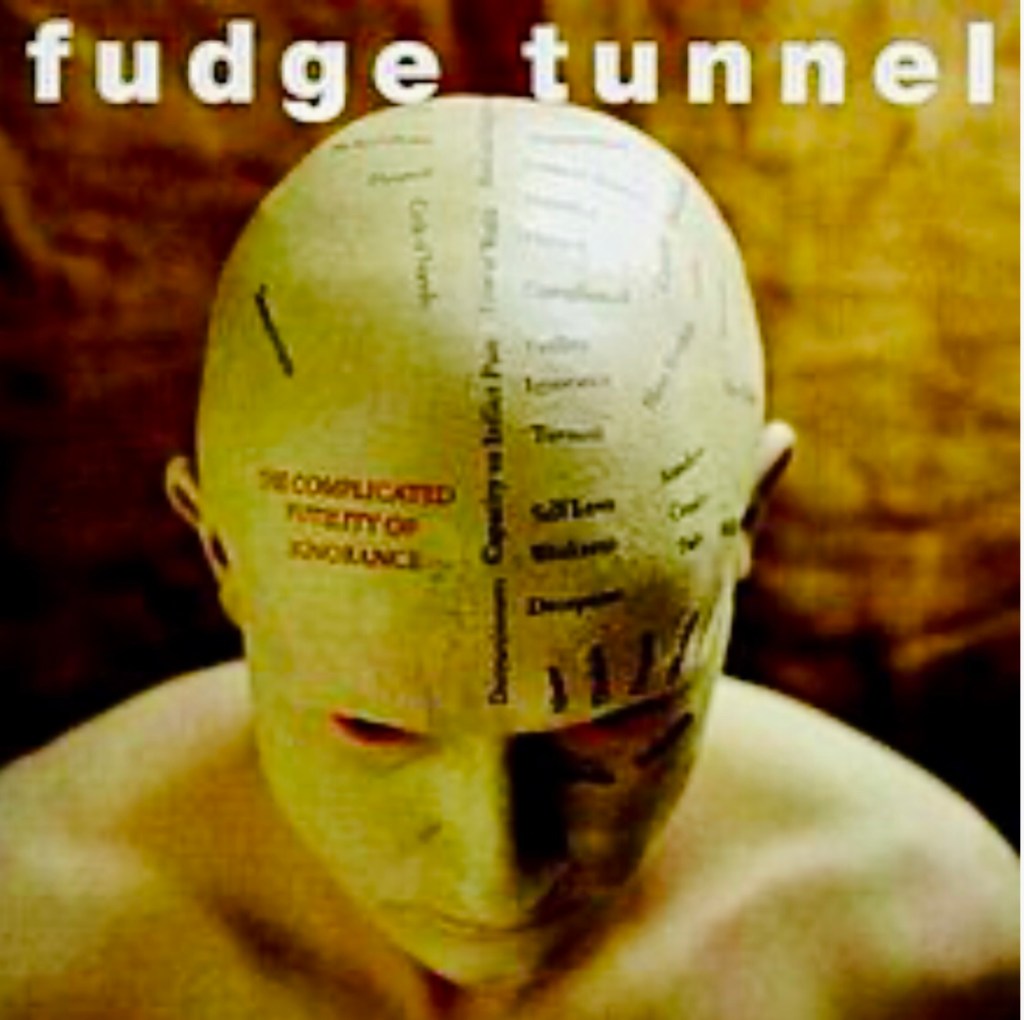
Fudge Tunnel were a young brash three-piece Noise-Rock band, who came out of Nottingham in the late 80s, but who could just as easily come from Seattle, as their distorted-fuzz-Punk influenced Metal, shared much with the heavy early sounds of Grunge bands like Nirvana, Melvins, Tad and Sonic Youth. Their debut album Hate Songs In E Minor arrived on Earache in 1991, and their shortish career would culminate with third album The Complicated Futility of Ignorance three years later, the same year in which vocalist / guitarist Alex Newport would create the legendary Nailbomb project with Sepultura’s Max Cavalera.
Fudge Tunnel’s final work is unquestionably their heaviest collection of songs, and widely considered the pinnacle of their recordings. It opens with ‘Random Acts Of Cruelty,’ immediately showcasing a distinctly Chaos AD era Sepultura style, with a rolling guitar riff that perfectly blends Grunge with Hardcore. ‘The Joy of Irony’ and ‘Excuse’ are reminiscent of a Bleach era Nirvana, with Newport’s vocal delivery not unlike Cobain at his most ferocious. The thick bass sound of David Riley is integral to the groove of Fudge Tunnel throughout the record, as highlighted on ‘Six Eight.’ While Newport’s riffs are consistently catchy as hell, as highlighted on the bouncing ‘Backed Down.’ While there is also plenty of enjoyable Sludge sounding Metal throughout the release, on tracks such as ‘Cover Up’ and ‘Find Your Fortune.’
7. // Napalm Death – Fear, Emptiness, Despair (1994)
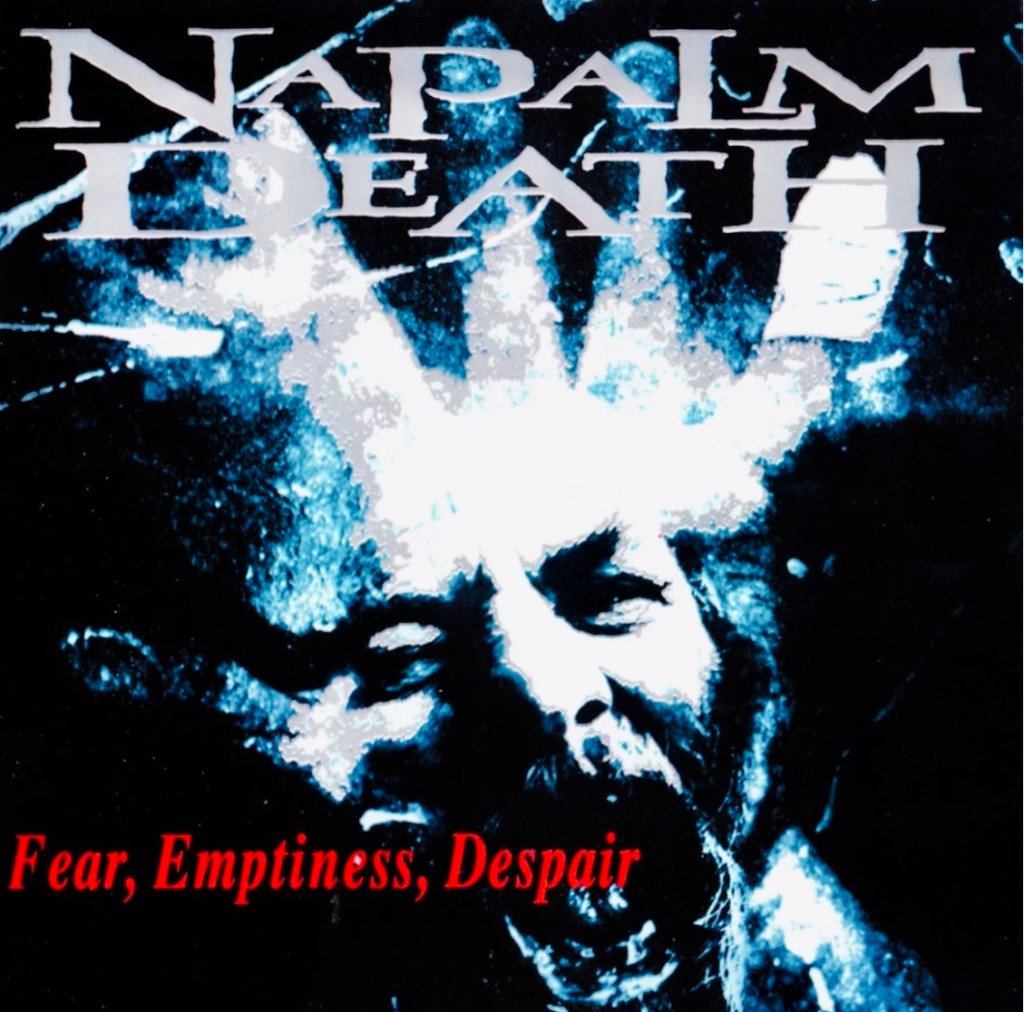
It can’t be underestimated just how influential Napalm Death have been on the worldwide Extreme-Metal scene, as the Godfathers of Grind-Core were one of the key bands to emerge from the darkest depths of the industrial West Midlands, in a Hardcore scene that was about to get a whole lot faster and heavier. They were also key in establishing Earache Records, as the releases of their vintage debut record Scum in 1987, and it’s follow up; From Enslavement to Obliteration in 1988, significantly helped boost the label’s profile. And it’s also no surprise that a number of former members bands feature prominently in this list, such was the talent of the musicians involved.
Their fifth album; Fear, Emptiness, Despair, is a typically blistering sonic onslaught from start to finish, with vocalist Barney Greenway sounding as gruff as ever on tracks such as ‘Twist The Knife (Slowly)’, ‘Hung’ and ‘Remain Nameless.’ While the rumbling bass of Shane Embury, provides the ever consistent heartbeat of their aggressive Hardcore influenced Death style. On ‘Plague Rages,’ Napalm Death introduce a phrenetic-rolling-groove style to the music, with an incredibly vivacious riff proving that the band could cut it in and amongst the new generation of heavier bands, when it came to writing a catchy Extreme-Metal ‘hit’. While the album is littered with further classics of the era, including ‘More Than Meets The Eye’, ‘State of Mind’ and ‘Retching On The Dirt’.
8. // Sleep – Sleep’s Holy Mountain (1992)
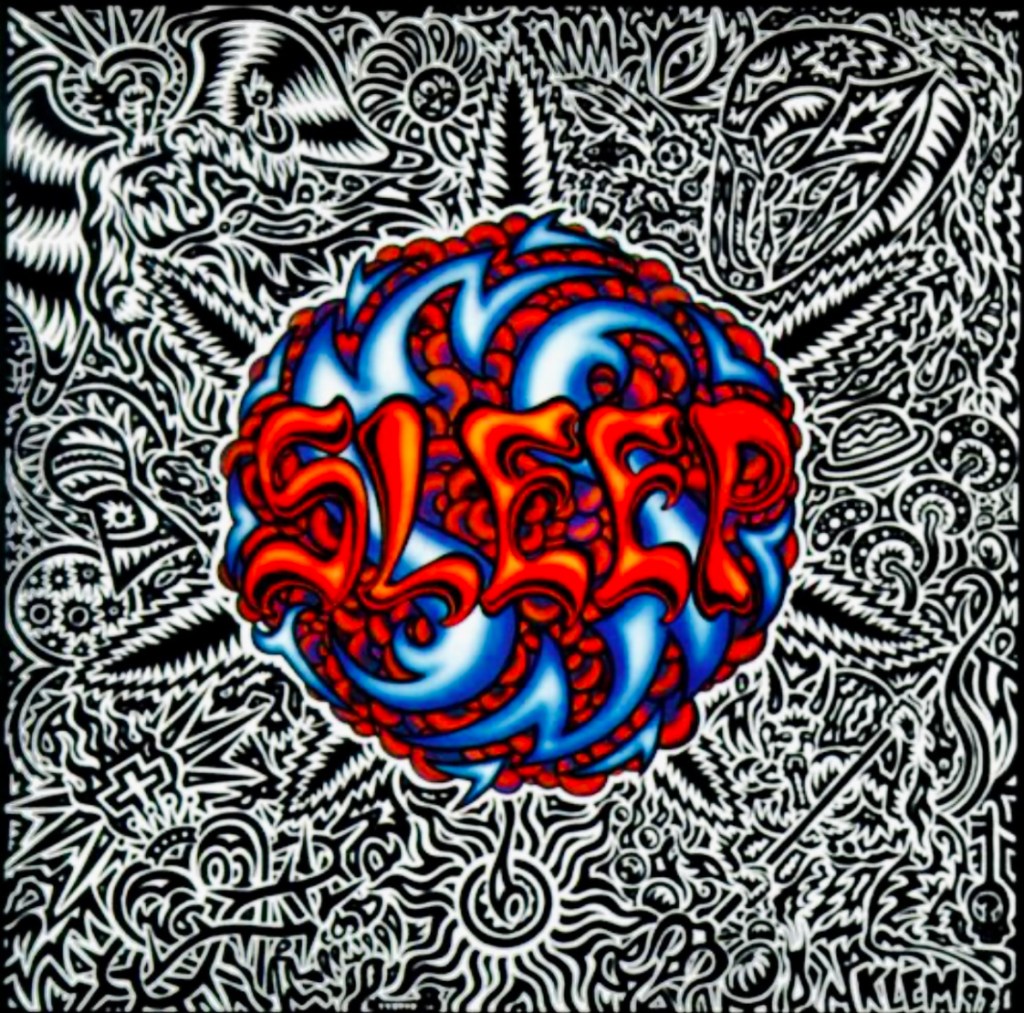
For many Sleep’s Holy Mountain in considered the quintessential Stoner-Rock album of the early 1990s. Laying the foundations for a sound that bands such as Kyuss, Fu Manchu and Monster Magnet, would go on to explore as the decade progressed. Sleep were a ‘power-trio’ combining a fluid rhythm section of drummer Chris Hakius and singer / bassist Al Cisneros, with the electrifying and Blues soaked guitar playing of Matt Pike, who would go on to form his Sludge-Metal outfit High on Fire after Sleep initially disbanded in 1998. Sleep’s Holy Mountain was released by Earache in it’s original form, after the band sent the complete recording to the label as a demo. With the raw, muddy, lo-fi quality of the sound evident throughout, and without a doubt part of the charm.
The record opens with the hazy Black Sabbath – esq ‘Dragonaut’, with Cisnero’s vocals even channelling a distinct early Ozzy era vibe. There is a psychedelic-funk sound to the Bass which is the heartbeat of the Sleep sound, and plenty of wah and phaser on the guitar, while Cisnero’s vocals take on more of a Hardcore style on ‘The Druid’, ‘Evil Gypsy / Solomon’s Theme’ and ‘Inside the Sun’. There are plenty of long meandering instrumental sections, with some impressive guitar solo’s from Pike which sound loose and improvisational throughout, ‘Some Grass’ provides a short interlude of Hillbilly slide-guitar, while Sleep unashamedly wear their Sabbath influence loud and clear on ‘Aquajar’ and ‘Holy Mountain’. ‘From Beyond’ is a lazy slow burning groove which throughout it’s 10 minutes long runtime, highlights everything that Sleep do best.
Words by Abstrakt_Soul


Leave a comment