


A truly psychedelic experience, and a visual phenomenon of a film from controversial Argentinian director Gasper Noé (Irreversible / Climax), Enter the Void plays with the mind of the viewer from the very opening credits, as neon flash imagery and a Techno soundtrack lay the foundations for what is to come. Shot from the POV of lead character Oscar (Nathaniel Brown), he and his sister Linda (Paz de la Huerta – Boardwalk Empire) live in an apartment in the heart of Tokyo.
We meet the American siblings as they talk on their balcony over looking the city nightlife, where she remarks that she is afraid of ‘Falling into the void,’ a metaphor for dying. Oscar replies ‘I’ve heard you fly when you die,’ and explains that he is reading the spiritual Tibetan Book of the Dead which explores the idea of reincarnation, a theme that inspires the narrative of the story in its unforgettable finalè.
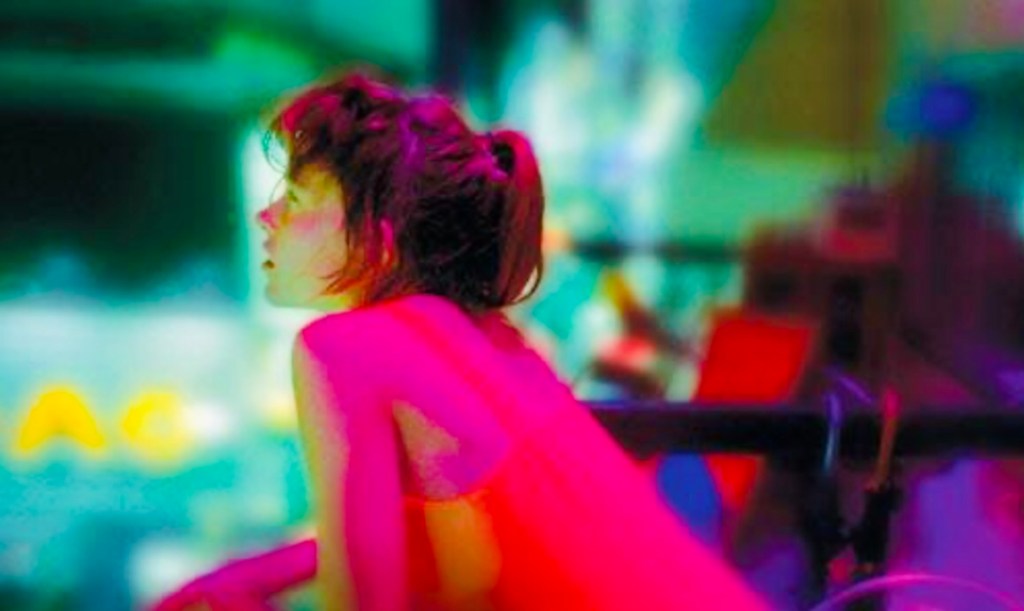
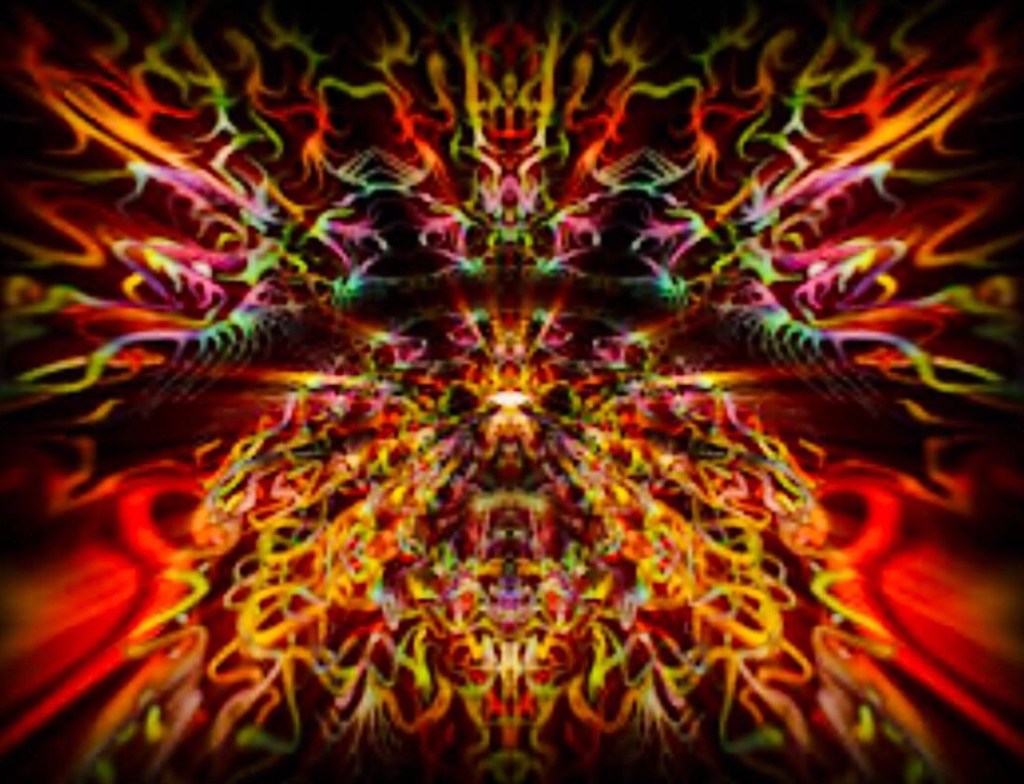
When Linda leaves, Oscar smokes a pipe of DMT – and the visuals of the POV shot instantly morph to show his hallucinogenic trip – beautifully shot by Noé with swirling kaleidoscopic colours and very realistically created. Enter the Void becomes a full on trip for the viewer alongside Oscar with sumptuous animation from Noé, as mind-bending visuals take over the mise-en-scene.
The movie melts into a dreamlike state of colourful patterns, seemingly symbolising brain cells and blood vessels, before we and Oscar are brought out of the trip by his ringing phone. A male on the phone asks Oscar to make a delivery of drugs, and as he reluctantly awakes from his hypnotic slumber, we see his face in the mirror for the first time as he douses his head with water to try and compose himself.
He’s visited by his friend Alex (Cyril Roy) , and they grab a concoction of drugs from his fridge and head out into the night. Alex can tell that Oscar is tripping, and as they walk they discuss Buddhism and its transitional theory of the cycle of life into death. Oscar then literally enters The Void, a bar where he meets his customer Victor (Olly Alexander), but Oscar has been set up and his deal is hijacked by the police. He runs to the WC and pours all of the drugs down the toilet, before shouting that he has a gun and he’ll shoot .. but then there is a blast through the door, and Oscar has taken a shot through his belly.
He falls to the floor in the filthy toilet, and Noé plays the sound of a slow heartbeat as Alex whispers to himself … ‘Please help me!’ We then experience Oscar’s soul rising from his body towards the lights of the ceiling, an out of body experience which could also be perceived as another experience of his DMT trip. The camera turns and we see his dead body laying in the fetal position on the toilet floor, before Police officers drag his body out, and the POV camera swirls around the room.

His spirit floats across the street to a strip club where his sister works, and we watch explicitly as she has sex with her boss in a dressing room. Oscar’s soul enters the man and we see a POV shot of him making love to his sister. Afterwards she checks a message from Alex on her phone and learns of her brothers death, dropping the phone and falling onto the sofa crying. The room flashes as Oscar watches her, with the colour palate turning a nightmarish red.
The following passages are the strongest in the movie as we discover the bond between brother and sister, as memories from their childhood flash before Oscar’s eyes. As children they are involved in a car crash in which both their parents are gruesomely killed, before the narrative jumps forward to when they are young adults, where they discuss a blood pact they made as kids, promising to never leave each other. But we also see the children being separated into different foster home in a harrowing scene, as Linda screams reaching for her brother.
From here the timeline of the narrative jumps from scene to scene as Noé entwines flashbacks with the present day. We see the motivation for Victor setting him up with the police, as Oscar had had a sexual relationship with his young friends mother, an attractive older woman and ultimately a very Freudian motivation for Oscar, as he is searching for a relationship he has not had since his own mother perished in the car crash. We see many memories of him and his mother, scenes of breast feeding and a shot in the bath with her and his then baby sister.
There are strong undertones of an incestuous relationship between Oscar and Linda. She sucks on his ear at one point and sits around half naked when they are in his cramped apartment together. He takes her to a nightclub and gives her ecstasy. She is absolutely wasted as they leave together and she reminds him it is the anniversary of their parents death. She says she feels free in Tokyo, and tries to kiss him. And in another scene after she starts working at the strip club, Oscar holds and smells his sisters underwear, while home alone in the apartment.

In flashbacks again we are taken deeper into the bond between the two of them, in the aftermath of the tragedy they faced at a young age. The film repeatedly explores their blood pact and promise to never leave each other. And in one of the most memorable scenes, the film provides one hell of a jump scare when in the present day they go on a roller-coaster ride together, before suddenly we leap back to the sudden impact of the car crash, with the picture then focusing on the mangled bodies of their parents.
Enter the Void eventually brings us full circle to the beginning of the movie and repeats the opening scenes as Oscar smokes DMT again, and the events leading up to his death replay. And it’s from here that the film completely goes out there, polarising the audience as it dives into a rabbit hole of the bizarre, and either makes or breaks your experience. Any sense of a structured narrative really goes out the window here, as we travel beyond and into the aftermath of his death. Oscar’s soul is able to move locations through light and the shots are visually hallucinogenic once again, and the themes of sex, death and rebirth accelerate.
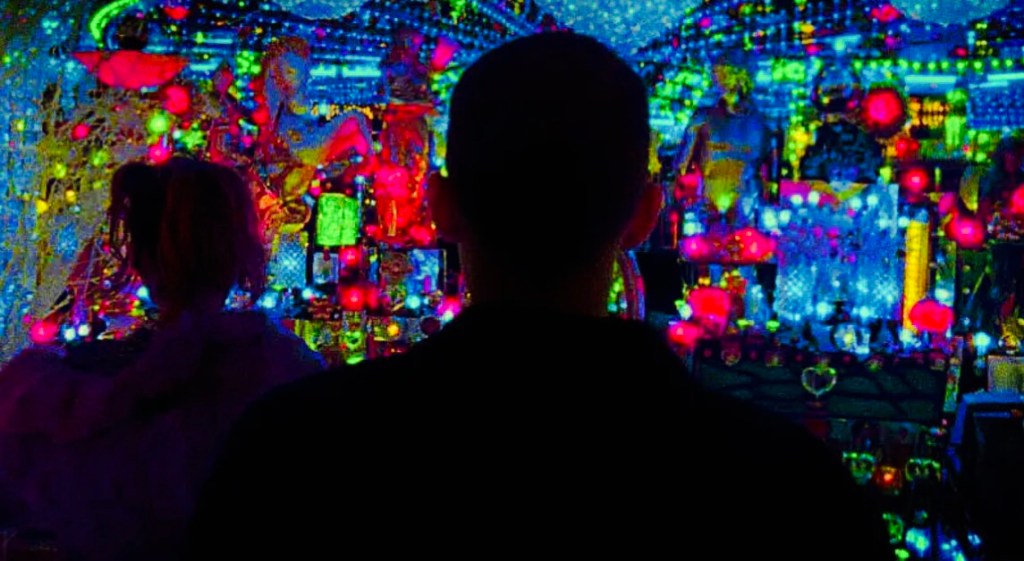
Noé continuously provides scenes of explicit sex as the film moves towards its climax, juxtapositioning shots of virtual pornography with the darkness of Oscar’s parents fatal crash, amongst other disturbing scenes, with some stunning animation all entwined into a visual sensory overload. In the finalè Oscar enters a female body through her belly button, and we see a penis penetrating her vagina from a camera seemingly positioned inside her cervix.
We then see sperm fertilising an egg and Oscar’s soul entering the sperm, becoming bathed in a fiery light before a sharp cut to black. After what seems like eternity we eventually hear a heart beat and the sound of a woman giving birth, as the conscious of Oscar is reincarnated as a baby. He looks at his mothers breast and face through blurry eyes, before watching his umbilical cord being cut as he breaks out into the crying and screaming of a newborn … before the film ends.
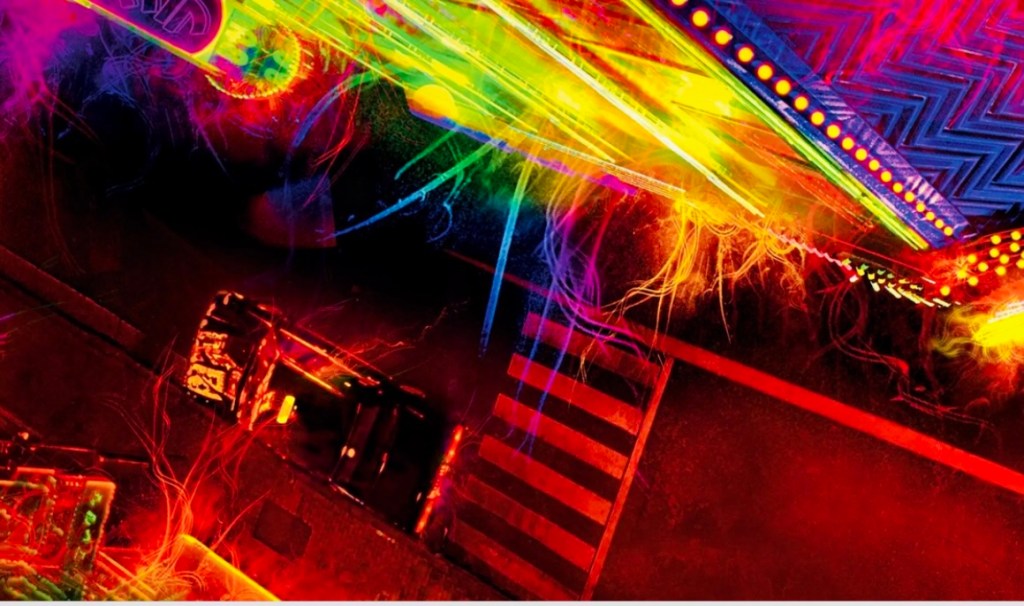
Enter the Void is nothing if not entirely thought provoking and visually stimulating. It can be uncomfortable to watch at times as it sends us into a cosmic trip while making us explore our perception of the afterlife and spirituality. Noé brilliantly merges the viewer’s conscious with that of Oscar’s, creating an artistic statement that is often sleazy and harrowing to extreme levels.
He takes the theme of reincarnation from The Tibetan Book of the Dead, takes unquestionable inspiration from Stanley Kubrick’s 2001: A Space Odyssey, and mixes with graphic exploitation to create a technically brilliant, nightmarish neon fantasy … that might just be his finest work. KZ
Words by Mark Bates

 kult-zilla.com
Leave a comment