


https://amzn.eu/d/b5TAnqi
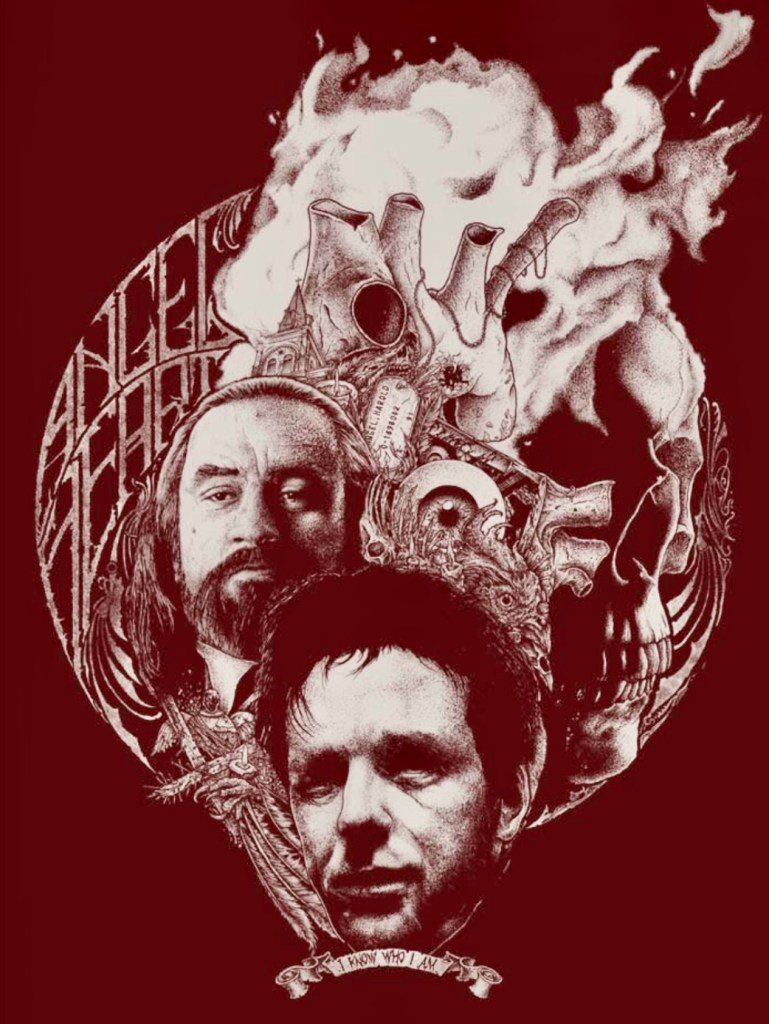
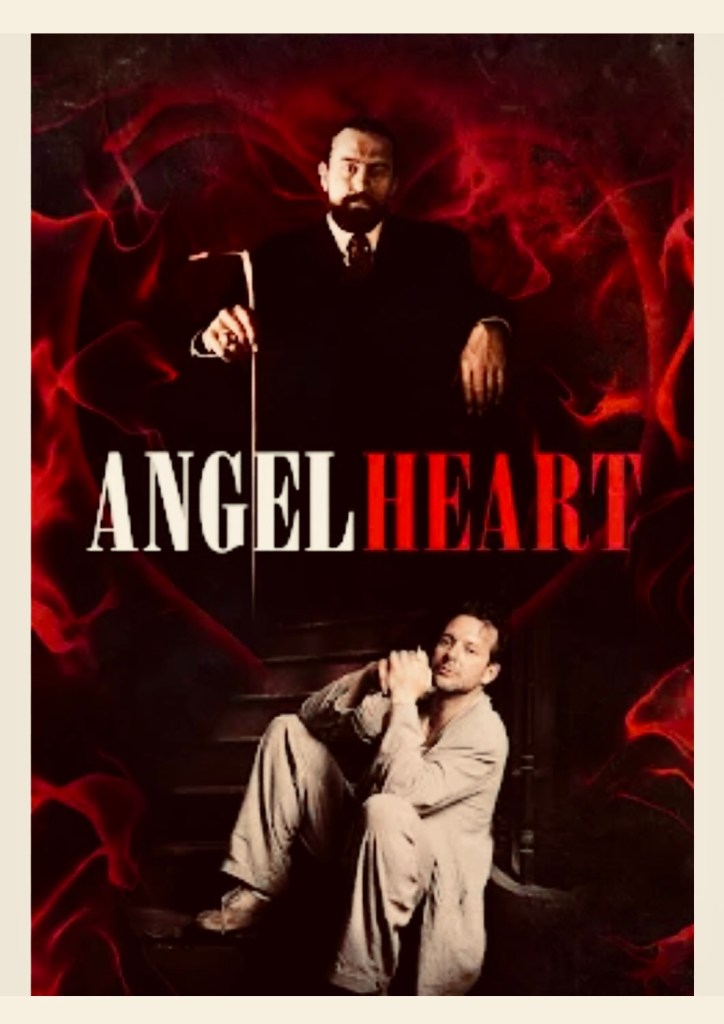
In 1987, British director Alan Parker (Midnight Express) delivered Angel Heart. A dark and psychologically disturbing film which effortlessly blurs the genres between Horror, Thriller, Supernatural and period Film Noir … and it may just be his masterpiece. Based on the 1978 novel Falling Angel by William Hjortsberg, the movie follows the tale of New York private detective Harry Angel – played superbly by Mickey Rourke (Sin City / The Wrestler) – who back in the eighties was one of the most prominent leading men in genre films, having starred in the likes of Rumble Fish (1983), Year of the Dragon (1985) and 9 1/2 Weeks (1986).

The story is set in 1955 where Angel is a typical hard-boiled private eye, a real loner with a certain distain of the society that surrounds him – working whatever small-time jobs he can find for whatever small-time cash he can get his hands on. He is hired by the mysterious Louis Cyphre (Robert De Niro – Taxi Driver) to track down a missing man by the name of Johnny Favorite, a successful pre-war crooner who Cyphre has an unsettled contract with.
The extent of Cyphre’s working relationship with Favorite is kept under wraps, but we learn that the singer was drafted and had fought in North Africa, before becoming injured and returning home from WW2 with amnesia. Cyphre has since lost track of Favorite, who has seemingly disappeared from the care-home he had been receiving treatment in for his chronic shell-shock. And with their contract out-standing, Cyphre is keen to find out whether Favorite is dead or alive.

Angel accepts the missing persons case, and starts by heading to the address of the care-home that Cyphre provides for him. From here, the investigation leads him down a dark path as he begins to unravel the mystery surrounding Favorite’s past, discovering that he was secretly removed from the facility 12 years prior. Angel tracks down the corrupt doctor who had signed his release, and learns that Favorite had returned from the war in a coma, and although he had somewhat recovered, he still suffered from acute amnesia when he had left the home.
As Angel follows the trail, he finds his investigation is fraught with obstacles at every turn. Witnesses he tries to coerce information from end up dead before he is able to find out the truth, often in bizarre and ritualistic ways. While he also finds himself being tailed and attacked by a pair of thugs. He soon realises he is way out of his depth and wants out of the case. But Cyphre isn’t having any of it, and throws a sum of money at Angel that is to good to refuse.

As the story progresses, the viewer discovers new information and clues alongside Angel, and Parker masterfully weaves a textured mystery putting us firmly in the place of the protagonist. Angel is certainly a likeable character to endure the journey with, although he is painted as a deeply flawed anti-hero from the off. Together we learn about the history of Johnny Favorite, his pre-war success as a singer in New York, as well as his links to Louisiana and the more subversive Blues music scene down in New Orleans; where Angel eventually ends up heading.
It transpires that Favorite had relationships with two woman. A wealthy woman by the name of Margaret Krusemark (Charlotte Rampling), a fortune teller who had joined Favourite in New York before moving back home after the war. And another by the name of Evangeline Proudfoot – who had a reputation for dabbling in voodoo witchcraft. After visiting and questioning Krusemark under the premise of someone who simply wanted their palm read, he discovers that Evangeline had died some years before. And on visiting her grave, he instead meets her daughter Epiphany (Lisa Bonet).
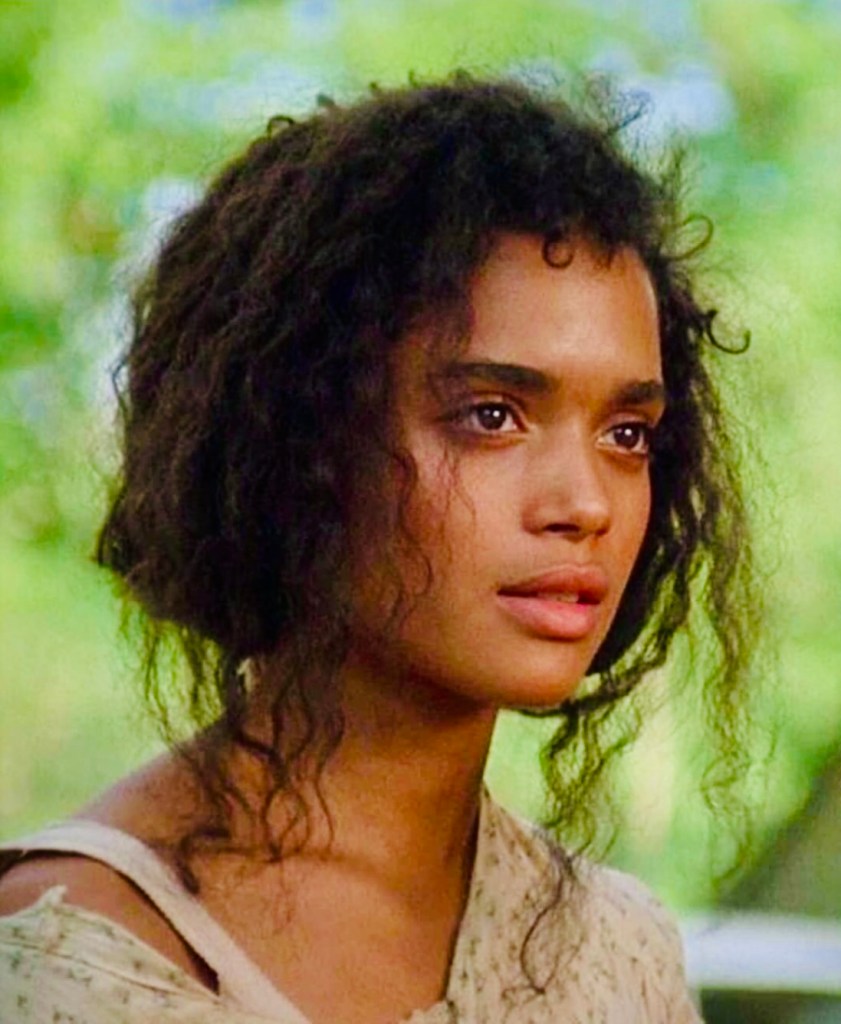
Angel gets drawn deeper into the mystery of Favorite’s disappearance, and uncovers a clandestine world of voodoo magic in which he discovers Epiphany is a Mambo-Priestess … just like her mother was. And he realises that she is also the daughter of Johnny Favorite. Whilst in New Orleans, the body-count begins to mounts up and Angel finds himself of great interest to local homicide detectives. The movie then accelerates to a bloody climax, and one hell of a twist which turns the prospective of the narrative on its head … demanding a re-watch!
Angel Heart is a Neo-Noir classic from the era. With an incredibly strong influence of vintage American Film-Noir movies from the forties and fifties, with Parker paying homage to the genre in both the setup and delivery of his movie, The colour palette is dark with the prominent use of shadows and mood-lighting throughout, while the suspense of the spider-web like mystery builds wonderfully. A sexual energy runs deep throughout the film, and this climaxes with an intense scene between Angel and Epiphany – which is stylishly presented by Parker, in what is an unforgettable sequence.

Robert De Niro performs one of his finest supporting roles as he dips in and out of the story, filmed at a time when he was at the absolute top of his game. He plays the role of Cyphre with a dark and menacing quality, a thoroughly self-centred character who has little regard for Angel’s plight, as the investigation becomes more and more dangerous. While Mickey Rourke masterfully carries the film on his shoulders in the standout role of his career from this era. Lisa Bonet is also superb in her role as Epiphany.
Parker creates a perfectly paced structure that regularly drip feeds pieces of the puzzle and clues that keep the narrative rolling, as the film hurtles towards its thoroughly satisfying conclusion – with the twist that we won’t go into here! Thematically, Angel Heart explores the racial and cultural division of the fifties. It is also drenched in religious symbolism, also exploring Atheism, Paganism … and the darkest of arts.
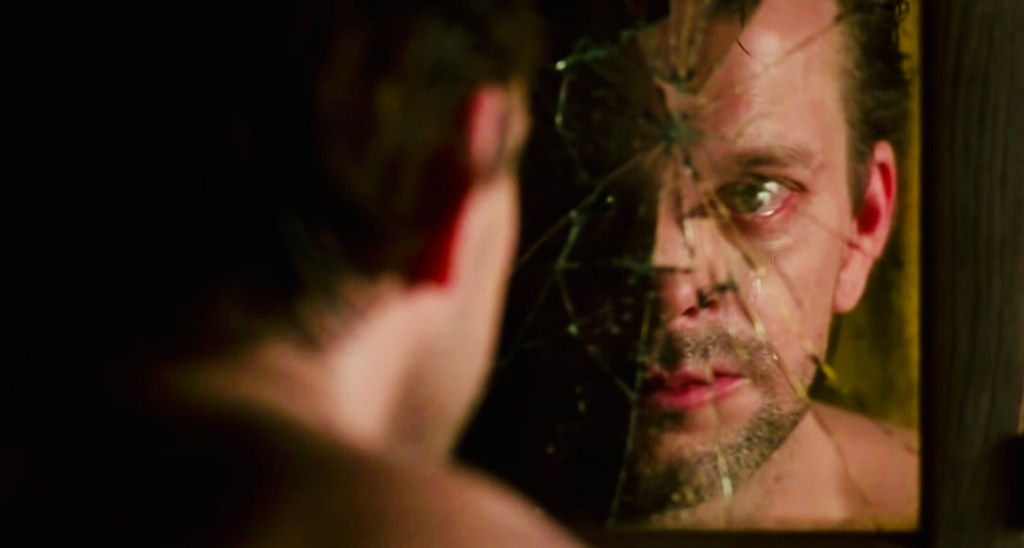
There are recurring images and symbols littered throughout, a descending elevator shaft representing a journey to Hell, mirrors providing a view into one’s soul, rain soaked nights contrasting with the extreme Louisiana heat … While we also dive deep into the subconscious of Angel at times, with a number of intriguing stylised dream sequences. The soundtrack, score and overall theme of music that runs deep through the film is highly impressive, while the sombre and thoroughly bleak ending leaves a lasting impression. All of the film’s components combine perfectly within the melting pot, blending together and creating one of finest Psychological-Thrillers of the last forty years. KZ
Words by Mark T. Bates

https://amzn.eu/d/b5TAnqi
Love Horror Movies !? Enjoy Horror Fiction !? Check out this creepy short-story – the first from our new Horror flash-fiction collection; The Curious Dark Vol. 1:
‘Re:Born’ – by Mark T. Bates (The Curious Dark #1)
 kult-zilla.com
Leave a comment