

https://amzn.eu/d/b5TAnqi
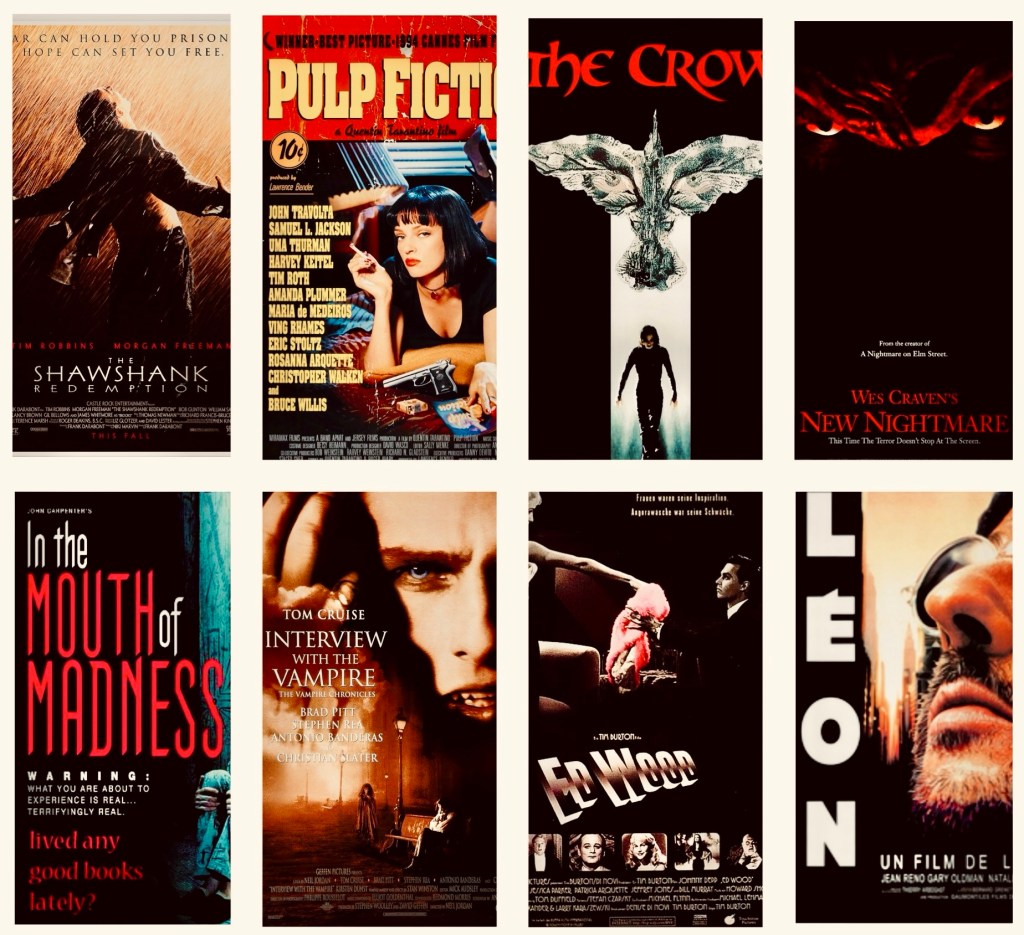
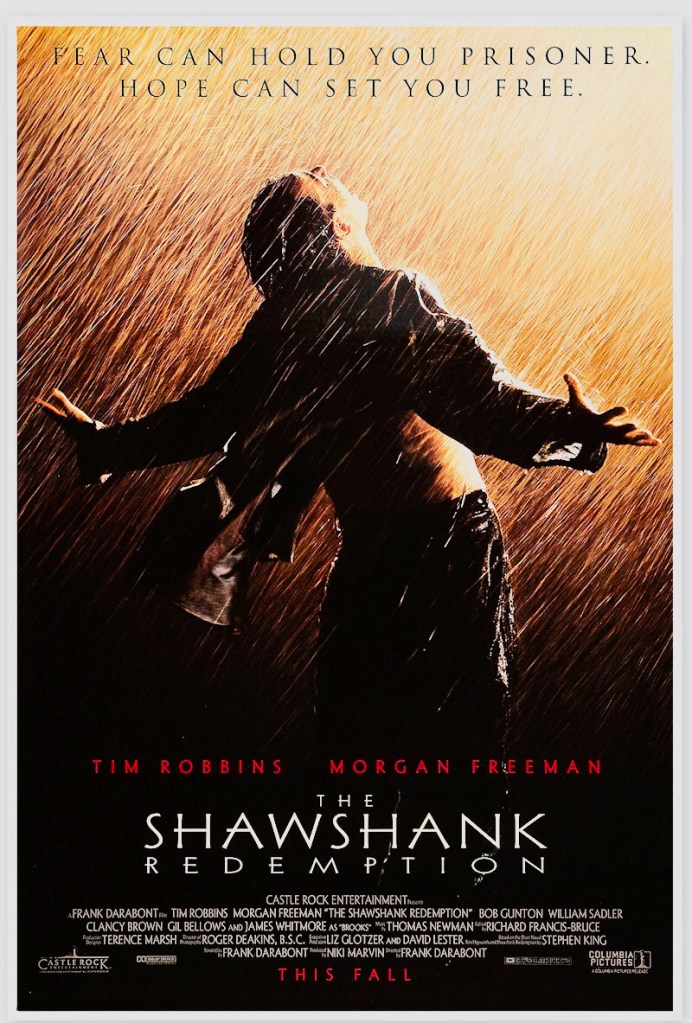
1. // The Shawshank Redemption
Stephen King is unquestionably the greatest living Horror author and is in the conversation as being one of the most influential writers of the last 50 years, while the relationship between his written work and the silver-screen has been ever-present. His first novel Carrie (1974) was successfully adapted into a film two years later by Brian De Palma (Scarface), and King’s name was projected into mainstream culture. From here his novels would go on to create some of the finest Horror movies of the era.
Stanley Kubrick’s The Shining (1980), John Carpenter’s Christine (1983) and David Croneneberg’s The Dead Zone (1983) are just a few of the best of them, but King has always been far more than just a writer of Horror. He has always dabbled within the multiple genres of speculative fiction – Crime, Suspense, Fantasy, Sci-Fi – and a notable adaptation of one his coming-of-age novellas The Body, was turned into the 1986 movie Stand By Me (directed by Rob Reiner – Misery).
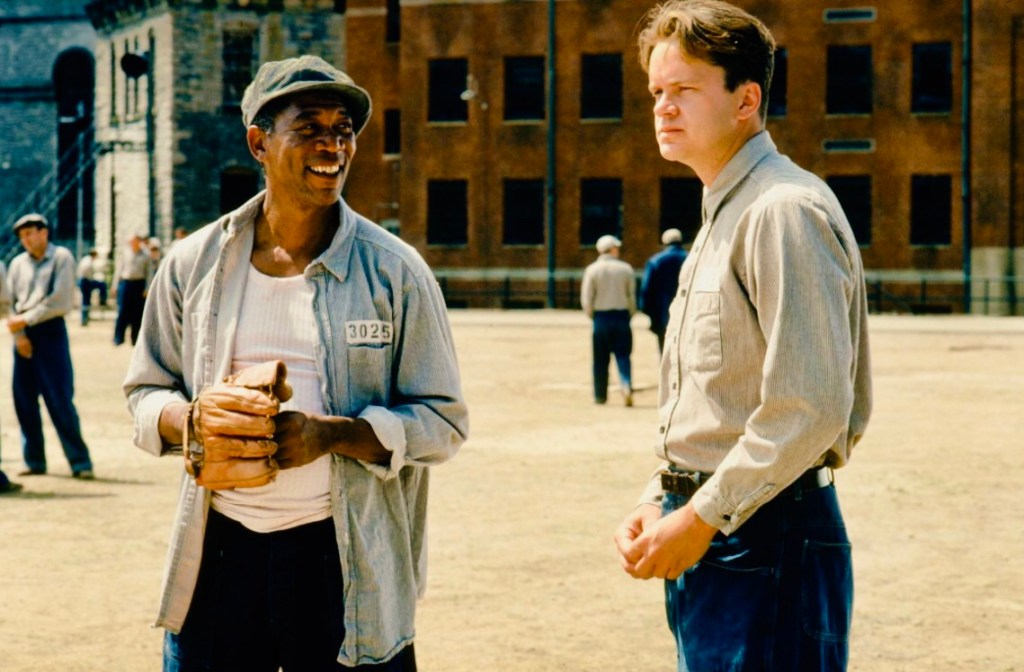
The Body was one of four novellas in King’s 1982 collection Different Seasons, and another story was Rita Hayworth and Shawshank Redemption. A charming tale of hope, set within the confines of the Shawshank prison, and following the friendship between two inmates – both convicted of murder – Ellis ‘Red’ Reddings and Andy Dufrense. The tale would be adapted for the screen by Frank Darabont (The Green Mile / The Mist) who would create one of the great dramas of the era, and a movie in The Shawshank Redemption, which has near perfect scores across ranking sites such as IMDB and Rotten Tomatoes.
Tim Robbins (Jacob’s Ladder) stars as Dufreyne, the mild-mannered banker accused of murdering his wife and her lover. And we follow his journey navigating his time in Shawshank alongside fixer Red – played by Morgan Freeman (Seven). Their performances, along with the supporting cast, are spot on. And the way in which the story magically weaves across the years is perfectly transformed from King’s strong source material by Darabont. This is a true cinematic masterpiece if ever there was one. The film of 1994, and quite frankly one of the films of the decade. KZ
2. // Pulp Fiction

Quentin Tarantino had already made his mark on modern cinema in the nineties, when his directorial debut Reservoir Dogs (1992) became an instant cult-classic that spilled over into the mainstream. His character led crime drama featured an ensemble cast including the likes of Harvey Keitel (Bad Lieutenant), Steve Buscemi (Fargo) and Tim Roth (Hoodlum), and quickly became renowned for its slick dialogue, and controversial gratuitous violence.
Tarantino had also experienced some success as a screenwriter, with director Tony Scott’s True Romance (1993) having also been conjured up within the mind of the former video-store clerk. But it would be with his next movie – Pulp Fiction – that he would cement his legacy as one of the hottest, and most controversial, film-makers of the decade. Pulp Fiction acts as a fine companion piece to Reservoir Dogs, following Tarantino’s debut in tone and style, while just about ramping up every aspect to maximum overdrive.
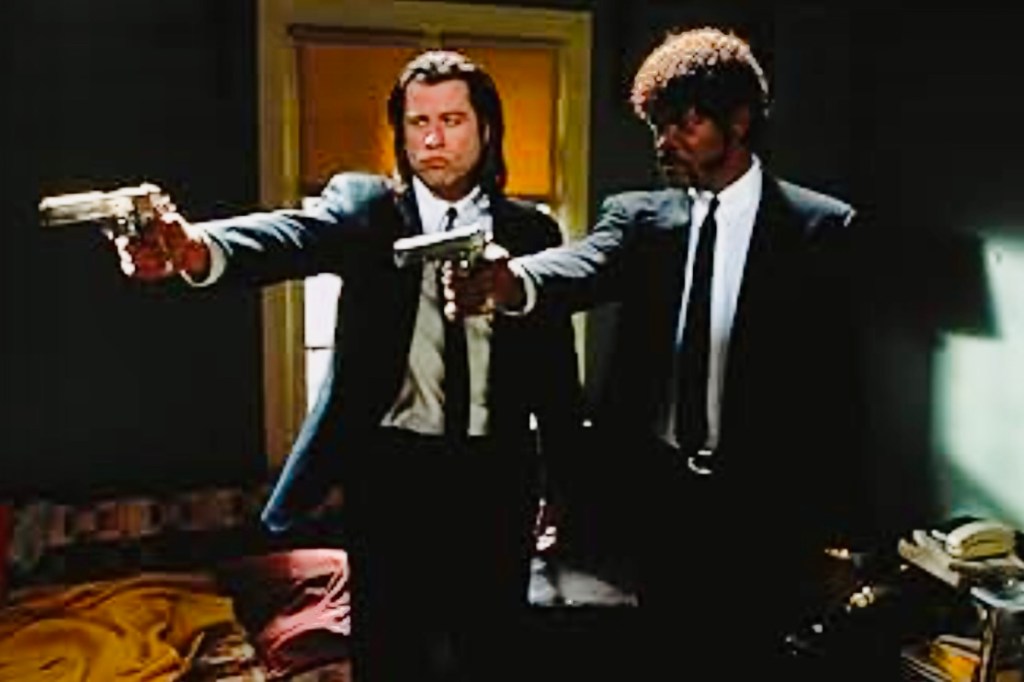
The epic LA crime flick entwines a number of different stories, jumping around in timeline with its non-linear narrative, and weaving them together in Tarantino’s unique way. Another ensemble cast sees Samuel L. Jackson (Star Wars I-III), and a career resurgent performance from John Travolta (Carrie) – working as two hoodlum enforcers for crime boss Marcellus Wallace (Ving Rhames – Dawn Of The Dead). They star alongside shady boxer Butch (Bruce Willis – Die Hard), Marcellus’s wife Mia (Uma Thurman – Kill Bill), and small-time hold-up thieves Pumpkin (Tim Roth) and Honey Bunny (Amanda Plummer).
Tarantino also finds time for the likes of Harvey Keitel and Christopher Walken (The Dead Zone) to feature in a movie which became the R-rated pop-culture hit of the era. Blending Tarantino’s super smart script and narrative, with a vintage and iconic soundtrack. Alongside a cast of memorable characters, with excellent performances from each cast member. The film also features controversial violence and a depiction of drug use which left its mark on audiences, well and truly setting Tarantino up for an iconic career. KZ
3. // The Crow
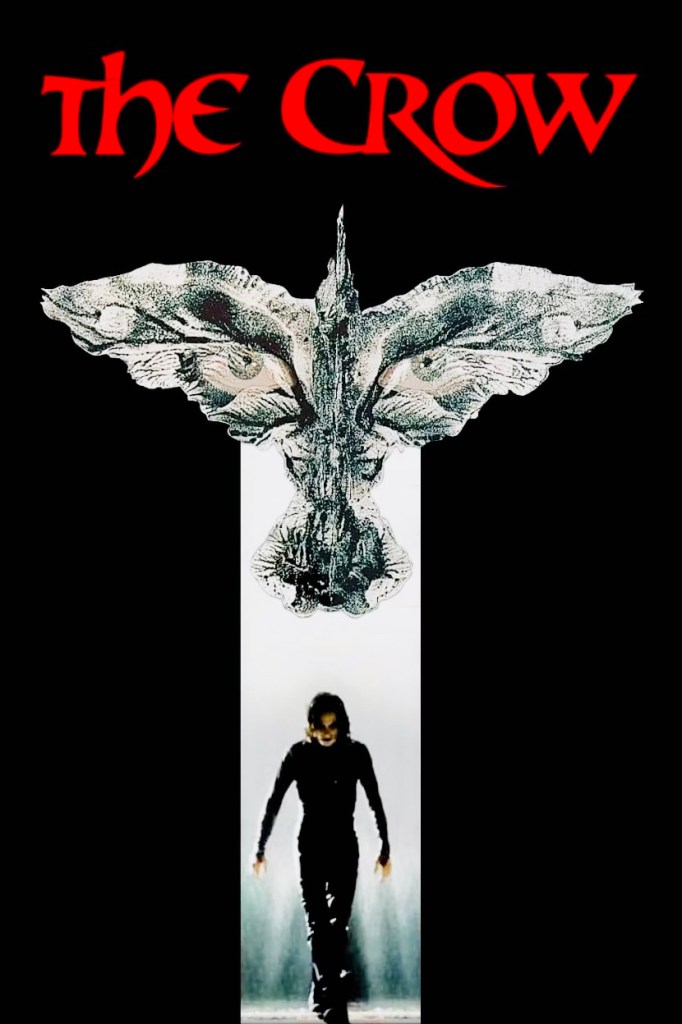
The Crow was a renowned supernatural-fantasy comic book series written by James O’Barr, which began in 1989 and soon became a cult-classic. Telling a story of retribution, when rock-musician Eric Draven is brought back from the dead by a mystical crow, to exact revenge on the gang of thugs that murdered him and his fiancée. The movie would arrive five years later, directed by Alex Proyas (Dark City) – and would star Brandon Lee (Showdown In Little Tokyo) in his final role.
The son of Kung Fu movie legend Bruce Lee would notoriously be killed on the set of The Crow, while filming one of the movies key action scenes. Shot with a live bullet in a tragic accident and making the film infamous in the process. Naturally tarnishing the production, but ultimately enhancing the reputation of what was a highly impressive performance by Lee, in a fine film that would surely have otherwise propelled his career onto the next level.
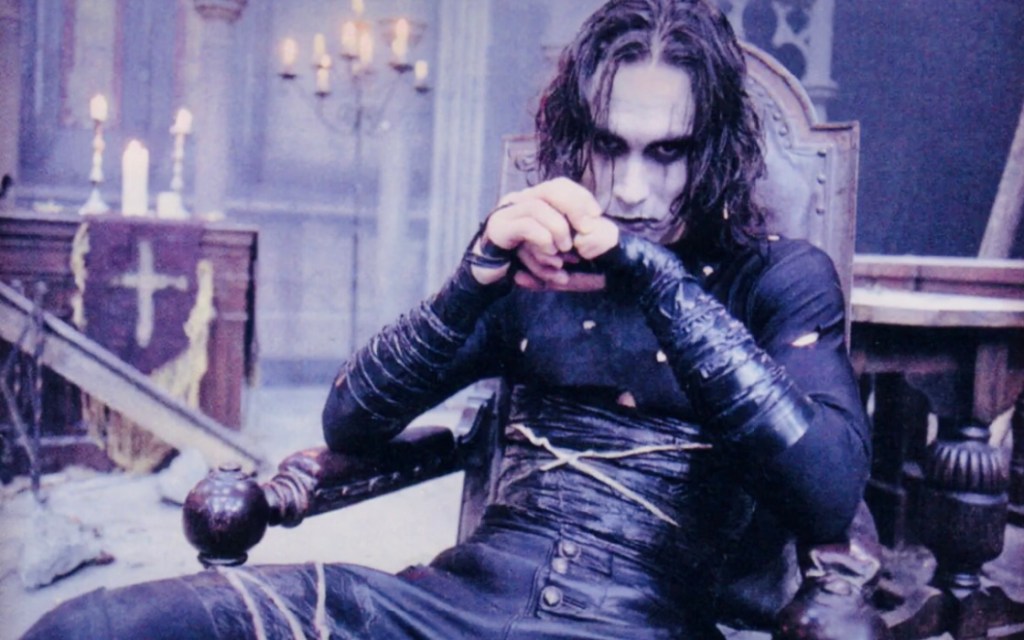
So The Crow provides a fitting tribute to the actor, a role defined by the tragedy, but also a performance defining role in a film that like it’s source material, would become an instant cult-hit. A stylishly dark-gothic fantasy movie, drenched in atmosphere and with a fine supporting cast including Michael Wincott (Robin Hood: Prince Of Theives) and Ernie Hudson (Ghostbusters). Lee’s portrayal of Draven cuts an iconic figure which is instantly recognisable today. The symbol of a gothic-hero with long dark hair and makeup, war-paint within the narrative of his bloody revenge.
The Crow was also well renowned at the time for its rock-soundtrack, featuring a series of iconic songs from the likes of The Cure, Stone Temple Pilots, Pantera and Nine Inch Nails – an album which would hit number one on the Billboard 200, and has sold nearly 4 million copies in America alone. Making it one of the highest grossing movie soundtracks of the era, and helping enhance the reputation and aura surrounding this much loved film. KZ
4. // Wes Craven’s New Nightmare
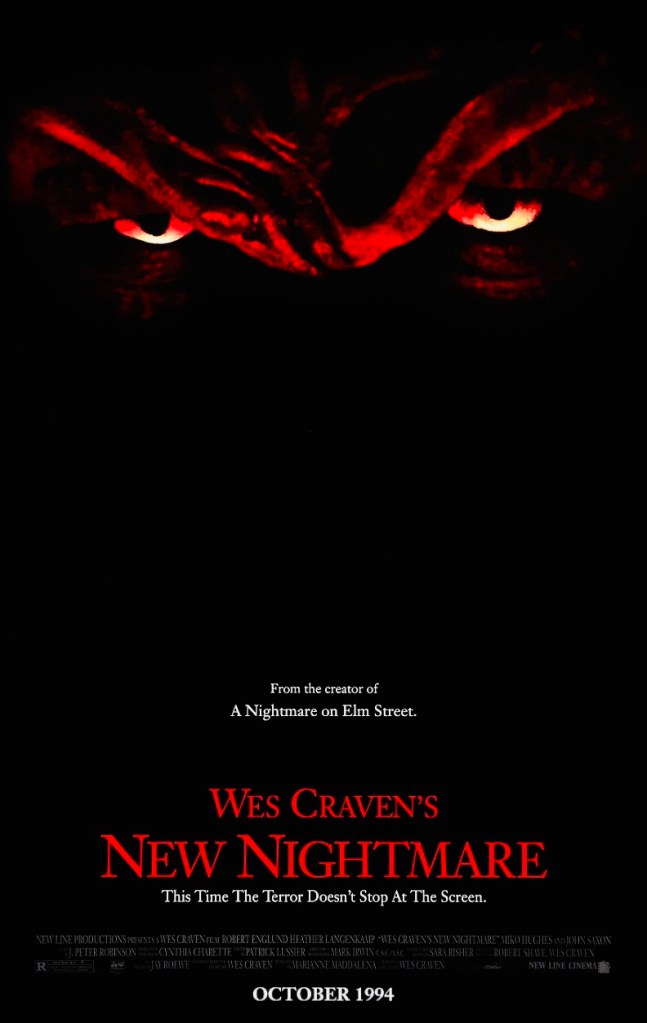
With A Nightmare on Elm Street in 1984 – writer and director Wes Craven shook up the slasher genre by creating a masterpiece in originality, and one of the icons of terror in the razor fingered child murdering stalker of dreams – Freddy Krueger (Robert Englund). But after signing away the rights to the franchise and falling out with producers New Line Cinema, his involvement in the proceeding five sequels amounted only to writing an early draft for Dream Warriors (Part 3 – 1987).
While he watched on as the series he created became financially successful, and a major part of popular culture at the time. While also observing the quality of the films rapid decline – with the character of Freddy becoming a parody of his former-self. However, when the series hit rock bottom with Freddy’s Dead: The Final Nightmare (1991) – New Line would once again turn to Craven and ask him to come on-board to create one last hurrah for the character. Laying the original run of films to rest, while also handing him complete creative control. And what Craven would produce with his thoroughly original and progressive premise on New Nightmare, would prove to be one of the stand out movies in the franchise.
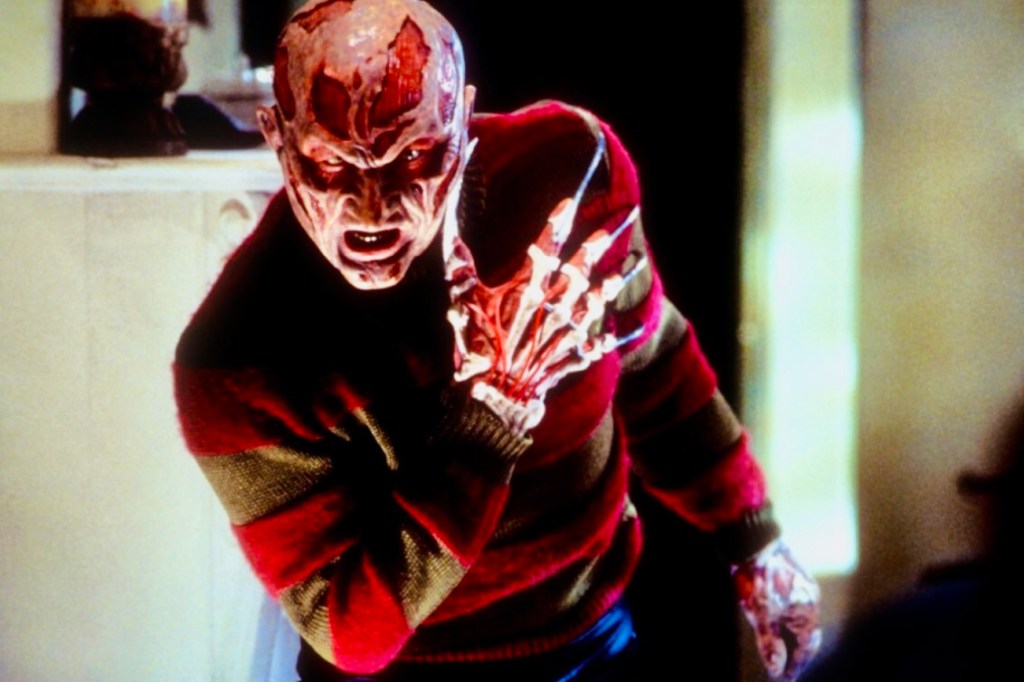
Often described as the pioneering film in meta-Horror story telling, New Nightmare moves the narrative into the real world – with actress Heather Langenkamp (Nancy Thompson in Parts 1 and 3) playing herself in this Hollywood set movie. Heather lives with her F/X artist husband Chase and their young son Dylan (Milo Hughes – Pet Sematary), and begins to become disturbed by her past involvement in the Nightmare films, as she is harassed by prank phone calls from someone seemingly pretending to Freddy.
Strange links to the movies and the fictional killer start to infect her life, while Dylan also begins to become haunted by the spirit of Freddy. Heather is approached by New Line executives and asked to come back to make one more Nightmare movie, that Wes Craven (who also plays himself) is writing. But art begins to imitate life, and the lines of fiction and reality begin to blur for all involved in the film – with murderous consequences within an often captivating mystery. KZ
5. // In The Mouth of Madness
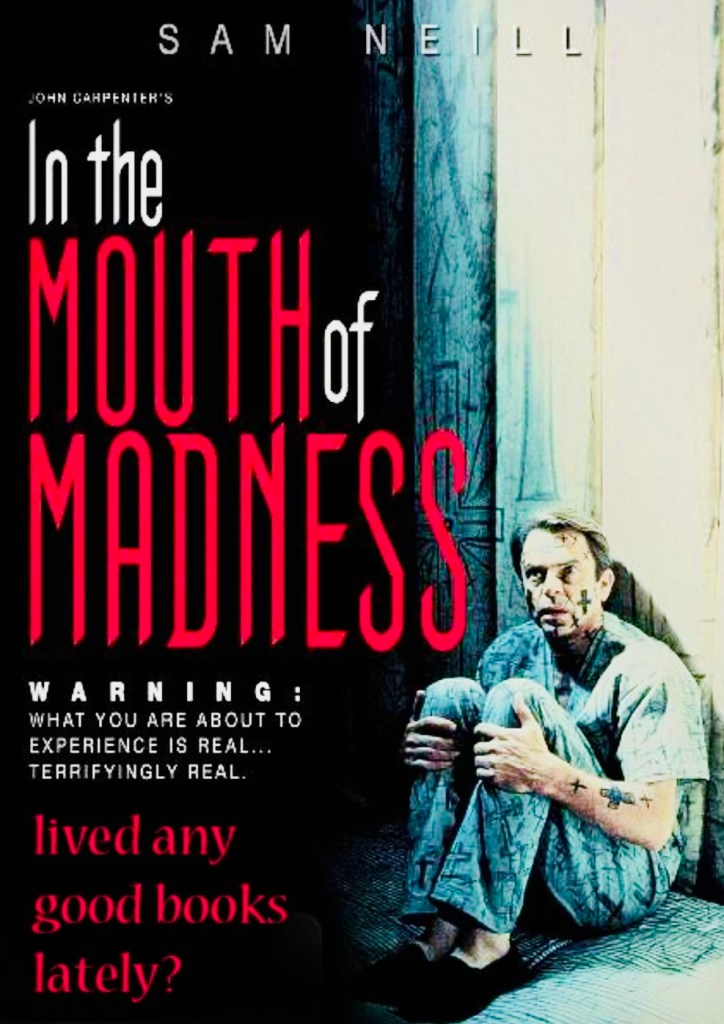
A pumping Metallica-esq riff opens what is arguably Horror-master John Carpenter’s (Halloween / The Thing) finest, and thoroughly weirdest film of the nineties. The film-maker is quite rightly a legend of the genre. His run from the late seventies to the late eighties is one of the best in the business, but it is argued that the quality of his output began to dip in the following decade, as Carpenter ultimately appeared to become somewhat disillusioned with Hollywood. In The Mouth Of Madness begins with protagonist John Trent (Sam Neil – Jurassic Park) being dragged kicking and screaming to a cell in a psychiatric hospital.
He begins experiencing horrific flashbacks, before being visited by a psychiatrist, with whom he begins to tell the story of how he has arrived there. Trent is an insurance investigator, played as a film-noir style private detective, who is asked to investigate a claim that has been lodged by a publishing company. The case is that of a missing renowned Horror-author – Sutter Cane (Jürgen Prochnow – Dune) – who has disappeared along with the final manuscript of his soon to be released, highly anticipated new novel – In The Mouth Of Madness.
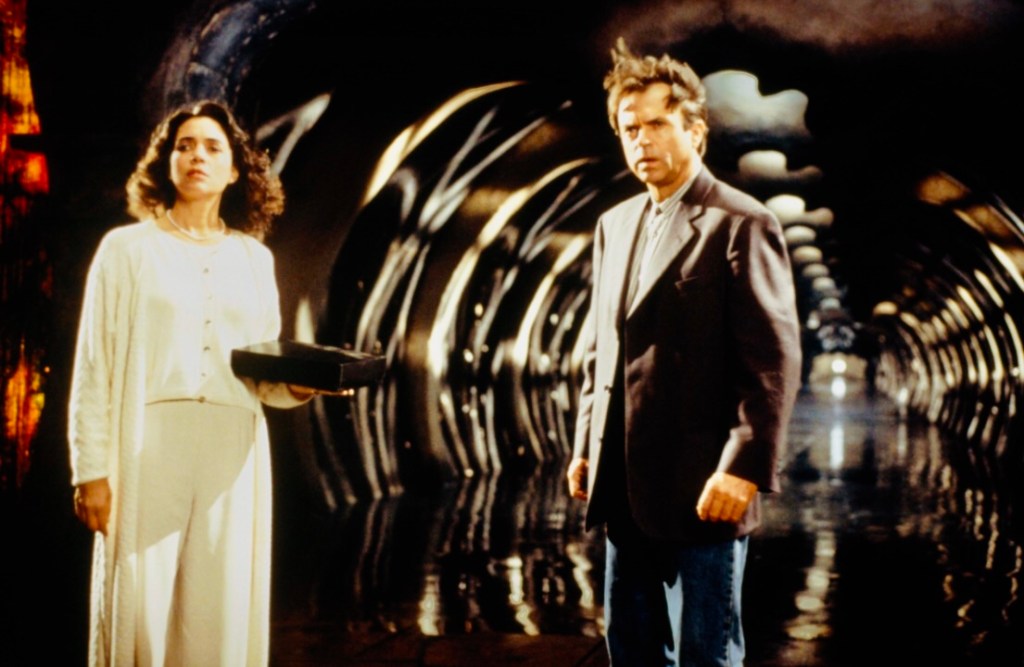
From here an enjoyable mystery which largely pays homage to the works of both H.P Lovecraft and Stephen King unravels … along with the investigator’s sanity! By piecing together sections of the front pages of Cane’s novels, Trent creates a map which takes him to the town of Hobbs End. A thought to be fictional location where many of Cane’s stories are set. He is joined by Cane’s editor Linda Styles (Julie Carmen – Fright Night 2) and they discover that the town is full of mysterious characters, seemingly lifted from the pages of Sutter Cane’s novels.
As time goes on the characters begin to appear more demonic to Trent, blurring the line between reality and fiction … and subsequently sanity and insanity. Driving the descent into madness of the initially cynical main character, who at first believes the horrific fantasy unfolding around him is part of an elaborate set up. From here the movie plays out to an inter-dimensional Horror story with an impending apocalypse. Which is wonderfully over the top with great practical F/X work, and with Carpenter clearly having a hell of a lot of fun during the film-making process. KZ
6. // Interview With the Vampire
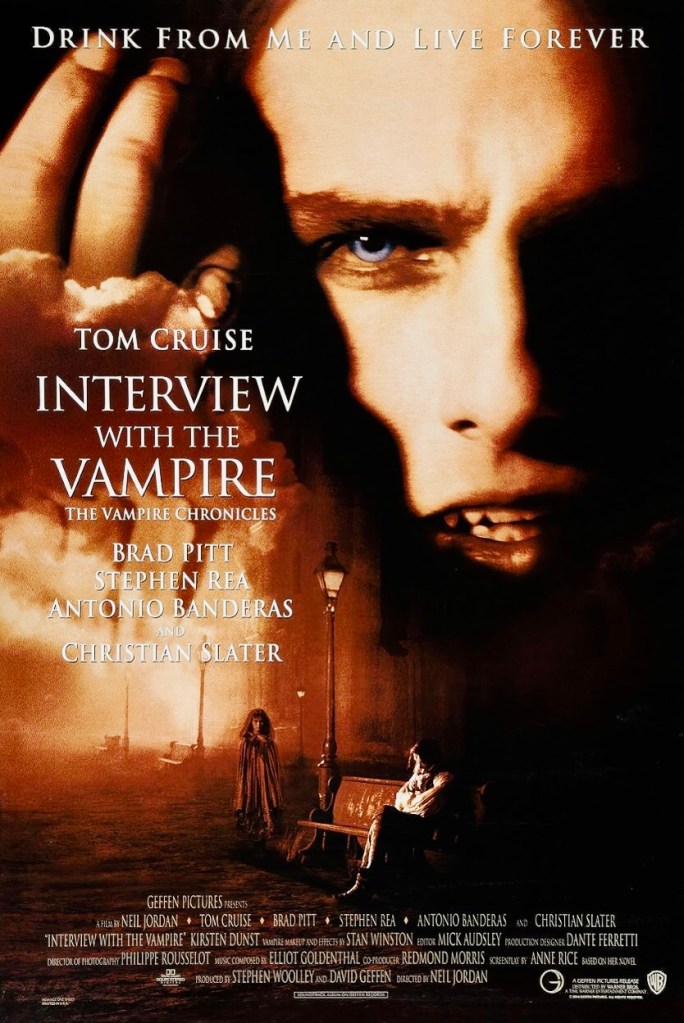
Interview With The Vampire is a beautifully made neo-gothic take on the vampire legend, directed by Neil Jordan (The Crying Game) – and lifted from the pages of Anne Rice’s classic 1976 novel of the same name. The film stars a superb nineties cast with Brad Pitt (Fight Club) starring as Louis, the modern day interview subject of journalist Malloy (Christian Slater – True Romance), where he recounts his life-story following the events of being turned in 1771, and subsequently tutored in the dark arts by the vampire Lestat (Tom Cruise – Rain Man).
The natural instinct of Louis is to initially fight against what he has become, by ignoring the lessons of Lestat and the necessity to kill humans. Initially choosing to feed on animals as he battles the vampire urge. He rebels against Lestat, and sets fire to his home in an attempt to flee the clutches of the monster. Kirsten Dunst (Spiderman) then co-stars as Claudia, the child Lestat turns in order to try and keep Louis from leaving him.

Her character takes to her fate far more naturally, sharing Lestat’s enjoyment of the vampire lifestyle, before she must come to terms with the realisation she will never grow old – fated to remain immortal in the body of a child forever. Claudia’s natural instinct is more viscous than that of Louis in every way, and she attempts to kill Lestat in order to provide them both their freedom. But ultimately the older vampire’s powers prove too strong. This sets off a brutal chain of events before Louis and Claudia travel the world in search of more of their kind.
In 1870 they arrive in Paris where they meet the oldest living vampire – Armand (Antonio Banderas – Desperado), along with his society of immortals who live in the city’s underbelly. The story then follows Louis through to the modern age before coming full circle as he sits being interviewed by Malloy in the present day. Interview With The Vampire arrived hot on the heels of Bram Stoker’s Dracula (1992), in a period of cinema which continued to deliver a string of fine films, in order to satisfy a resurgent fascination with the vampire sub-genre. KZ
7. // Ed Wood
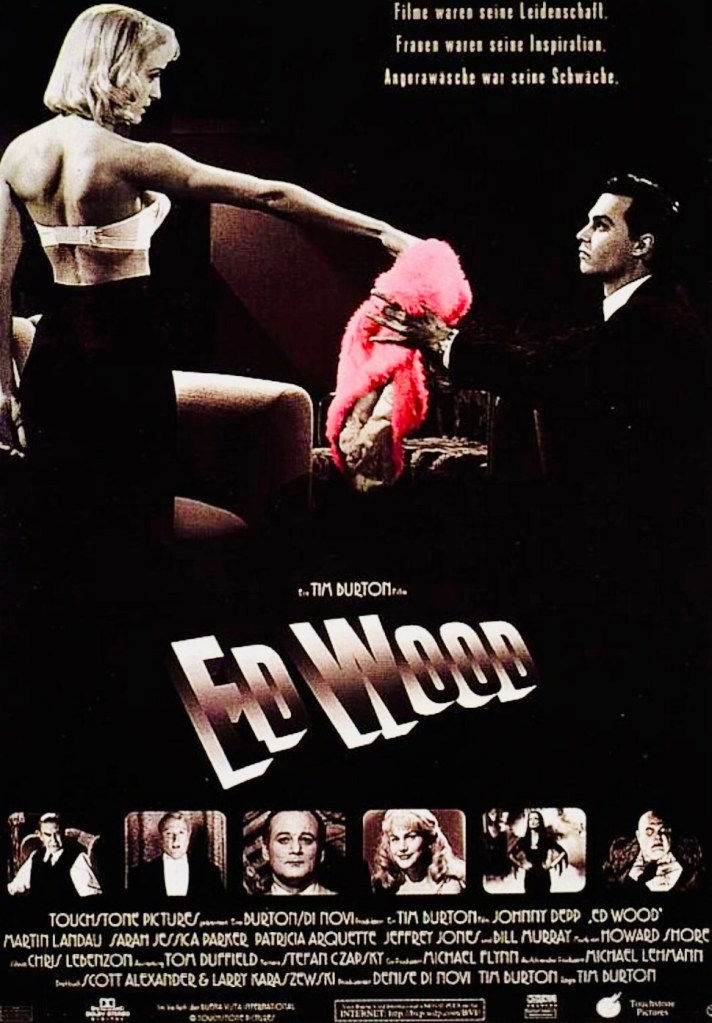
Ed Wood is director Tim Burton’s tribute to the renowned B-movie film-maker, whose run of cheap Sci-Fi / Horror flicks in the 1950s – which included Bride Of The Monster (1955), Plan 9 From Outer Space (1957) and Night Of The Ghouls (1959) – saw him achieve a renowned cult-status in the genre. The cross-dressing writer / director lived a colourful life, and one that Burton brought to our attention with this charming and funny homage.
Presented entirely in Black and White in order to capture the feel of the fifties, Ed Wood stars Johnny Depp in the lead role. An actor who had already worked with Burton on Edward Scissorhands (1990), and would of course go on to work with him a number of further times on films including Sleepy Hollow (1999) and Dark Shadows (2012). And his performance as Wood captures a jittery and socially-awkward man, always with an uplifting optimism that whatever project he is working on is going to be the one that takes his career to that next level.
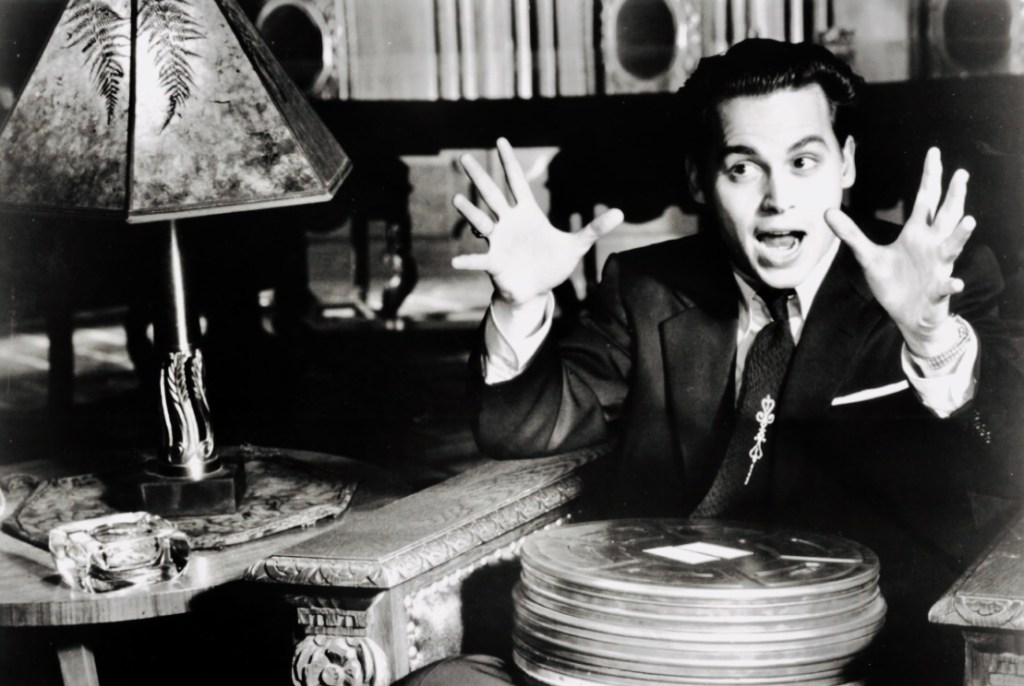
For anyone interested in genre film-making and it’s history, Ed Wood provides a highly intriguing look back at a very specific niche, and is memorable for featuring Martin Landau (North By North West) as the legendary Hungarian Dracula actor Bela Lugosi. Wood and Lugosi met in 1952, and the iconic 70-year-old star was out of work and addicted to Morphine. He would go on to appear in Wood’s movie projects prior to his death in 1956.
Ed Wood also features a fine supporting cast including Sarah Jessica Parker (Hocus Pocus), Patricia Arquette (True Romance), Jeffrey Jones (Beetlejuice) and Bill Murray (Ghostbusters). And although it may not be one of the first films thought of when considering Burton’s back catalogue. It is certainly one of his most charming, and would win Landau an Oscar for Best Supporting Actor, as well as a Best Makeup Oscar for Rick Baker (An American Werewolf In London). KZ
8. // Léon: The Professional

Luc Besson is a French film-maker who had moderate success in his homeland during the eighties, with films such as Subway (1985) and The Big Blue (1988) – before his crime-drama La Femme Nikita (1990) started to gain him notoriety in Hollywood. Léon: The Professional would subsequently be Besson’s first English-language movie, and it would star his regular collaborator, French-actor Jean Reno in the title role – as a master hitman living in the Little Italy superb of New York.
Léon forms an unlikely bond with his twelve-year-old neighbour Mathilda, played by Natalie Portman (Black Swan) in her debut role – when her family, including her abusive low-life father, is murdered by the drug dealer he is holding dope for. The dealer is in fact a corrupt DEA agent, played by a fantastic Gary Oldman (Dracula), in a show stealing performance from the actor who was at the very top of his game at the time.
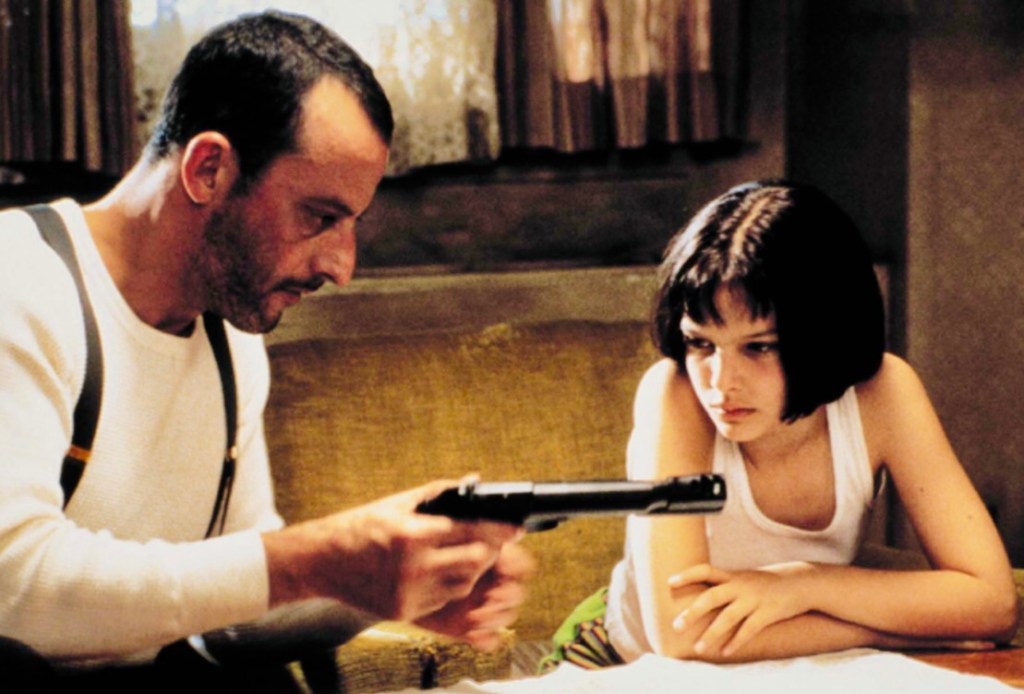
With no-one else to turn to, Mathilda latches onto her allusive neighbour, and discovering his line of work begs him to take her under his wing, and teach her the secrets of his nefarious business. The heart of the story sits with the blossoming relationship between he two characters, which can be perceived as a little strange at times – as the child develops an infatuation with her new role model. However Léon ensures their friendship remains just that, as he ultimately becomes a father figure for the troubled orphan.
Léon: The Professional (known simply as Léon outside of the USA), was a critical success at the time and made a significant Box-Office profit, however remains controversial due its Lolita style depiction of the young girl in Mathilda – along with the controversies surrounding Besson himself, who has faced accusations in his career and has come under criticism for marrying his wife Maïwenn, when he was 33 and she was just 16. However Léon remains a thoroughly intriguing thriller from the era, and Besson would go on to win a number of prestige awards for his next film – The Fifth Element in 1998. KZ
Words by Mark Bates
https://amzn.eu/d/b5TAnqi
If you enjoyed this feature – now check out our Greatest Movies list of 1984 :
Kult-Zilla’s – 10 Greatest Movies … Of 1984!
 kult-zilla.com
Leave a comment