

https://amzn.eu/d/b5TAnqi
Along with A Nightmare On Elm Street, Friday The 13th is the Slasher-Horror series that defined the eighties. Beginning with a low budget Horror movie first released in 1980, that would spawn a franchise dropping almost one movie per year – becoming a Horror pop-culture phenomenon in the process. The series is iconic for introducing the summer-camp Slasher setting, nowadays a standard Horror trope. While also introducing an icon of Horror in Jason Vorhees – the hockey masked, machete wielding madman.
The original movie sets up the lore of Jason as a young mentally challenged boy, drowned at Camp Crystal Lake in 1958. Neglected by the camp-councillors who should have been watching him, while his mother Pamela Vorhees worked in the kitchen. It was filmed in a kind of whodunnit style, as in the modern day a new generation of councillors are murdered one by one. With the killer never being shown to the audience, and the film utilising a POV camera style.

Friday The 13th was conceived by Sean S. Cunningham, who at the time was best known for producing Wes Craven’s directorial debut The Last House On The Left (1972). Inspired by the enormous financial success and style of John Carpenter’s Halloween (1978), Cunningham wanted to replicate the simple Slasher concept, while increasing the gore of the kills in order to shock, scare, and really capture the imagination of a new generation of Horror fans. Cunningham brought in practical FX wizard Tom Savini to work his magic, with the artist – who had worked on George A. Romero’s Dawn Of The Dead (1978) – really heightening the realism of the film’s gore.
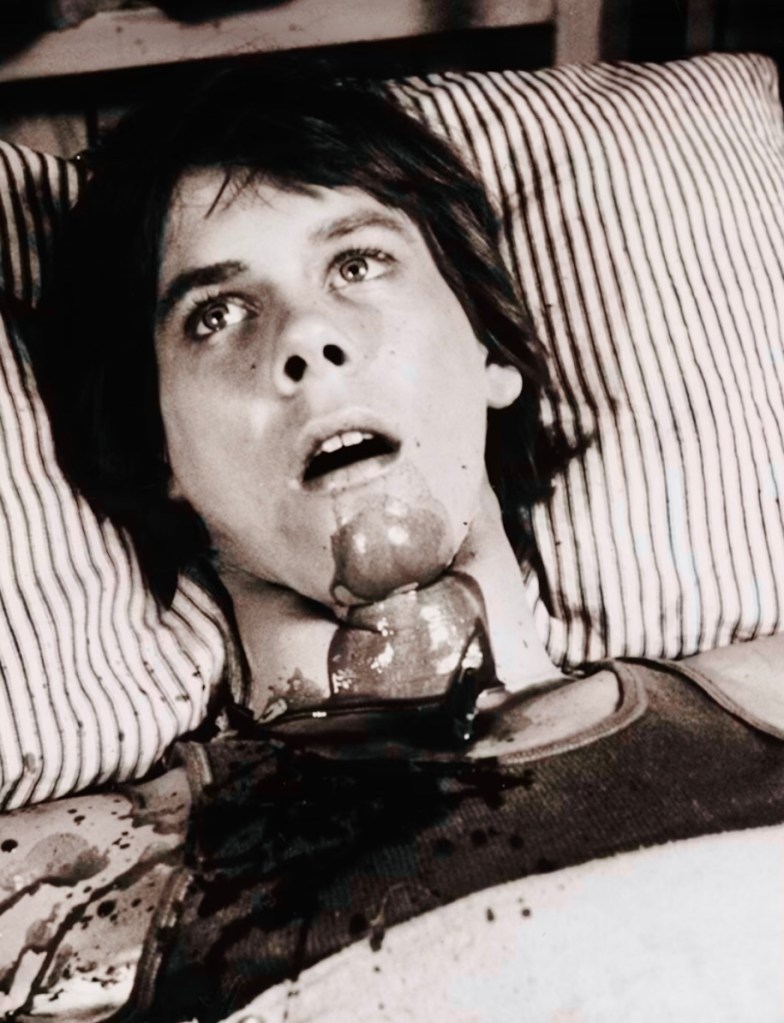
While composer Harry Manfredini creates a very Psycho (1961) like score, to help capture the classic-Slasher mood. Friday The 13th also provided an early outing for a young Kevin Bacon, who is killed in the most hideously memorable fashion, and would of course go on to be one of the leading young actors of the eighties and nineties – starring in such films as Footloose (1984), Tremors (1990) and Flatliners (1990). It would also star vintage American TV actress Betsy Palmer as Pamela Vorhees, and a final act twist (spoiler!) unveiling her as the killer. The final sequences also very much evoke Hitchcock’s Psycho in their tone and delivery, as Pamela talks to herself as Jason; “Kill her Mummy!”
It can often be overlooked in the grand scheme of the franchise that Jason Vorhees is not in fact the killer until the 1981 sequel. It is the long suffering mother of her (presumed dead) child that takes revenge on those who dare to re-open Camp Crystal Lake. And she receives her commupence by way of decapitation at the hands of final-girl Alice (Adrienne King) at the end of the movie. Friday The 13th is incredibly simple in it’s concept, relying on both the gore of the murders as well as sex to titillate the audience. And in addition to the original script (and inspired by Brian De Palma’s 1975 adaptation of Stephen King’s Carrie) – the film delivers a final jump-scare, as the deformed child figure of Jason leaps from the lake and drags Alice into the water.
But was this just a dream? Inspired not only by Carpenter’s Halloween, but also the Italian Giallo-style movies of the sixties and seventies, Cunningham created Friday The 13th with a budget in the region of just $550,000. And it would go on to gross over $50 million in the box office. A sequel was accelerated into production to capitalise on the financial success for Paramount Pictures, and Friday The 13th: Part 2 would arrive the following year. And inspired by their revamped ending, after chopping off the head of their original killer before the final credits of the first movie rolled – they had a plan as to who would slot in as their new antagonist.
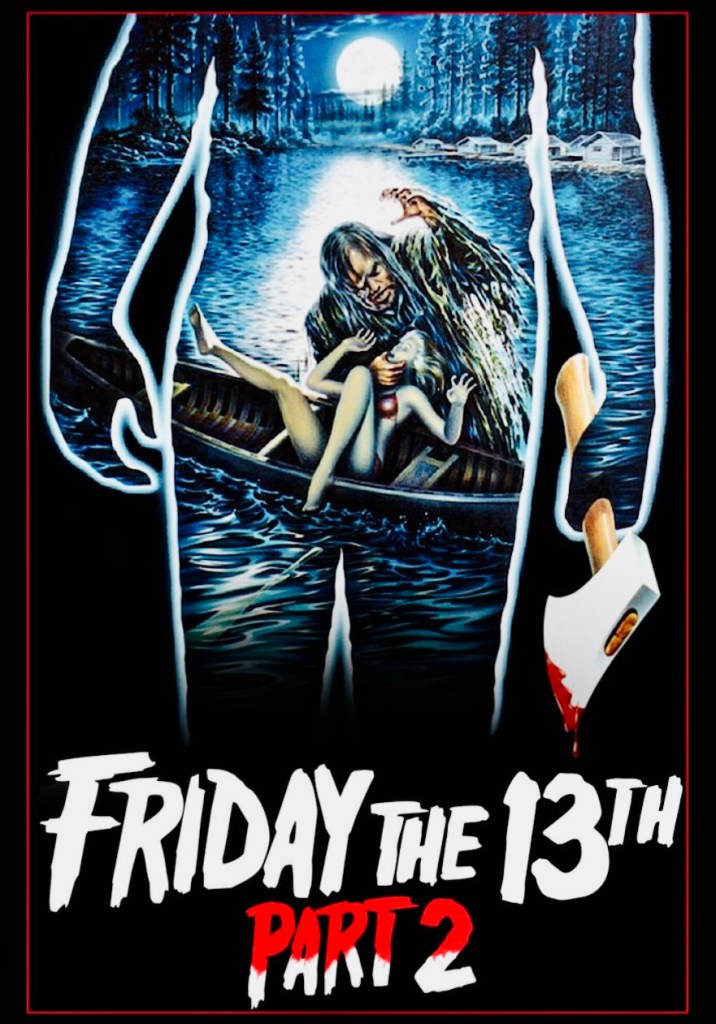
So while Friday The 13th (1980) set up the lore of the child Jason Vorhees, seemingly drowned and sending his deranged mother on a murder spree, it is Part 2 (1981) that introduced us to the adult Jason (Warrington Gillette), and the origins of the iconic-killer we know today. Although not quite exactly as we know him. Framed very much in the mould of Halloween’s Michael Myers, this silent deadly assassin first tracks down Alice – the killer of his mother. Stalking her in her home, in an opening sequence that also flashes back to remind the cinema going audience the events of the first film.
But it transpires that Jason did not drown as first thought. In a spooky camp-fire story the cast are told that his body was never found, and that he has actually been living in the woods surrounding Camp Crystal Lake for all these years. And having witnessed the death of his mother, he was now primed to take his own revenge. After murdering Alice he returns to his home, and five years later begins killing when his peace is interrupted by a new set of unsuspecting camp-counsellors. But this isn’t the Jason we know and love. As having not yet acquired his iconic Hockey Mask, he simply wears a basic sack over his head.
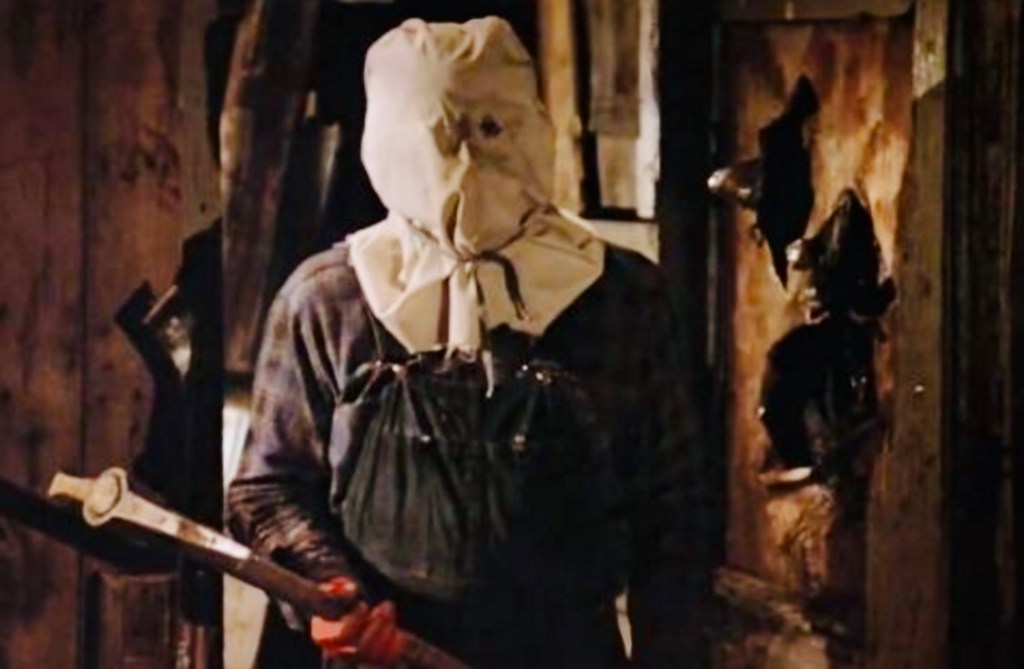
First time director Steve Minor, who would go on to make further films in the Horror genre – including House (1985), Warlock (1989) and Halloween H20 (1998) – took over from Sean S. Cunningham while creating what many fans feel is one of the strongest movies in the series. The cast of victims are fleshed out a little fuller than in the first film, and although Part 2 retcons the survival of Alice from the original, it provides a new final-girl by way of Ginny (Amy Steel – April Fools Day). Who’s final showdown with Jason more than matches the battle between Alice and Pamela Vorhees, as she capitalises on his Mummy issues – in another very clear nod to Psycho.
An increased budget of around $1.25 million saw a box-office return of over $21 million in the US, so although not as successful as the opening movie, it still fared more than well enough for a third film in the series to be commissioned by Paramount. With Steve Minor returning for his second and last outing in the Friday The 13th director’s chair. Again we are shown a recap at the beginning of the film recounting Ginny’s experience at the end of Part 2, as she discovers Jason’s shrine to his dead mother – and we discover that Jason is alive and well. This time the film was also to be theatrically presented in the 3D format, allowing for plenty of tongue-in-cheek, retro early eighties startles.
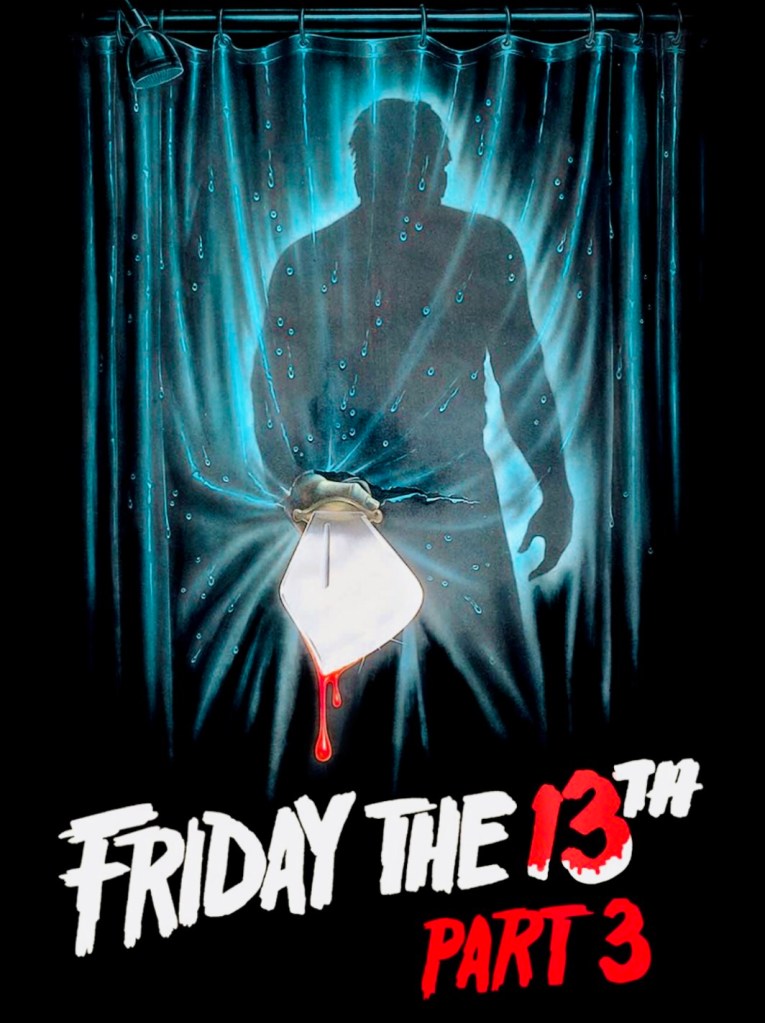
Friday The 13th: Part 3 arrived in 1982 and was set just a day after Part 2, as news of the grizzly mass murder scene at Camp Crystal Lake starts to transmit around the area. One noticeable early change is the music of Harry Manfredini, which takes on more of a synth-pop style during the opening credits. Jason spreads his wings and begins stalking the local townsfolk, killing two shop-owners before the film introduces us to the next set of teenagers descending on Crystal Lake. There is more of a comedic tone within the representation of the characters, and multiple moments of suspense and false scares in the opening scenes.
At this point the R-rated series was gaining some traction and a cult following, particularly popular among the teenage and YA cinema going public in the US – and the film is definitely aiming for more of a playful Slasher vibe. The acting is particularly wooden throughout, with the filmmakers admitting they casted the film based on appearance rather than thespian ability, and there are a number of slapstick shots created solely with the 3D aesthetic in mind. However for a corny early eighties Slasher B-movie, this has a guilty pleasure kind of charm. And one of the most memorable aspects of Part 3 is it’s defining moment in the series – as Jason finds and adorns a hockey mask to cover his deformed face.
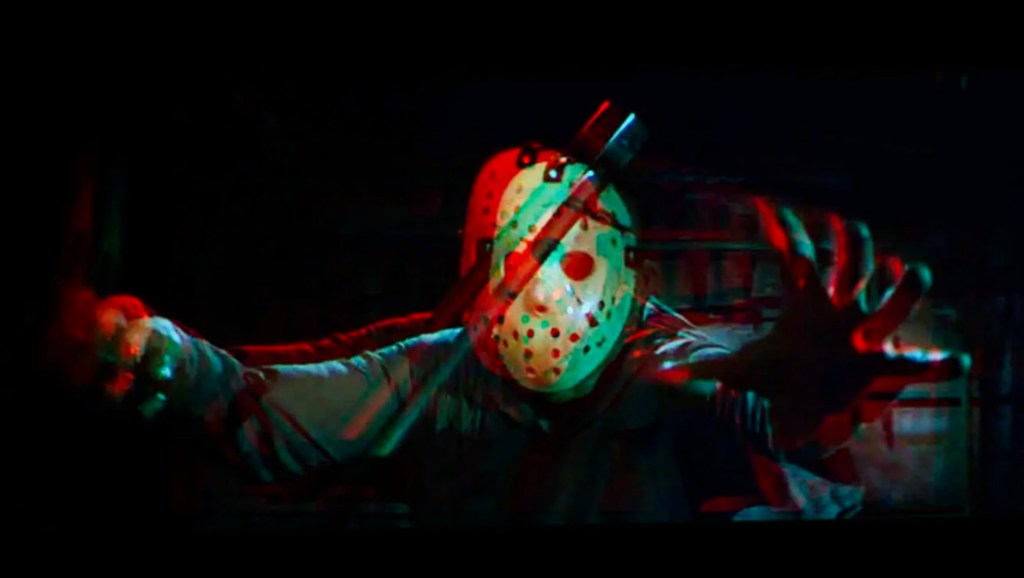
Of course as we know, the mask itself would become the symbol of the Friday The 13th franchise – and of the wider Slasher sub-genre itself. Part 3 was originally scripted to continue the story of Ginny, with Jason tracking her down in the hospital she is submitted to following the events of Part 2 – which would have delivered a plot somewhat similair to Halloween 2 (1981). But plans were shelved when actress Amy Steel declined to reprise her role, and what Part 3 delivers instead is another random set of characters for Jason to pick off – with little real substance in terms of plot. But it does provide the usual blend of nudity, screaming victims, gory kills and another titular final-girl in Chris (Dana Kimmell) – that fans of the series were coming to know and love.
And it was another hit at the US box office, grossing over $36 million from a budget of around $2.2 million. It was the picture that would finally knock E.T the Extra-Terrestrial off of the number one slot. And would finish the year as the highest grossing Horror Movie after Poltergeist. Laying waste to any plans that Paramount may have had of this being the final film in a completed trilogy. And having toyed with the idea of releasing Friday The 13th as an anthology series of unconnected Horror Movies, plans were soon rolling into bringing Jason – and his hockey mask – back one last time in Friday The 13th: The Final Chapter.
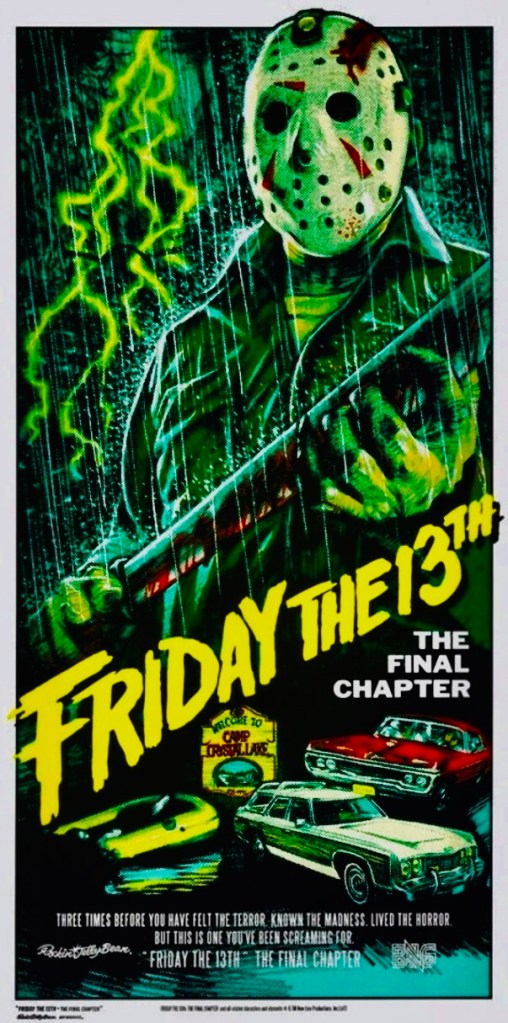
With Jason battered, bruised and seemingly dead with an axe in his head at the end of Part 3, The Final Chapter immediately picks things up as police and ambulance crews descend on the aftermath of the blood-bath. Jason’s corpse is taken to the local hospital mortuary, and the series is able to deliver its Halloween 2 inspired hospital setting after all. The movie begins with a nice recap wrapped around the camp-fire story in Part 2, a retelling of the lore and a greatest hits montage of the best kill sequences from the first three movies.
There is nice suspense in the hospital as we wait for Jason to emerge from his body-bag slumber in the morgue. And when he finally makes his bloody escape, he heads straight back to Crystal Lake where there is fresh meat waiting for him. Joseph Zito, who had directed another prominent early eighties Slasher – The Prowler (1981) – was chosen to direct what was marketed as the last in the run of Friday The 13th films. And The Final Chapter would feature a young child actor by the name of Corey Feldman – who would of course go on to star in a string of iconic movies, including Gremlins (1984), The Goonies (1985), Stand By Me (1986) and The Lost Boys (1987) – as Tommy Jarvis, a character who would become a recurring feature in the franchise.

Crispin Glover (Back To The Future) also appears, and practical FX king Tom Savini returned for the first time since the original movie. Paramount Pictures supposedly had every intention of closing the series with The Final Chapter, sensing a decline in the Slasher genre by 1984. However, once again the film would turn an enormous profit for them. Raking in $33 million against its $2.2 million budget. Clearly Slasher-flicks were far from dead, and this was also the year that provided us with Wes Craven’s A Nightmare On Elm Street. The return of Savini manning the kills, alongside a deeper character development and solid script, has retrospectively seen The Final Chapter often being hailed as the quintessential Friday The 13th film.
And it’s financial success meant that it was inevitable the series would have to continue. But the creative minds did have somewhat of a problem on their hands having killed off Jason Vorhees for good, as his head was beaten to a pulp with his own machete by the young Tommy Jarvis. Friday The 13th Part V: A New Beginning (1985) would focus on the continuing story of Tommy, as the traumatised child (a returning Corey Feldman) visits the grave of Jason Vorhees in his dream. Watching in Horror as teenagers dig up his corpse, bringing him back to life in a foreboding intro.
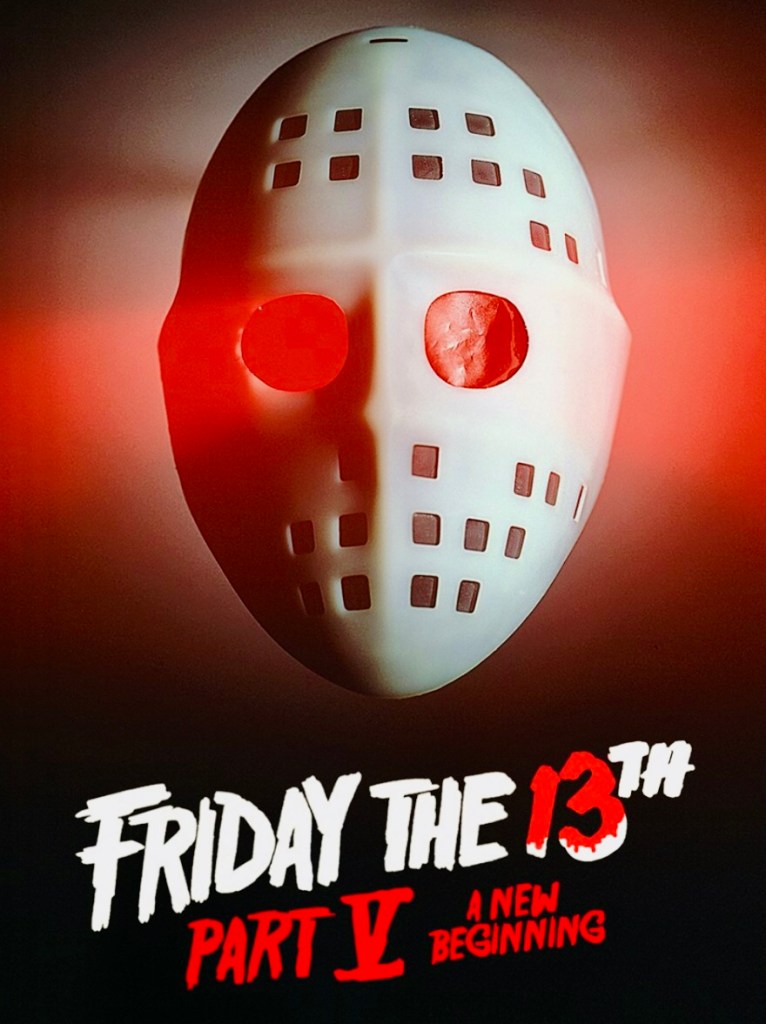
In the reality of the movie however, Tommy is now a young adult (John Shepherd – Thunder Run) – who having been committed to a mental health institute following his traumatic childhood encounter with our masked killer, is released into a halfway home for wayward teenagers. Still clearly suffering from PTSD he is welcomed into the home, which is a centre for him to continue his therapy before being released back into society. The film asks whether Tommy himself has become a psychopath following his brutal self-defence killing of Jason, and returns to the whodunnit format, as a new killing spree occurs and the audience is asked; Has Jason somehow returned? Or is it someone else behind the hockey mask?
A New Beginning provides a fresh concept and setting for the series, and was directed by Danny Steinmann who had caught the attention of producers with his revenge exploitation-flick Savage Streets (1984) – starring Linda Blair (The Exorcist). But he was perhaps best known in the Adult-Film industry having written and directed 1973’s High Rise. And he certainly brings plenty of sex, nudity and a classic Grindhouse feel to Friday The 13th … even more so than fans had become accustomed to over the proceeding five years – as well as yet another iconic new final-girl for the series, in Pam (Melanie Kinnaman – Thunder Alley).
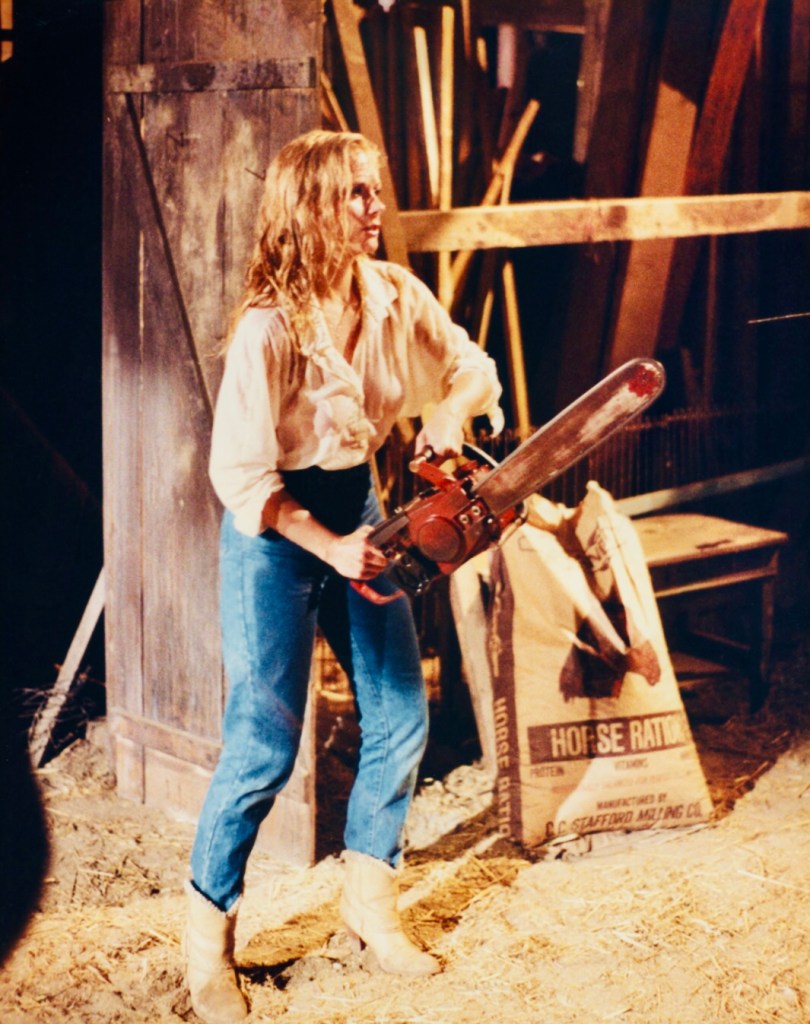
A New Beginning is not usually at the top of any Friday The 13th fans ranking of the movies, however it offers something different in its exploration of post traumatic stress, and the declining mental health of Tommy Jarvis. While also developing and providing a twist for the character in the final scene. The film is thoroughly eighties through and through in its tone and style, and really is quite a fun Slasher-flick from the middle of the decade. And of course, the numbers once again rolled in as the film took over $21 million in the box office, compared to it’s $2.2 million production costs. However this was a relatively steep decline from the previous movies, and there was also a level of criticism and backlash from fans at the direction the film had taken,
It was clear that much like the financially unsuccessful attempt by the Halloween series to move away from Michael Myers in Halloween III: Season Of The Witch (1983), with the franchise swiftly bringing back it’s iconic antagonist in the very next movie – that Friday The 13th needed Jason Vorhees. Although his image and the mask appeared throughout A New Beginning, the killer ultimately proving to be a (spoiler!) copycat worked out ok for one movie. But the series needed a return of what was now their cash cow. And that is exactly what they delivered with Part VI: Jason Lives (1986).

A now older Tommy Jarvis (Thom Matthews – The Return Of The Loving Dead) visits the grave of Jason once again. He needs to see his body to be sure that he is dead. And while he and a friend dig up the grave, Jason’s maggot-ridden corpse is struck by lightening, re-animating him back to life in a nod no doubt to Frankenstein’s Monster. And so begins a thoroughly new chapter in the series, which despite it’s often criticised lack lustre plots and cohesiveness, is certainly progressive in terms of style when looked back on retrospectively, or binge watched in sequence. Jason Vorhees is now a supernatural un-dead killer, and from this film onwards, there are really no boundaries as to what the character or story can deliver.
It’s all surface level stuff, but this is all people really want and expect from these movies. Jason (C.J. Graham) is unquestionably tougher and meaner than ever before. With the supernatural element providing the opportunity for even more inventive kill sequences, while allowing for a higher suspension of disbelief as Friday The 13th aimed to compete with the success of the A Nightmare On Elm Street series – and their child-killing dream demon Freddy Krueger. Jason returns to Crystal Lake, where the wider community are now all well aware of his former murder-sprees. Although Tommy, having witnessed Jason’s resurrection, has a tough time convincing the local law enforcement that the machete wielding maniac has now returned from the grave.
Tommy faces off with Jason in the movies finalé, as he sets a trap and they fight in a boat on the lake surrounded by fire – with Tommy ultimately chaining Jason to a rock and submerging him deep in he middle of the water. Damning him to a watery grave, until … well, the next movie of course! Jason Lives was written and directed by Tom McLoughlin (Sometimes They Come Back) – and also featured a number of original songs performed for the movie by renowned shock-rocker Alice Cooper, including the catchy; ‘He’s Back (The Man Behind The Mask).’
Grossing $19.5 million at the US box office from its $3 million budget, Jason Lives showed that the series was still a profitable business for Paramount Pictures. A now-Zombified supernatural version of Jason allowed for fresh ideas to be explored. Friday The 13th: The New Blood was released in 1988 and directed by John Carl Buechler, a notable special FX designer who had an extensive background in the Horror genre. He had also directed a couple of Fantasy-Horror flicks – Troll (1986) and Cellar Dweller (1987). The film introduces us to the character of Tina (Lar Park-Lincoln – House II), a teenager with telekinetic powers – a phenomenon first introduced to Horror pop-culture by Stephen King’s debut novel Carrie (1975).
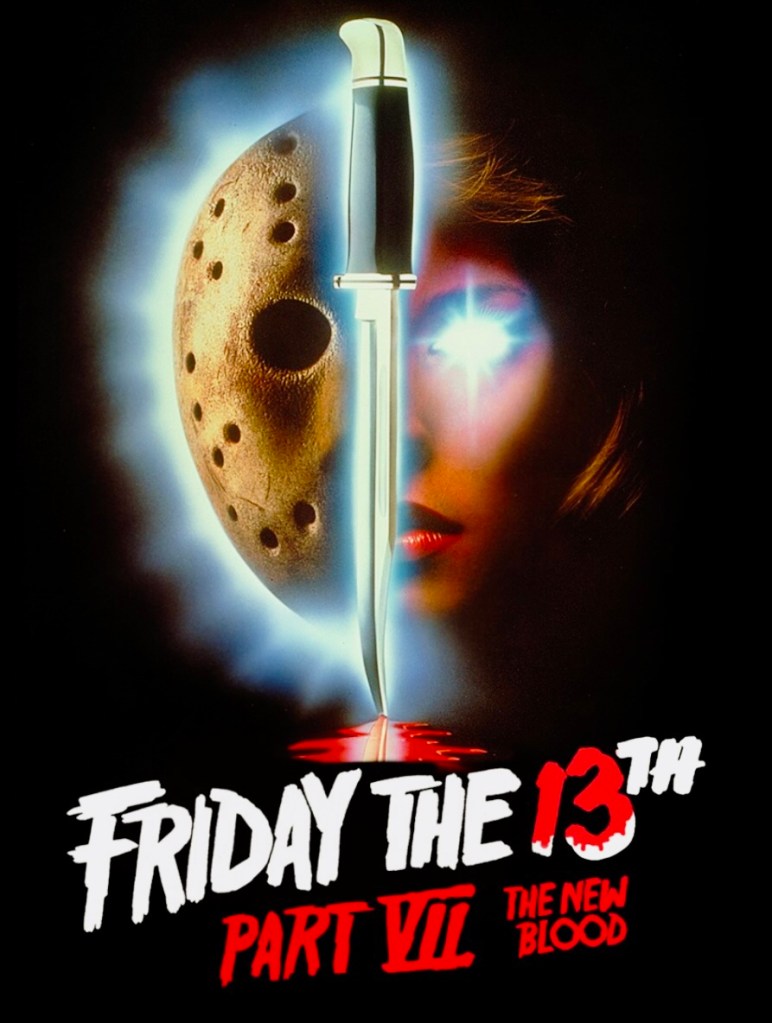
As a younger child she witnessed her father drown in Crystal Lake. After inadvertently collapsing the dock he was standing on with her dormant power, following her witnessing him arguing with, and physically abusing her mother. Years later when she returns to the area as part of her ongoing therapy, she tries to use her powers to resurrect her father. But instead, she unfortunately of course resurrects Jason, who is chained to the floor of the lake following the end of Jason Lives. He emerges from the water, his skin deformed across his body and his clothes damp and tattered. He is now an absolute hulk of a figure, and this would be the first of four movies in which burly actor Kane Hodder would play the killer – which for many, is the ultimate version of Vorhees.
Jason is especially spiteful and physically imposing under the watch of Hodder, and the kills in A New Blood seem particularly ruthless as the zombified killer wastes no time in getting down to business. Tina is under the treatment of her psychiatrist Dr Crews (Terry Kiser – Weekend At Bernie’s), who uses her therapy in order to manipulate and hone the telekinetic powers she has. Tina has visions of Jason killing the people she knows throughout the film, and as bodies start to mount up around her, she researches the history of the murderer. Coming to the realisation that it was her who raised him from the dead, and it is her that must send him back there.

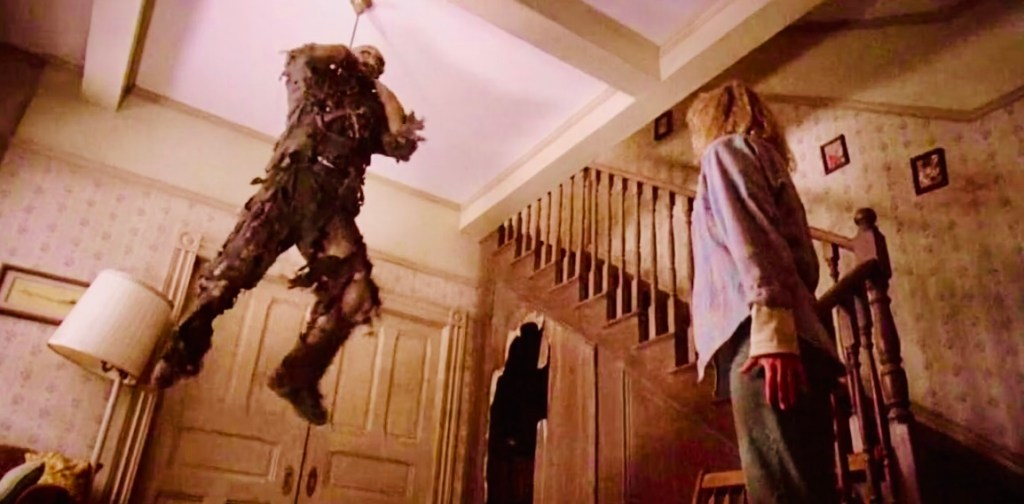
Her powers make her the stand-out final girl of the series so far, as Tina is able to engage in battle with the psychotic supernatural barbarian. With their duel making for a highly entertaining finalé, in which she is utterly terrified, but able to harness her fear and attack Jason by moving objects with her mind. At one point she makes his hockey mask constrict and start to crush his skull, causing Jason to de-mask and unleashing the revoltingly disfigured monster he has become underneath. As their battle rages they end up on a boardwalk by the lake, and seemingly beaten – Tina’s powers summon the spirit of her father, who rises from the water. Shackling Jason in chains once again – and dragging him back down into the deep.
After Jason Lives, Paramount had first pitched the idea to New Line Cinema of merging Friday The 13th with their A Nightmare On Elm Street franchise – which was enjoying far more profitable returns. And although New Line declined the offer at the time, they would eventually acquire the rights years later and provide us with Freddy Vs. Jason in 2003. But in wanting to take Friday The 13th in more of a fantastical direction, it was the Jason Vs Carrie idea which inspired The New Blood – a film which virtually matched the $19.5 million box office takings of it’s predecessor, from a budget again just shy of $3 million. So although their profit were being left in the shade by New Line’s rival iconic Horror franchise, these films were certainly still turning a buck for Paramount – and Friday The 13th Part VIII: Jason Takes Manhattan would arrive a year later in 1989.

At this point in the series new ideas were a must to try and offer a little variety into the otherwise tried and tested stalker-slasher narrative. So the hook was taking Jason out of Camp Crystal Lake, and into the Big Apple. An intriguing premise full of opportunity to move Friday The 13th in a whole new direction. However, very little action actually takes place in New York, and instead for the most part the movie takes place on a boat, which is somehow transporting a number of high school graduates from Crystal Lake, to Manhattan Island. An electrical current once again resurrects the dormant corpse of Jason, who is still laying at the bottom of the lake following his battle with Tina at the end of The New Blood. And he boards the vessel, beginning a new murder-spree of those travelling on the boat.
Eventually the ship makes it to it’s New York destination, and we do get a few sequences of Jason terrorising in the city. But there is the feeling that this movie could have been a whole lot more. What it is remembered for however, is a number of inventive kill sequences. We get Jason killing a rock musician with her own guitar, as well as punching a boxers head clean off his shoulders! Jason Takes Manhattan would be the last Friday The 13th film produced by Paramount Pictures – as the rights to the series were acquired by the house that Freddy built – New Line Cinema. Kane Hodder returned as Jason, and the film was written directed by Rob Hedden (The Colony).
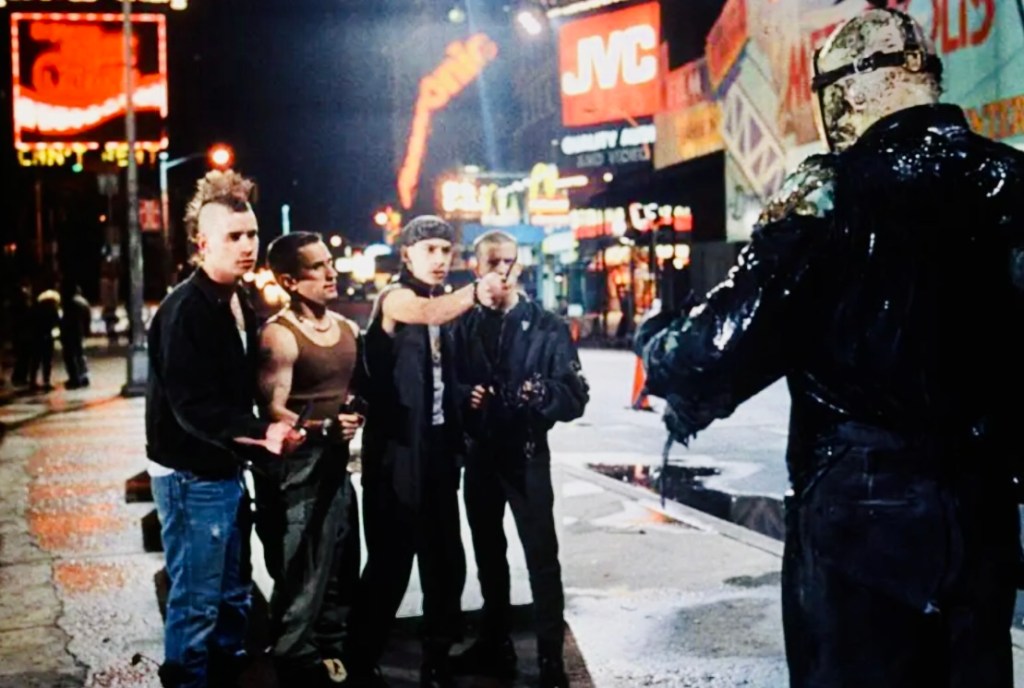
Jason Takes Manhattan far succeeded the budget of any of it’s predecessors – around $5 million – but had the poorest performing box office at around $14.3 million. Still profitable, but with diminishing margins. It also took somewhat of a hammering by critics (nothing unusual there) – but also by fans of the franchise. And the film is widely considered to be one of the weakest of the Friday The 13th movies. But it does provide a milestone for the series, drawing a close to the decade in which it flourished with a total of eight films. Helping reinvent the Slasher genre for a new generation, and cementing it’s place as one of the Big 3 – along with Halloween and A Nightmare On Elm Street.
Following it’s initial bloody decade of Horror, the series has so far seen another four official movies – as well as a number of fan-made films. Jason Goes To Hell was the next instalment arriving in 1993, followed by Jason X in 2001 – marking the end of Kane Hodder’s Jason portrayal. The Freddy Vs Jason crossover soon followed in 2003, before the series would receive a complete reboot with Friday The 13th (2009). A reimagining directed by Marcus Nispel – who had also handled The Texas Chainsaw Massacre remake (2002) – which re-told the origin story of Jason and his mother, before largely taking inspiration and combining elements from the first four movies. It’s now been fifteen years since Jason Vorhees stalked our screens. But if there was something you would bet your house on, it would be that one way or another … he will return! KZ
Words by Mark Bates

https://amzn.eu/d/b5TAnqi
 kult-zilla.com
Leave a comment