


Stephen King the master of horror, has written a plethora of our favourite darkest stories, which have been adapted into some of the most iconic genre movies of all time, starting with Brian De Palma’s Carrie in 1976, through to the modern day with recent glossy movies including It in 2017. In the nineties his stories provided us with the Oscar winning Misery (1990), and a movie which is almost always in the conversation regarding the greatest films of all time, The Shawshank Redemption (1993).
It was in the eighties, that King’s star-power rose at an alarming pace, and quality movies based on his work arrived one after another, with the likes of Stanley Kubrick’s The Shining (1980), David Cronenberg’s The Dead Zone (1983) and John Carpenter’s Christine (1983) all considered bonafide Horror classics. But it was with the Mary Lambert directed Pet Sematary (1989), that perhaps his most terrifying work was brought to life, in a film that descends into a horrific final act, that chilled the audience to their bones.
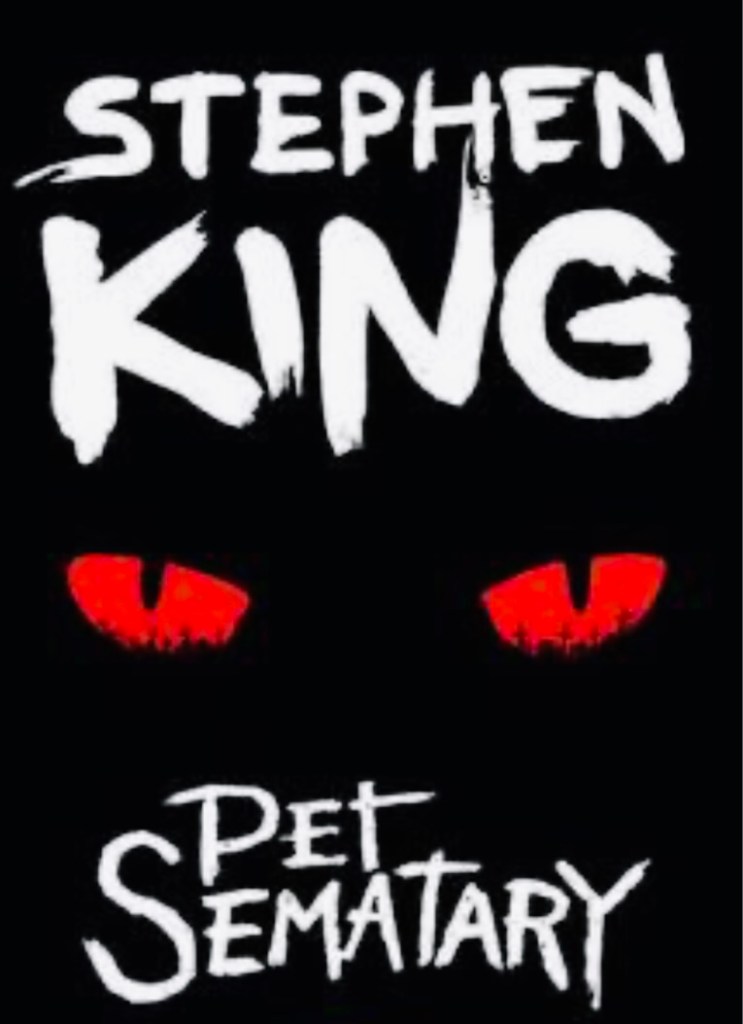
For a first full length motion picture from an otherwise renowned music video director, who was better known for working with the likes of Madonna, Eurythmics and Sting, Lambert created a fine film and one of the most renowned Horror movies of the era. And although she would follow this up with the cult sequel Pet Sematary II (1992), starring Edward Furlong in his first major role following Terminator 2: Judgement Day (1991), she would strangely never make a meaningful return to the genre again.
With eighties nostalgia being such a hot topic in the modern era, Stephen King’s early films have found themselves to be sought after properties, ripe for revisiting. Carrie (2013) starring Chloë Grace Moretz (Kick Ass / Let Me In) was the first high profile adaptation to receive the remake treatment, and following the box office success of It: Chapter One (2017), Pet Sematary (2019) would arrive next.
We take a look at comparing the contrasting directions of the two Pet Sematary movies, and how they compliment each other as well as King’s legendary source material.
Pet Sematary (1989)
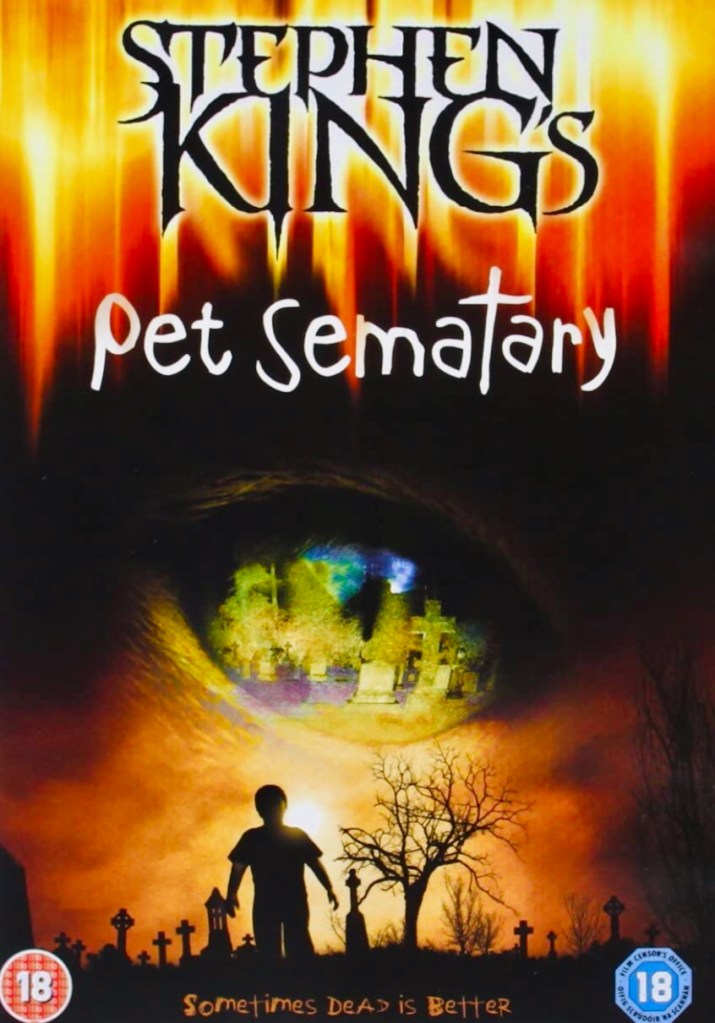
The creepy and iconic original movie based on King’s vintage 1983 novel, tells the ultimate tale of a family tragedy, and proves that messing with the afterlife and resurrecting the dead is never going to end well. King would also write the screenplay for the film, which came at the very height of his popularity in 1989, and provided one of the very finest Horrors of the era.
In Pet Sematary the Creed family move to a quaint farmhouse in the village of Ludlow that sits on the side of a busy highway, after Louis (Dale Midkiff) takes on a new job as the doctor at the local Maine university. He’s joined by his wife Rachel (Denise Crosby), their young daughter Ellie (Blaze Berdahl), their toddler son Gage (Miko Highes) and their cat Church. They soon meet their kind and elderly neighbour Jud Crandall (Fred Gwynne – The Munsters) who lives on the opposite side of the highway, and he shows them the local Pet Sematary, where a path into the woods from their garden leads to.
On Louis’s first day at work, Victor Pascow (Brad Greenquist) a student hit by a car whilst out running, dies gruesomely in his surgery. That night the apparation of Pascow visits Louis, and coaxes him out to walk into the woods, where he delivers a chilling warning about the dangers of the grounds beyond the Pet Sematary. At this stage the movie is playing faithful to the key scenes of King’s story, however it is moving at a faster pace to keep the film flowing, and noticeably misses some character development from the novel.
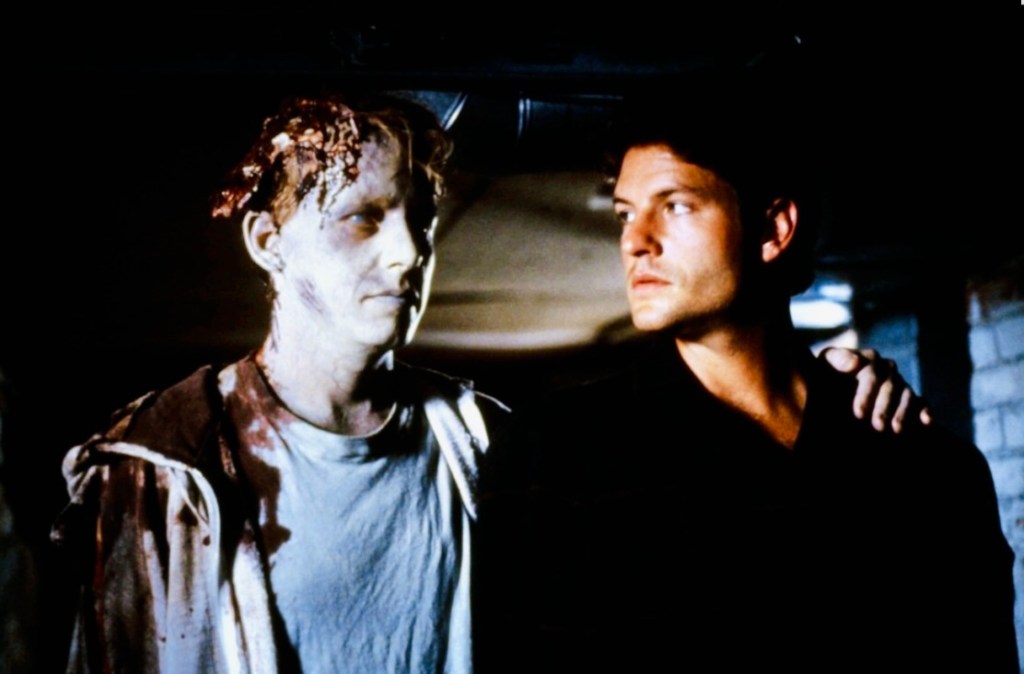
Louis wakes up the following morning believing his nightmare to be over, but discovers his feet and the bed clothes are covered in mud. When his family travel to Rachel’s parents for thanksgiving, Louis stays at home alone. While they are away, Church is killed on the road next to their house, leading to Jud taking Louis out to bury the cat in the land beyond the Pet Sematary. He explains that this is an ancient Indian burial ground that holds magical powers of resurrection, and that his daughter Ellie need never know about her cats accident.
Church returns from the grave, but there is a change in the nature of the reanimated feline, who has become more vicious and predatory. The movie explores the theme of death, and looks closely at how a child learns of and perceives the afterlife. In a side-plot Rachel tells Louis about her older sister Zelda, who haunts her dreams. She had a debilitating spinal condition and died a clinically insane shell of a teenager, who had become bitter and twisted in her final weeks, and the image of her crazed deceased sister is one which returns to haunt both her, and the viewer later in the movie.
As the movie progresses an idillic family picnic turns to disaster, as Gage chases a kite onto the highway and is hit by a speeding truck, setting up the terrifying final act. Against Jud’s advice, Louis predictably looks to the magic of the Pet Sematary to bring his son back, a decision which leads to tragic consequences, as he discovers the power within the sacred burial ground, is one of pure evil.
A couple of key characters are noticeably excluded from the film adaptation, with King providing a snappier screenplay that gets right down to the bones of the story, in order to meet its 100 minute runtime. The movie’s tone is dark and sombre from the start, whereas the novel focuses on first developing a happier story of family and friendship, as well as one of hopes and dreams, before descending into the horror of its final act.
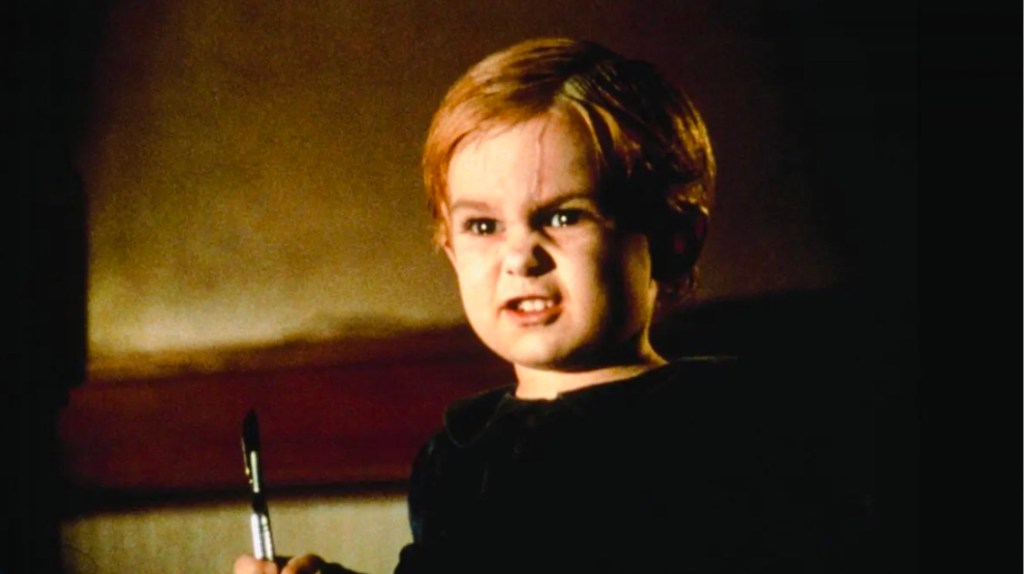
The film takes us there far quicker, and is remembered fondly by Horror fans for its descent into terror, while providing the quintessential creepy young child in a captivatingly memorable performance by Miko Hughes, who astonishingly was just two years old when he played the role of Gage, before going on to perform further child roles in movies including Kindergarton Cop (1993) and Wes Craven’s New Nightmare (1994).
There are some strong snippets of gore and Body-Horror throughout, and the movie memorably manages to maintain a wholly sinister tone, aided by a wonderfully eerie soundtrack, helping to create a film which is unpleasant and uncomfortable to watch at times. Pet Sematary faithfully recreates each key scene from the novel into a well paced Horror movie, while providing a thoroughly bleak but clear cut ending in the very final scene. Rather than finishing on the ambiguous note of the novel, which offers a glimmer of hope for Louis.
Pet Sematary (2019)

The 2019 remake directed by the duo team of Kevin Kölsch and Dennis Widmyer (Starry Eyes) begins on a predictably dark and sombre tone, with trails of blood and a raging house fire, as per the end of the original movie. The film then cuts back to a happier time, with the Creed family arriving at their new home, full of the optimism that a new start gives to life. Ellie (Jeté Laurence) is portrayed as being slightly older, and the film immediately focuses in on her as more of a central character, and her discovery of the Pet Semetary after she and Rachel (Amy Seimetz) witness a procession of masked children, wheeling a dead dog down into the woods.
This is an early first notable change in the story by screenwriter Jeff Buhler (The Midnight Meat Train), and it is while she explores the Pet Sematary that she first meets Jud Crandall (John Lithgow), and learns of its history leading to her inquisitiveness of life and death, which she discusses at length with her mother and father Louis (Jason Clarke – Terminator Genisys). As she quizzes her parents about the afterlife, she asks her mother about her sister Zelda, and we see flashbacks of Rachel’s troubled childhood much earlier than in the original movie.
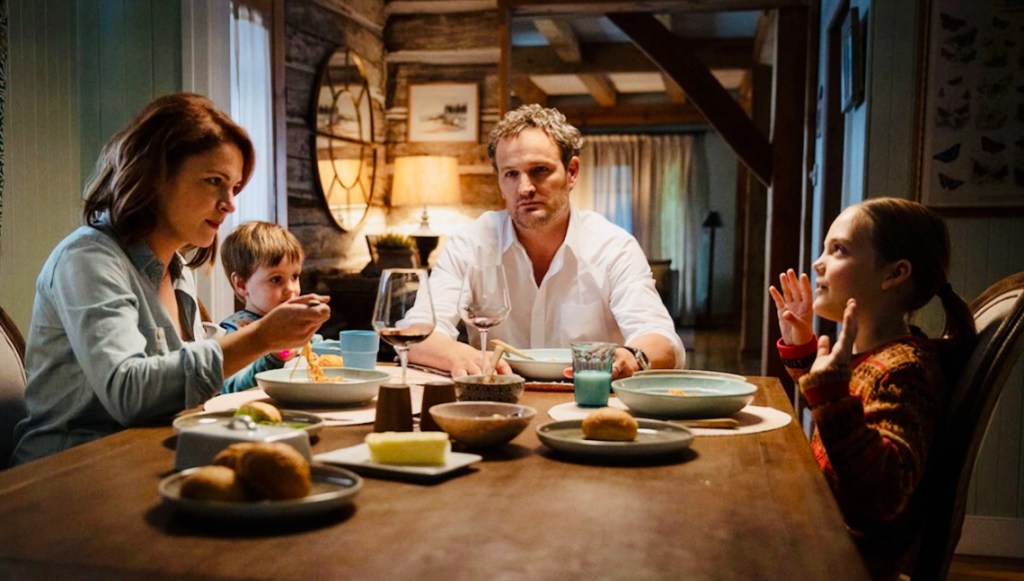
As Victor Pascal (Obssa Ahmed), the student hit by the car, is brought into Louis’s surgery, the practical effects are even grizzlier here than in 1989, and the film then proceeds to provide a sharp modern Horror jump-scare, as the dead body rises and speaks to Louis. Louis’s dream the following night, as he is taken into the woods by Pascal and warned about the dangers beyond the Pet Sematary, is filmed in an intriguing and stylishly manner, shot beautifully and bathed in captivating lighting.
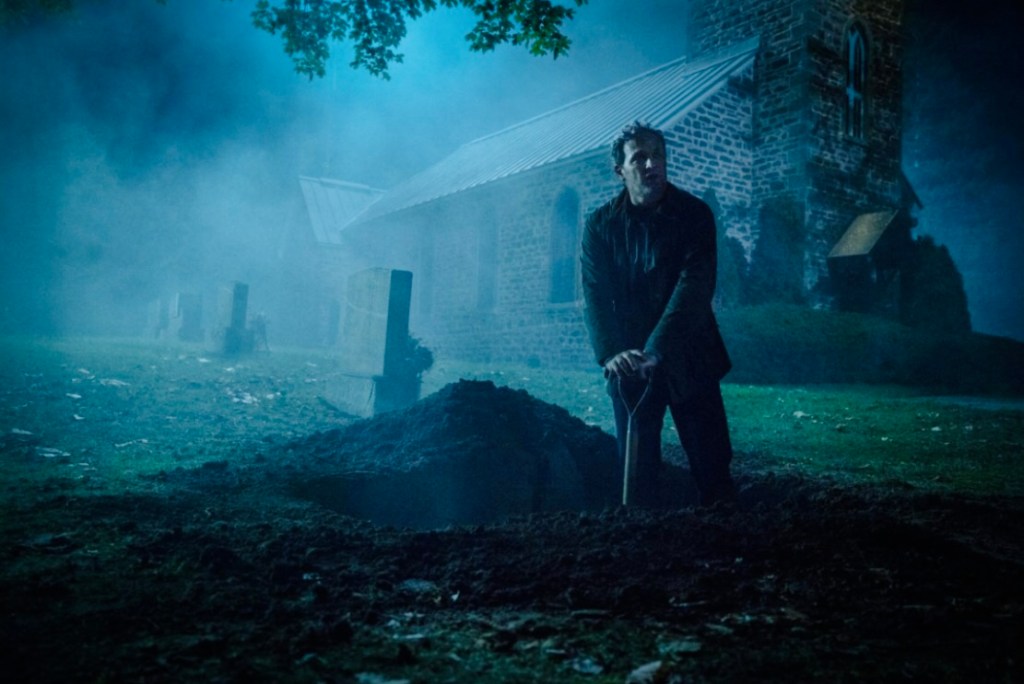
In this version of the narrative, Rachel is at home and aware when Church is killed on the highway, and she and Louis decide together that he will bury the cat that night with Jud, and that they will tell Ellie Church has just run away. But as we know, Jud decides to take Louis beyond the Pet Sematary to the sacred Indian burial ground, in a shot which is again bathed in atmospheric and smoky blue lighting. The film again then focuses more on Ellie, and her reaction to the return of Church, as her once docile pet now hisses, scratches and hunts.

Not wanting the reanimated pet around his family anymore, Louis takes Church deep into the woods and lets it go. But the cat finds its way back during Ellie’s birthday party, and in complete contrast to its source material, it is Ellie who is killed by the passing truck as she runs out into the road to great her returning pet, and not her little brother Gage. From here the movie takes a brave new direction, and in many ways it makes for an interesting twist that Pet Sematary (2019) turns out not to be a shot for shot remake of the original. but rather its own interpretation of Stephen King’s notorious tale, offering something new and unknown for fans of the novel.
Again the visual style as Louis takes his daughter to the burial ground is impressively shot, and for obvious reasons has much more of a textbook modern Horror feel, than that of its classic 1989 counterpart. Ellie returns home, but instead of becoming the instant murderous being that Gage did in 1989, the movie instead explores the relationship between her reanimated zombie-like corpse and Louis, a theme hinted strongly at in the novel, as Louis first imagined what Gage may be like after he returns from the grave. This provides more of a character and relationship study, as the movie takes a little more time to tease Ellie’s descent into murder and madness, before building up to the inevitable climax of horror, but with a very different finalè, and its own obscure twist. KZ
Words by Mark Bates
 kult-zilla.com
Leave a comment