


John Carpenter … the master of horror! Writer, director and producer of some of the most iconic films of the genre, specifically during his peak of the late 70s and throughout the 1980s. He also composed some of the most recognisable film scores to accompany the majority of his movies, but will always be best known for creating what would become one of the most successful horror franchise’s of all time, with a character that is one of films most infamous masked faces of evil.
His vast influence on filming technique within the genre is second to none, with his use of shadows and silhouettes, widescreen composition and his masterful building of tension and use of jump scares, now prevalent throughout modern horror. Although sadly from a financial standpoint his movies at the time were often box office flops, most achieving cult status and notoriety after their initial release, and his career can perhaps best be appreciated when you look back at his extraordinary body of work as a whole.

He started his career writing and directing a number of short science fictions films during the late 1960s, before creating his first theatrical directorial release Dark Star (1974) an extended version of one of his film school projects. From here his stellar career accelerated at an almighty pace, starting with his first real break in cinema Assault On Precinct 13 (1976) before creating one fine movie after another from the late 70s and through the 1980s, until disillusionment with the Hollywood machine appeared to set in with more of a mixed output in the 90s.
His weakest films came in the 2000s with the misjudged return to Sci-Fi in Ghosts Of Mars (2001) and finally his take on a more modern influenced approach to horror with The Ward (2010) both lacking his usual recognisable feel. Since 2010 Carpenter seems to have kept himself content with writing as well composing new music for film and TV, with his only work behind a camera coming with the creation of a handful of music videos to accompany some of his best known scores.
Hold on tight and buckle up as we take a look at the finest ten films of John Carpenter’s illustrious career :
1. // The Thing (1982)
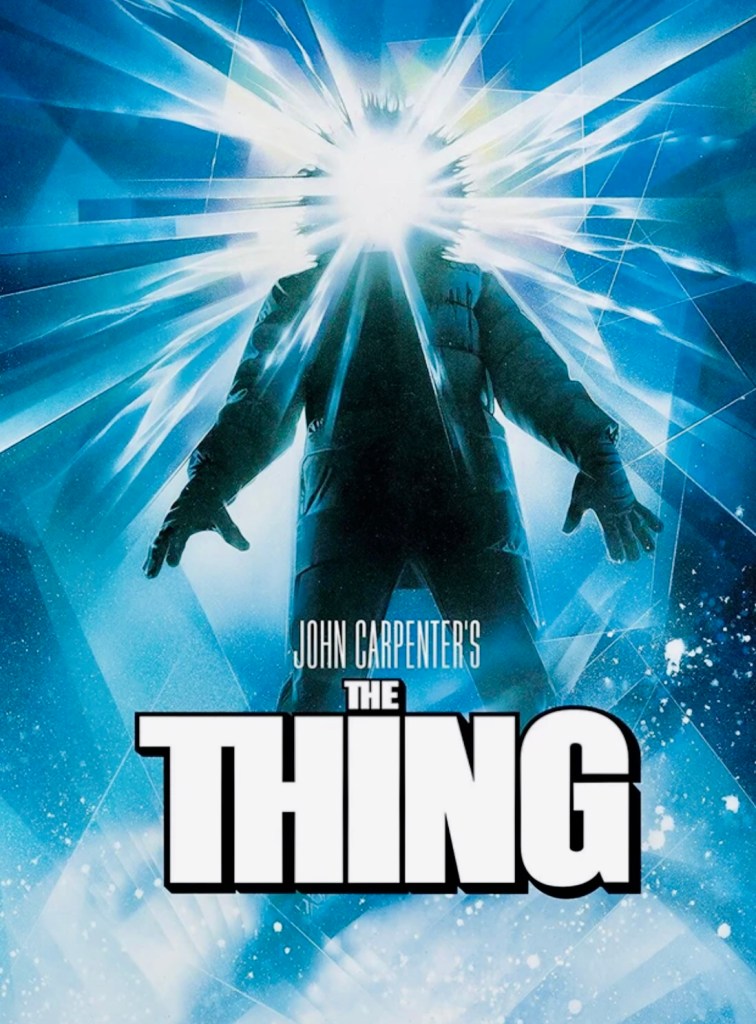
Arguably Carpenter’s finest hour came with his remake of the classic monster B-Movie The Thing From Another World (1951). However he created a reimagining that far outdoes the original by returning closer to the source material for inspiration, the 1938 novella Who Goes There? (written by John W. Campbell Jr). Set in a bleak and desolate Antarctic winter, the film opens with gunfire and a helicopter chasing down a dog as it sprints across the icy wasteland towards a research facility inhabited by a group of American scientists.
Alerted to the commotion the team rush out to be greeted by the dog and a Norwegian marksman who appears hellbent on destroying the animal, but who is shot and killed by one of the Americans after he accidentally shoots one of their team in the leg. An investigation follows with lead character MacReady played by Carpenter regular Kurt Russell (Escape From New York) visiting the Norwegian base they believe the helicopter to have come from, which he finds burnt out and with signs of bloodshed inside.

Further mystery follows in the form of a hollowed out ice grave and discovery of a carcass like no human or animal he has seen before. The carcass is returned to base and an autopsy is performed where viscerally disgusting gloopy model effects are used, setting the tone for what’s to come. Groundbreaking Body-Horror ensue as we next see the transformation of the dog from the opening sequence into a grotesque alien form, created by practical F/X wizard Rob Bottin (Robocop) who’s work in the film is as memorable as the story itself.
From here the movie plays out as an absolute classic of the Horror / Sci-Fi genre as we learn the camp is now inhabited by a shapeshifting being which can transform into any living form that it comes into contact with. The completely isolated group must fight for survival against the threat and themselves, as paranoia spreads among them as they realise the alien may have killed, digested and imitated the form of any one of them. The films minimal and eerie score pays homage to the 1950s era of the original movie, and perfectly adds to the overall bleak feeling of isolation. KZ
2. // Starman (1984)

Following The Thing (1982) Carpenter made this charming Science Fiction love story devoid of his usual horror and instead providing more of an uplifting fantasy tale, similar to the likes of Steven Spielberg’s ET (1982) and Close Encounters Of The Third Kind (1977) which had both of course been hugely successful mainstream movies. Karen Allen (Raiders Of The Lost Ark) stars as Jenny Hayden, a widow who we meet at the beginning of the film, distraught and drowning her sorrows while watching a home video of her and her recently deceased husband.
We then see an Alien spacecraft crash land nearby, from which a translucent form journeys to and enters her property, scanning a photo album with pictures of her husband. Hayden then witnesses the being taking the form of a human baby before growing into the exact likeness of her husband played by Jeff Bridges (Tron). The effects used as Carpenter shows the transformation are grotesquely surreal, not dissimilar in feel from the similarly classic werewolf transformation sequence filmed in John Landis’s An American Werewolf In London (1981).
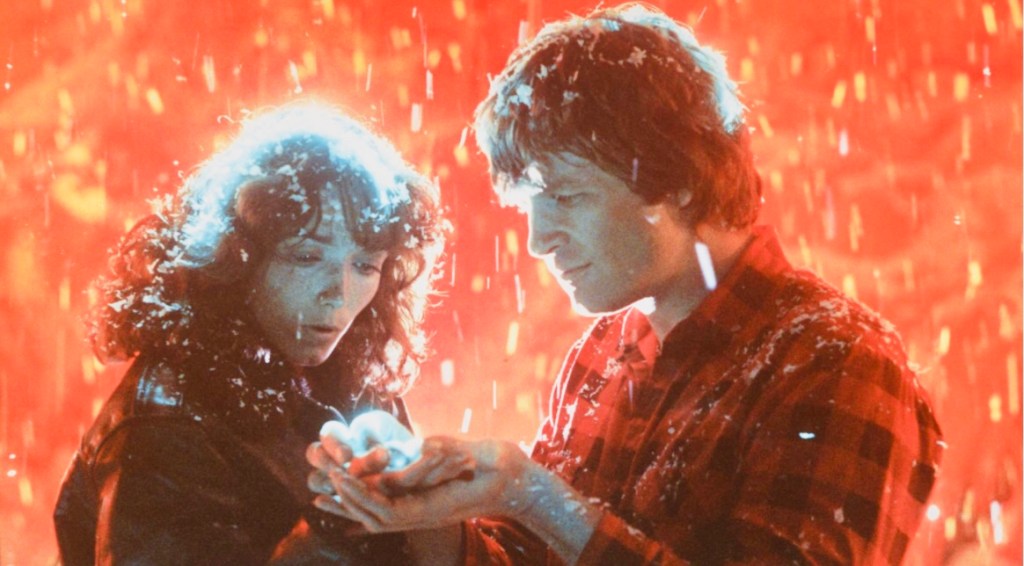
Jeff Bridges puts in a fine performance as he plays the quintessential fish out of water as his child like alien being learns what it takes to be human, mimicking everything that’s said to him with a jerky body language. Karen Allen also shine, playing a vulnerable role as she comes to terms with what is happening to her, and journeys from being frightened at first to assuming the role of teacher, as she begins to care for the alien when it becomes apparent he means her no harm.
The film becomes a road movie as the two travel together in an orange Mustang to a meeting point he needs to get to in the desert in order to travel back home, all the while being pursued by government agents who are tracking the arrival of the alien. Slowly Jenny begins to fall for the likeness of her husband as she is offered an extraordinary opportunity to say one final goodbye. Carpenter certainly showed another string to his bow with Starman at the time, which remains a highly endearing movie to this day. KZ
3. // Halloween (1978)
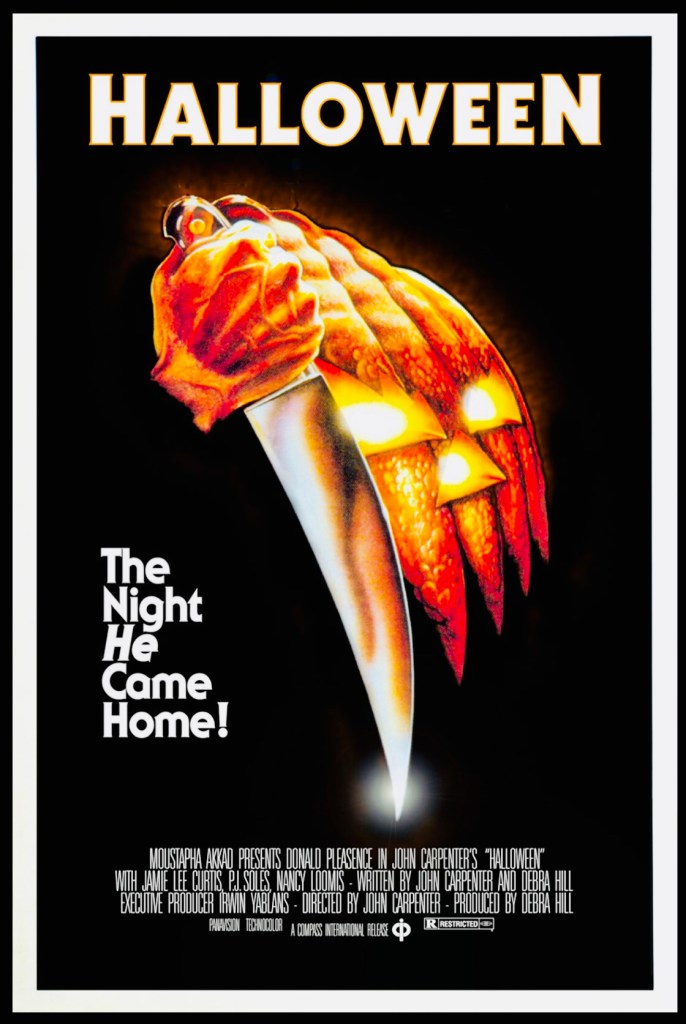
Filmed towards the end of the Psychological Horror / Thriller rich 1970s Halloween is undoubtedly Carpenter’s most renowned work. An early slasher film in which the success spawned a new age for the Horror sub-genre in the 1980s, providing inspiration for multiple films and franchises most notably the Friday the Thirteenth series, as well as a host of it’s own sequels that are still being made to this day.
The movie begins with a slow POV shot of a young Michael Myers as he murders his sister, before jumping forward 15 years to the night before Halloween when Michael escapes from the mental institute he has been kept in since that fateful night. His psychiatrist Dr Loomis played by Donald Pleasance (who would also go on to reprise the role in multiple Halloween films) explains that Michael has not uttered a word since the night he killed his sister, and that he is pure evil incarnate and must never be allowed to remain free of his incarceration.
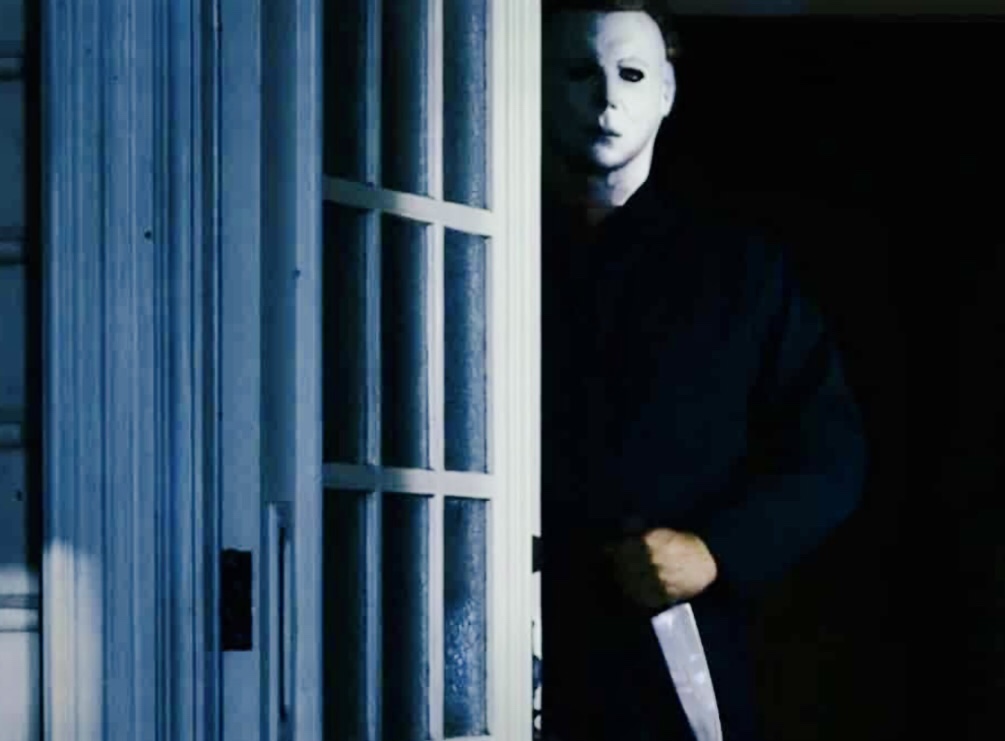
Michael returns to his home town of Haddenfield Illinois and the old Myers’s house which now sits as a dilapidated property that local school children believe is haunted. He soon begins stalking local teenager Laurie Strode played a young Jamie Lee Curtis (daughter of Hollwood stars Tony Curtis and Janet Leigh) in her breakthrough film role, and from here Carpenter slowly builds the tension through to a thrilling final act of murder, and a game of cat and mouse filmed using dark elequant shots of mood creating lighting.
Almost as infamous as the film itself is Carpenter’s instantly recognisable and haunting score, first introduced during the opening credits but reoccurring throughout the movie as a theme for the scenes featuring the killer. The soundtrack personifies the very being of Michael Myers, or ‘The Shape’ as he was simply referred to in the final act of the screenplay. Halloween is quite simply one of the most important Horror movies ever to have been made, and Carpenter made his mark with the film which made a ridiculously large profit and really kickstarted his career. KZ
4. // Christine (1983)

In 1983 Carpenter joined a then exclusive club of directors chosen to adapt work by master Horror writer Stephen King, following on from the likes of Brian De Palma – Carrie (1976) Stanley Kubrick – The Shining (1980) and David Cronenberg – The Dead Zone (1983). Christine tells the story of a possessed Chevrolet Pontiac opening with the roar of the vehicles engine accompanied by the song ‘Bad To The Bone.’
We see a 1950’s production line of white cars before the camera lingers on the one red car on the line. Christine’s hood then crushes the hand of an inspection worker, swiftly followed by her killing of another worker who sits in the car and rudely drops his cigar ash on her seat. The movie then skips to 1978 where Keith Gordon (Dressed To Kill) plays Arnie, a bullied geeky 17yr old who with his friend Dennis (John Stockwell – Topgun) comes across the now battered and rusty vehicle.
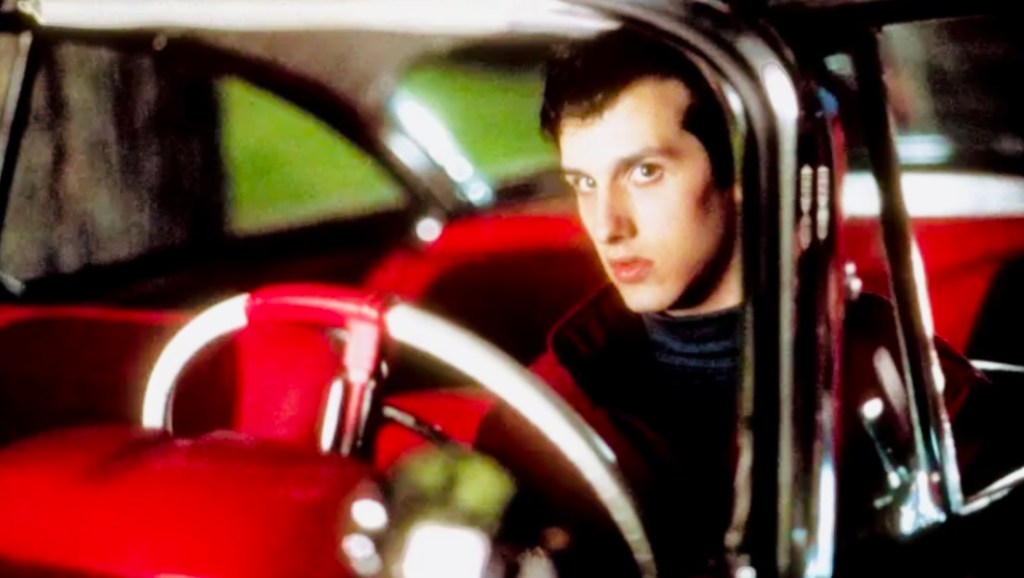
They buy her from a mysterious redneck who informs them that the car had a strange hold over his brother the previous owner of the vehicle, and they later learn that he, his wife and his daughter all died in the car. Despite this Arnie is drawn to Christine and feels that he can restore her to her former glory. As he works on her his confidence starts to grow and he begins dating one of the most desirable girls in high school … however the car does not seem like his new relationship.
Christine has a personality that infects herself on Arnie with a strange and deadly influence, and a bizarre relationship between the two blossoms. Jealous of Arnie’s new found swagger, a gang of bullies smash Christine to smithereens. An obsessed and somewhat possessed Arnie vows revenge with the vehicle, and in a highly memorable shot watches as she self repairs in front of his eyes … before they then embark on the murderous rampage of the various teenagers that wronged them. KZ
5. // Escape From New York (1981)
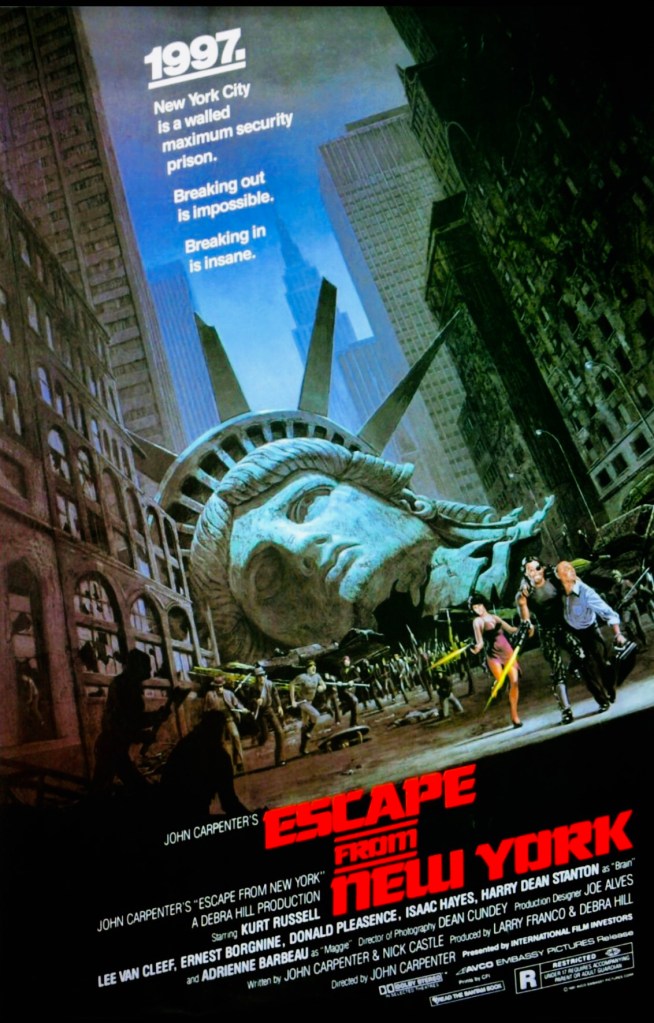
In 1981 Carpenter took a break from the Horror genre to make a futuristic Action / Sci-Fi film, and the first of his many movies with Kurt Russell (The Thing) who stars as the iconic Snake Plissken. Set in a futuristic 1997, for 10 years Manhattan has been turned into a self contained prison due to the crime rate increasing by 400% in the middle of the 1980s. The city is contained by a giant wall and is completely separated from the outside world.
Police surround the perimeter but there are no guards inside, and the convicts are left to fend for themselves. At the beginning of the movie we see terrorists hijack Air Force One and although he is able to utilise an escape pod, the President played by another Carpenter favourite Donald Pleasance (Halloween) lands inside the prison walls, where he is swiftly captured and held hostage by the inmates.
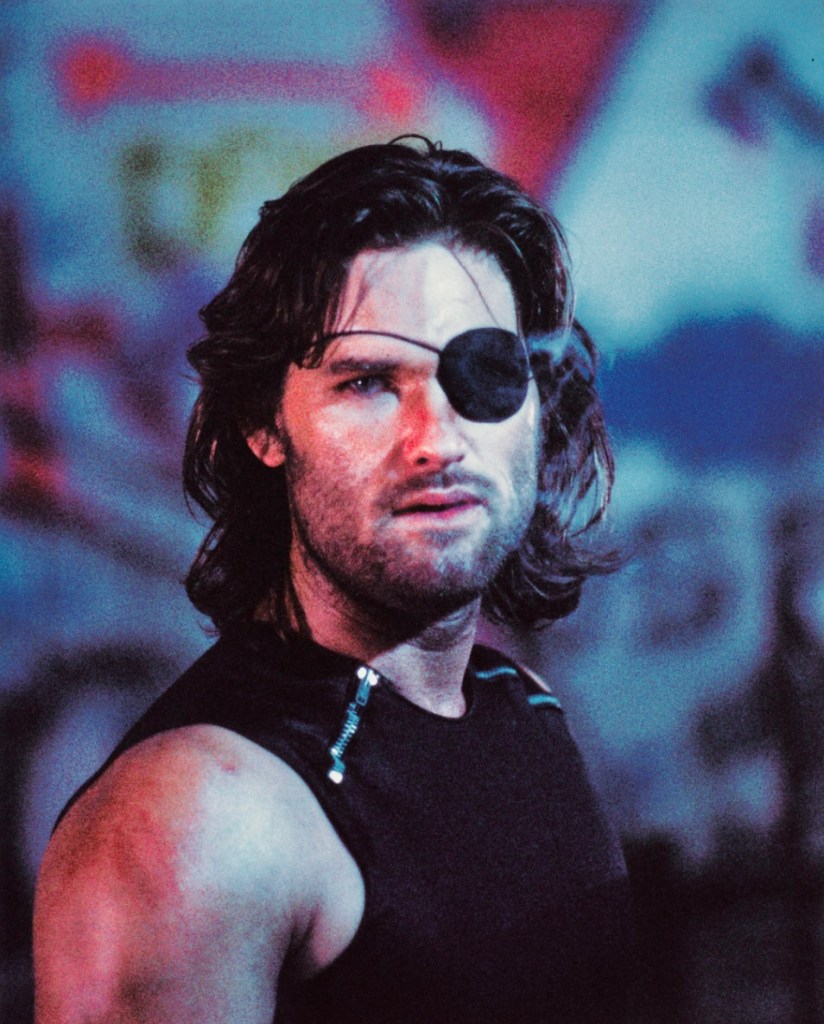
Convicted vigilante Snake is offered a full pardon for his long list of offences if he agrees to enter the prison, rescue and escape with the President … he accepts under duress and is given 22 hours to complete his mission. He faces a death sentence if he is not successful as he is implanted with a device which will explode within his neck unless neutralised by his handlers. Snake must navigate his way through the society of psychotics and sycophants in order to find self proclaimed leader The Duke, who is holding the president.
As action movies go although Escape From New York feels a little dated compared to many 80s films that followed in the genre, the tone is dark and grungy and has a totally unique Carpenter feel which makes it highly enjoyable. Again Carpenter delivers a now iconic and instantly recognisable synth-wave score for the film, and he would later return to the story and character of Snake Plisken (along with Kurt Russell) for the questionable sequel – Escape From LA (1996). KZ
6. // In The Mouth Of Madness (1994)
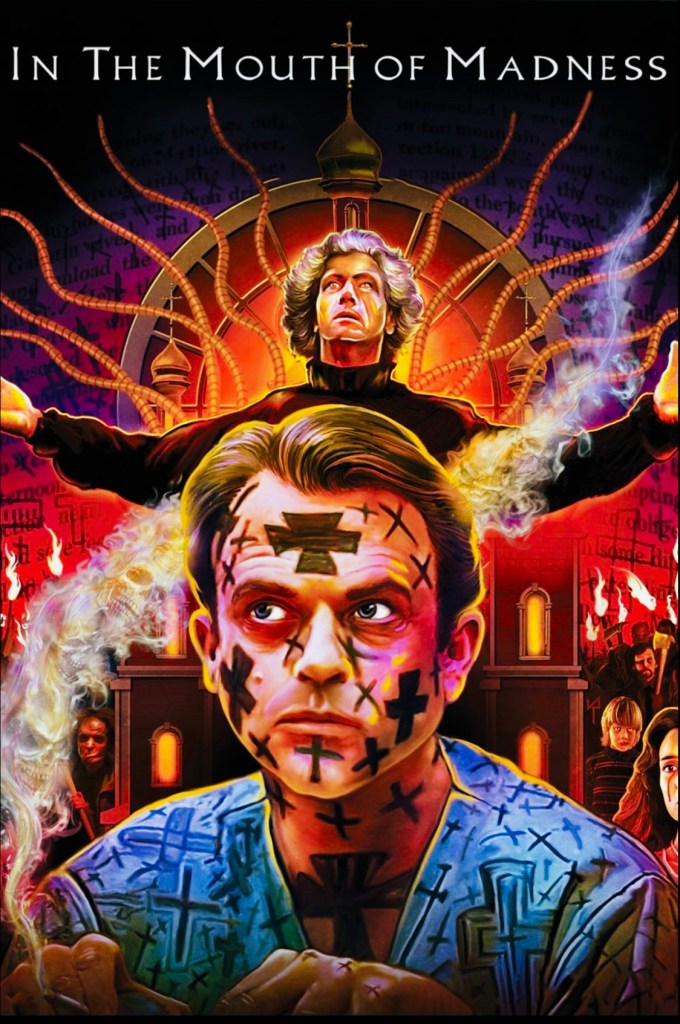
A pumping Metallica-esq riff opens what is arguably Carpenter’s spookiest and finest film of the 1990s. We meet John Trent played by Sam Neil (Jurassic Park) who is dragged to a cell through a psychiatric hospital in a straight jacket, before experiencing horrific flashbacks. He is visited by a psychiatrist and begins to tell the story of how he has arrived there.
He is an insurance investigator, played as a film noir style private detective, who after a claim is lodged by a publishing company is asked to look into the case of missing renowned Horror writer Sutter Cane (Jürgen Prochnow – Dune) who has disappeared along with the final manuscript of his soon to be released new novel – In The Mouth Of Madness. From here an enjoyable horror mystery (largely a homage to the works of both H.P Lovecraft and Stephen King) unravels … along with the investigators sanity.

By piecing together sections of the front pages of Cane’s novels, John Trent creates a map which takes him to the town of Hobbs End, a thought to be fictional location where many of Cane’s stories are set. He is joined by Cane’s editor Linda Styles, played by Julie Carmen (Fright Night 2) and they discover that the town is full of mysterious characters seemingly lifted from the pages of Sutter Cane’s novels.
As time goes on the characters begin to appear more demonic to Trent, blurring the line between reality and fiction and subsequently sanity and insanity. Driving the descent into madness of the initially cynical main character, who at first believes the horrific fantasy unfolding around him is part of an elaborate set up. From here the movie plays out to an inter-dimensional Horror story with an impending apocalypse, which is wonderfully over the top with great special F/X work, and with Carpenter clearly having a whole lot of fun during the film making process. KZ
7. // Memoirs Of An Invisible Man (1992)
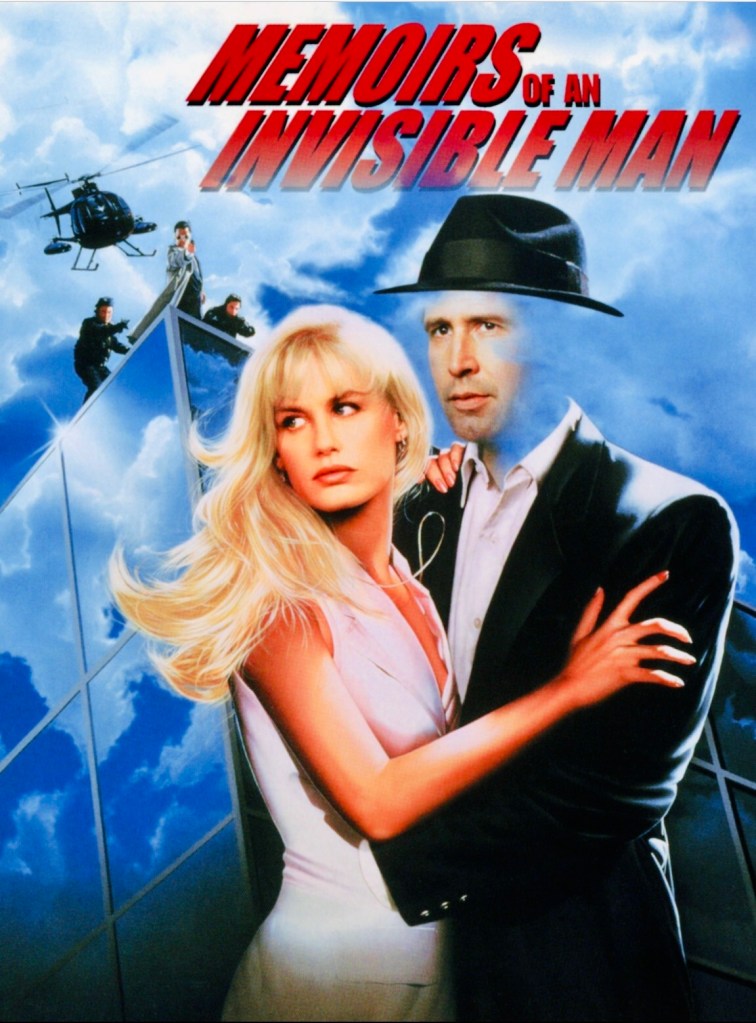
By 1992 Carpenter was experimenting more with his output and Memoirs Of An Invisible Man was a departure further away from his renowned horror style than ever before. The film stars Chevy Chase (National Lampoon’s Vacation) as Nick Hallaway, who is turned invisible during a radiation leak at a business conference while he is sleeping as the rest of the building is evacuated. He is then forced to go on the run, pursued by shady CIA agent David Jenkins, played by Sam Neil (In The Mouth Of Madness).
Agent Jenkins takes it upon himself to keep Hallaway’s existence covered up while he tries to hunt him down with the view of recruiting him as a super spy, but his real intentions are never entirely clear. Although Carpenter and his leading man were famously far from best of friends on set, Chevy Chase does suit the tone of the film and there is a dead pan comedy element to the character similar to his performance in Fletch / Fletch Lives, with a voiceover not too dissimilar from those movies either.

A charming element of the movie is viewing the struggle Hallaway has coming to terms with his condition. Eating is difficult as he cannot see his own hands, and after he eats he can see his stomach digesting in a mirror, which allowed Carpenter to inject elements of Sci-Fi into the movie. Another nice scene is when Nick is kissing love interest Alice Monroe played by Darryl Hannah (Splash) in rainfall, and we see the water shimmering off of his invisible body.
All in all this a highly enjoyable and original take on the Invisible Man story, which may seem quite unlike a John Carpenter film due to the fact it was not written or scored by him. The film was originally being made by director Ivan Reitman (Ghostbusters) who ended up walking away from the project due to his own on set conflicts with Chevy Chase. KZ
8. // They Live (1988)

In 1988 Carpenter created They Live, a darkly comic Sci-Fi movie which has become a cult classic with an unlikely lead played by then WWF pantomime villain ‘Rowdy’ Roddy Piper. Although far from being a great actor ‘Rowdy’ suited the role of a vagrant drifter who during a deep depression arrives in a town looking for work, with nothing but the clothes and bag on his back.
He ends up on a construction site where he meets Frank played by Keith David (The Thing) who takes him to a shanty town where he can find shelter, hot food and a shower. Here he also stumbles across a resistance group who are sending out TV broadcasts proclaiming that humans are being decimated into working class slaves by an unseen force. It soon becomes apparent that not everything is at seems in this town, and one evening Police raid the community and attack the resistance members.
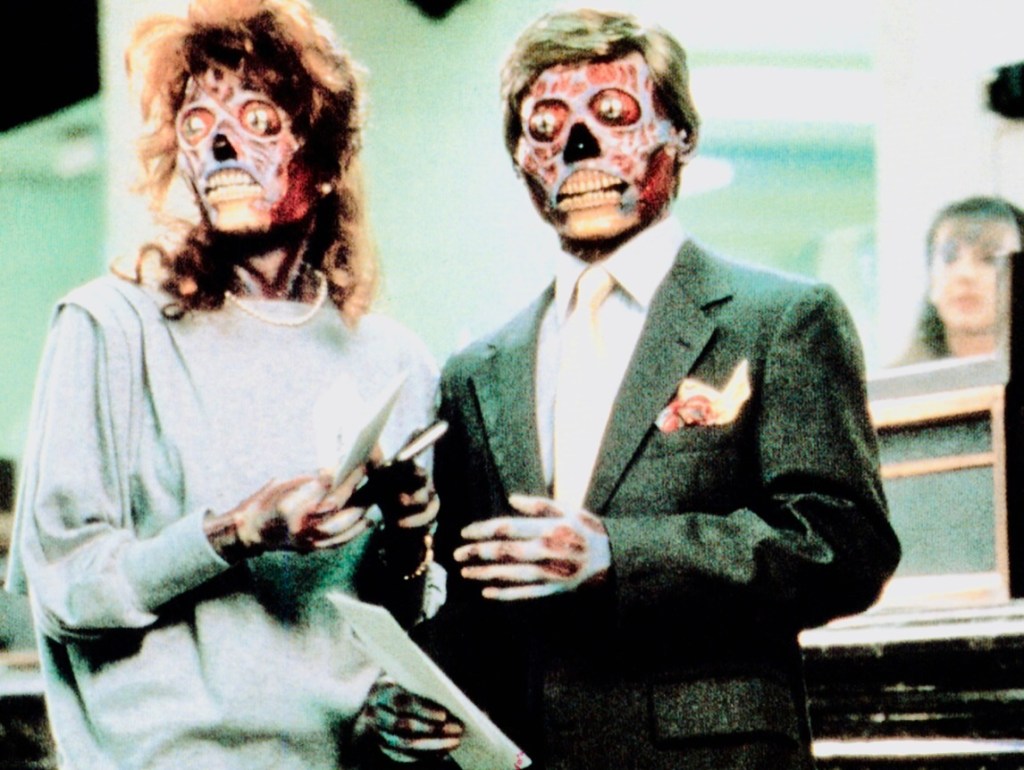
In the aftermath of the raid, the drifter finds a box of sunglasses. He takes a pair and after putting them on learns the truth. He now sees subliminal messages behind billboards such as ‘Obey’, ‘Consume’, ‘Do Not Question Authority.’ He sees bank notes with ‘This Is Your God’ printed on them, and terrifyingly he sees certain people with strange skeletal alien faces. It turns out that since the 1950s the Earth has become a kind of farm, a commodity for a consumerist alien race where Humans have become nothing but livestock to their unseen Alien overlords.
The drifter looks to seek the help of his friend Frank in order to help humanity see the truth. They Live is a movie about the great class divide, a cynical commentary on consumerism and control during the Reagan years of 1980s America. It features a perfectly minimal recurrent Blues theme scored by Carpenter, and a highly memorable and amusing fight scene that just keeps on going between the drifter and Frank, which was choreographed by Roddy Piper himself. KZ
9. // The Fog (1980)
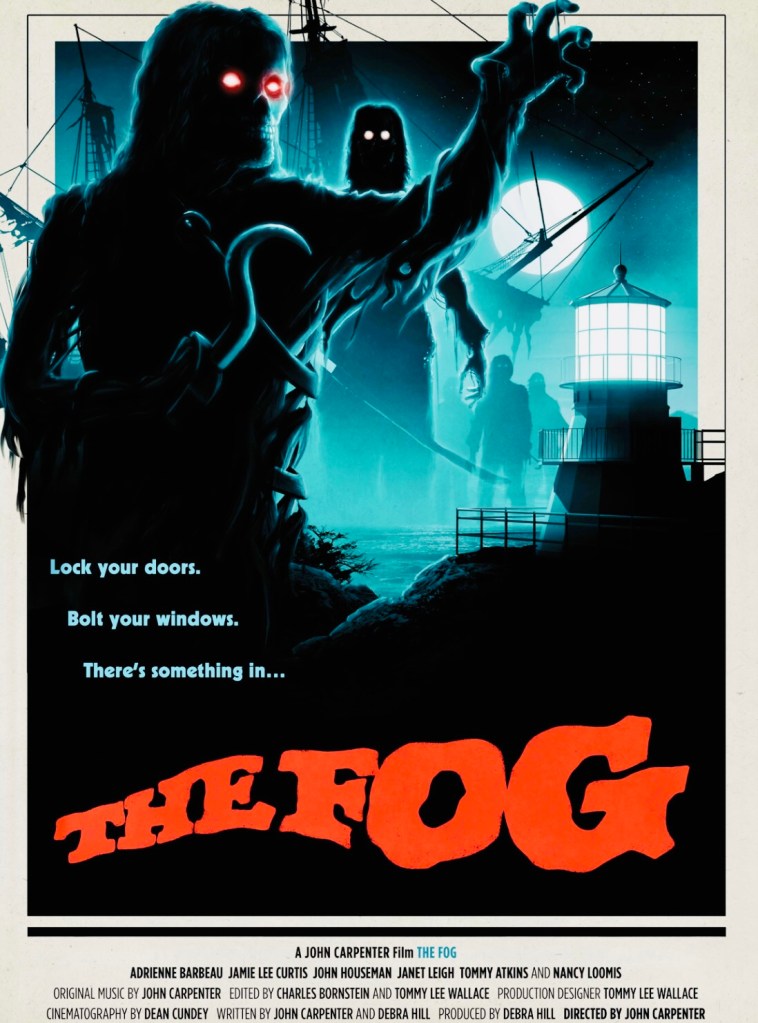
Opening and setting the tone with a quote from Edgar Allen Poe – “Is all that we see or seem, but a dream within a dream?” – Carpenter followed the success Halloween (1978) with an eerie ghost story … the kind that’s told to children around a campfire at midnight. The tale of a ship wrecked on rocks as it became caught in a fog following the light of a beach campfire to shore.
And where from Midnight until 1am is now the witching hour that belongs to the dead of the ship, as they come ashore for revenge. On the 100 year anniversary of the wreck, in the quiet Californian fishing town of Antonio Bay, a fog drifts in from out at sea. And with it brings unspeakable terror for the town’s inhabitants, a 100 year curse coming to fruition, mirroring the ghost story which is told at the beginning of the movie.
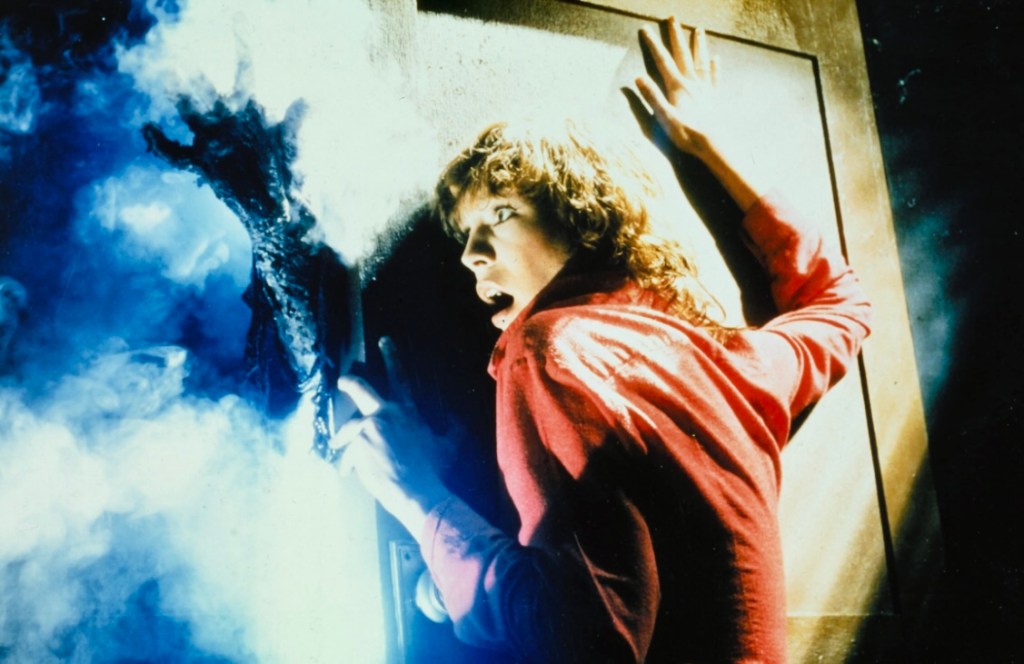
Bringing back Jamie Lee Curtis (Halloween) to star in an ensemble cast, with a host of interesting characters who have to battle their way through the nightmare, Carpenter cemented his reputation as a Horror movie specialist. Creating his second scary movie in a row that had audiences gripped at the time, and that are now considered classics of the genre.
The Fog considerably ups the jump scares on its predecessor, utilising some great visual and special F/X with the ghosts emerging from the fog. And creates a thoroughly sombre tone enhanced by Carpenter’s perfectly matched score, which in itself sounds like the perfect accompaniment to his infamous Halloween music. KZ
10. // Big Trouble In Little China (1986)

Even for John Carpenter, Big Trouble In Little China is a movie from the more bizarre end of the spectrum! Continuing his bromance with Kurt Russell (Escape From New York / The Thing) who stars as trucker Jack Burton, Carpenter brought an air of oriental mysticism to his work with this tale of magic, martial arts and intrigue. As Burton unwittingly finds himself in the middle of a centuries old war between rival gangs of Chinese king fu sorcerers …and an ancient wizard trying to lift a 2000 year old curse.
A uniquely original action movie for the time, Big Trouble In Little China is brimming with elaborate sets and costume designs, and feels reminiscent of Steven Spielberg’s Indiana Jones And The Temple Of Doom (1984) in places, with the tone of a gloriously over the top Action-Adventure B-Movie.

After a fairly straight forward opening a beautifully shot Kung Fu street fight first introduces the wizards, and from here the film dives deep down into a rabbit hole of fantasy, which is fast paced and takes the viewer on a elaborate and somewhat surprising journey.
Russell’s character is comically confused throughout, an American hero but flawed and well out of his depth as the action and magic unfolds around him. The movie features some great martial arts action for the time, including some wonderfully dodgy looking practical wire work in the final showdown, as various characters fly through the air during battle. KZ
Words by Mark Bates

 kult-zilla.com
Leave a comment